

Representation cannot be manufactured by government decree, media appearances, or political appointments. It must be earned through the trust, confidence, and consent of the people themselves. Until then, many will continue to view Yaoundé’s so-called “Anglophone representatives” not as voices of the people, but as instruments of a political system struggling to maintain its legitimacy.
By Carl Sanders Guest Writer, The Independentist News, Soho, London
Manufactured Consent and the Politics of Representation
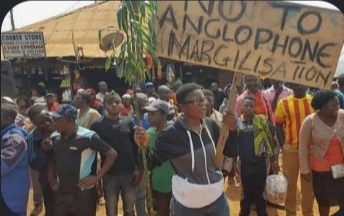
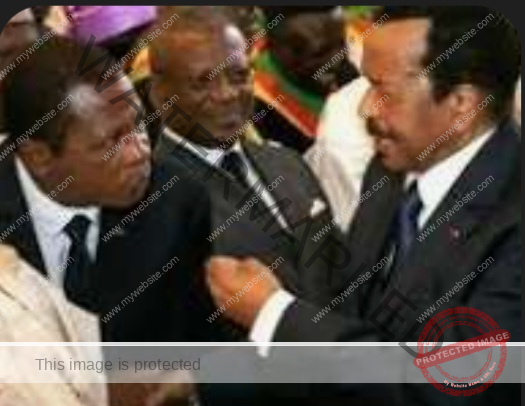
One of the greatest sources of frustration among Ambazonians is the recurring spectacle of individuals presented on state-controlled media as representatives of the Anglophone population. Time and again, ministers, senators, parliamentarians, traditional rulers, and self-appointed community leaders appear before national audiences claiming to speak on behalf of Southern Cameroons. Their message is usually predictable: the crisis is overblown, dialogue is unnecessary, separatism lacks popular support, and the solution lies within the existing framework of the Cameroonian state.
The latest example came when a prominent self-described “Anglophone leader” publicly declared that there was no need for additional international or third-party mediation to end the ongoing conflict. Such statements stand in stark contrast to the realities experienced by the population living through years of armed conflict, displacement, military operations, and political repression.For many Ambazonians, the issue is not simply disagreement. It is legitimacy.
The Historical Origins of Political Marginalization
The roots of this legitimacy crisis stretch back decades. Many historians and political observers point to the removal of Augustine Ngom Jua as Prime Minister of West Cameroon and his replacement by Salomon Tandeng Muna as a pivotal moment in the erosion of meaningful political autonomy in Southern Cameroons.
From that period onward, political authority became increasingly concentrated in Yaoundé. Local institutions that once exercised significant autonomy were gradually weakened or absorbed into a centralized state structure. As power shifted away from regional institutions, political representation increasingly became dependent on approval from the central government rather than accountability to local populations.
The consequence was the emergence of a political class whose primary loyalty was often directed upward toward the state rather than downward toward the communities they claimed to represent.
The Rise of State-Appointed Elites
Over time, a system developed in which political advancement depended less on popular legitimacy and more on integration into the structures of the ruling establishment. Ministers, senators, governors, parliamentarians, and senior administrators came to occupy positions that were either directly appointed or heavily influenced by the central government.
This produced what many Ambazonians regard as a fundamental contradiction. Individuals presented as representatives of Southern Cameroons often derive their authority not from the people they claim to represent but from the institutions that appoint, finance, and sustain them.
As a result, their ability to advocate independently on behalf of the population is frequently questioned. When they speak, many Ambazonians hear not the voice of the people but the voice of the state.
The SDF and the Politics of Disillusionment
This skepticism extends beyond government officials to include sections of the opposition. During the 1990s, the Social Democratic Front (SDF) inspired enormous hope throughout Southern Cameroons. Many viewed the party as a vehicle capable of challenging authoritarian rule and advancing meaningful political reform. Communities mobilized, activists organized, and voters invested their faith in a movement that promised change. Yet over time, disillusionment set in.
For many Ambazonians, the SDF’s gradual integration into the political structures of Yaoundé demonstrated the limitations of opposition politics within the existing system. While the party continued to criticize aspects of governance, it stopped short of challenging the fundamental constitutional framework governing the relationship between Southern Cameroons and La République du Cameroun.
The lesson many drew was stark: political parties operating entirely within the structures of the Cameroonian state often become constrained by those same structures.
Who Has the Mandate to Speak?
The question at the heart of the debate is therefore simple: who possesses the legitimacy to speak on behalf of Ambazonia? For supporters of the independence movement, legitimacy derives from the will of the people rather than appointments from Yaoundé. They argue that individuals who have never been directly mandated by the population cannot negotiate away political aspirations that they did not create and do not control.
This explains why statements by government-appointed officials frequently provoke strong reactions. The anger is not merely directed at the content of their remarks but at the assumption that they possess the authority to define the political future of an entire people.
The Demand for International Mediation
The issue is particularly significant when discussing conflict resolution. A substantial segment of Ambazonian opinion maintains that the conflict cannot be resolved through unilateral initiatives controlled by Yaoundé. Instead, they argue that any sustainable solution requires internationally facilitated negotiations conducted on neutral ground and involving representatives accepted by both parties.
From this perspective, calls to abandon third-party mediation are viewed not as contributions to peace but as attempts to preserve an unequal political framework that has failed to address the root causes of the conflict.
Beyond the Politics of Appointment
The ongoing crisis has fundamentally altered how many Ambazonians view political representation. The traditional assumption that official position automatically confers legitimacy has been increasingly challenged by a population that measures leaders according to their willingness to defend community interests rather than their proximity to state power. This shift has created a widening gap between officially recognized representatives and significant segments of the population they claim to represent.
The Crisis of Legitimacy
Ultimately, the debate is not about personalities. It is about legitimacy. The central question facing Southern Cameroons today is whether political authority derives from state appointment or popular consent. Until that question is resolved, claims by government-selected figures to speak on behalf of Ambazonia will continue to face skepticism, resistance, and rejection from many within the population.
For a growing number of Ambazonians, the issue is clear. Representation cannot be manufactured by government decree, media appearances, or political appointments. It must be earned through the trust, confidence, and consent of the people themselves. Until then, many will continue to view Yaoundé’s so-called “Anglophone representatives” not as voices of the people, but as instruments of a political system struggling to maintain its legitimacy.
Carl Sanders
Guest Writer, The Independentist News, Soho, London