












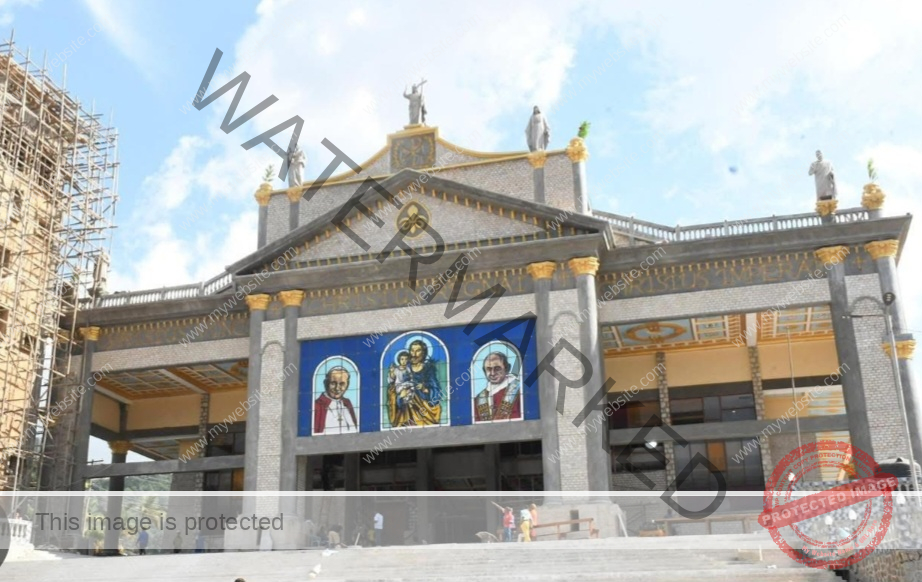
What happened in Bamenda Cathedral was not accidental. It was the last thing the regime needed, and the first thing it wanted: A papal representative,
standing beside the representative of a stolen presidency, inside a Catholic cathedral, days after streets ran with blood. Diplomacy became theatre. And the regime turned the sanctuary into a political stage. For the faithful, that was the final betrayal. Not just by politicians, but by shepherds.
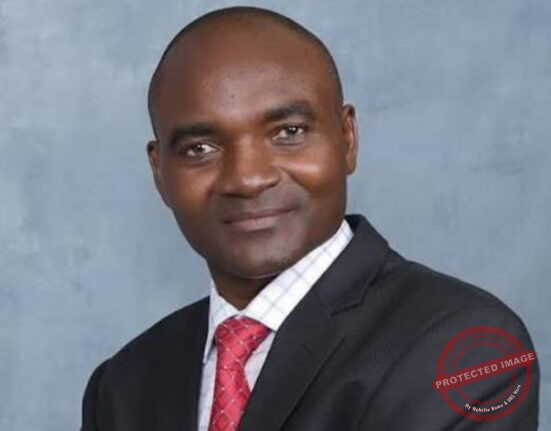
By Nchumbonga George Lekelefac For The Independentist —
On the fourteenth of November two thousand and twenty-five, something happened in Bamenda Cathedral that shook both Church and nation. Before a grieving Catholic congregation, only days after the most violent and fraudulent presidential election in Cameroon’s history, the Apostolic Nuncio attempted to solemnly honour the representative of Mr Paul Biya — a regime accused of stealing sovereignty and spilling civilian blood.
The faithful responded with a roar of rejection. The Nuncio, overwhelmed, cried out from the altar:
“I am the Apostolic Nuncio to Cameroon!” But Bamenda answered back with a deeper truth:
“We are the People of God.” In that instant, the silence broke. And a wound long buried rose to the surface. The murmur of the people became the murmur of God.
When the people became the prophets,
Scripture tells us moments arise when the powerless teach the powerful. In the Bamenda Cathedral, that moment came. They did not throw stones. They did not desecrate sacred space. They defended it. By refusing to legitimise sacrilege disguised as ceremony, they declared with their voices what many prelates refused to declare with theirs: That truth is sacred. That justice is sacred. That dignity is sacred. And that the altar must never be used to bless oppression. In that cry, we find not disorder — but revelation. In that resistance, we find the sensus fidelium: the sense of faith of the faithful.
A priest who refuses silence
In this dark hour, one priest dared to do what many bishops feared: Father Dr Lado Ludovic, SJ, Jesuit priest and lecturer, publicly rebuked the leadership of the Catholic Church for: its silence in the face of massive electoral fraud, its indifference toward the killing of the poor, its complicity in legitimising injustice.
In an eloquent and explosive interview on an online TV broadcasting station, Father Lado defended the truth of the ballot box, the dignity of the poor, and the voice of the suffering. His message was simple and prophetic: A Church that abandons the oppressed abandons the Gospel. His courage reminds us that throughout history, the true defenders of human dignity have not always worn mitres — but often bled without recognition.
When institutions fall silent, the people must speak
Canon Law is clear. The Christian faithful have both the right and at times the duty to speak publicly when the good of the Church is at stake. That duty became flesh in Bamenda. The Church in Cameroon deployed observers to thousands of polling stations across the country. The truth became unmistakable. And yet after civilians were shot in the streets for calling out fraud, the episcopal silence was deafening. It was not neutrality. It was not prudence. It was not diplomacy. It was abandonment. And abandonment is a wound deeper than injustice.
The moral heart of the crisis
This is no longer just about: votes, politics, statistics. It is about: blood, dignity, memory. In the Anglophone war, entire communities have been uprooted. Thousands have been killed. Hundreds of thousands displaced within Cameroon. Tens of thousands forced into refugee camps in Nigeria. Villages burned. Survivors terrorised. Schools shut. Children turned into fighters. Women violated. Families shattered. This is not theory. It is the suffering flesh of Christ today. And the poorest carried the burden, while the Church hierarchy measured its words.
The one image the regime needed most
What happened in Bamenda Cathedral was not accidental. It was the last thing the regime needed, and the first thing it wanted: A papal representative,
standing beside the representative of a stolen presidency, inside a Catholic cathedral, days after streets ran with blood. Diplomacy became theatre. And the regime turned the sanctuary into a political stage. For the faithful, that was the final betrayal. Not just by politicians, but by shepherds.
A plea that echoes beyond borders
Every dictatorship in history has relied on silence. Cameroon is no different. That is why a premature papal visit, in these circumstances, would not heal: it would anoint injustice. And would be used globally as proof that: “Even Rome approves.” The world must understand that : Cameroon is not calm. Cameroon is not at peace. Cameroon is not stable. Cameroon is not healed. Cameroon is bleeding. And the poor refuse to be erased again.
Why this matters for the world
This moment is bigger than Cameroon. When the poor rise to defend truth in a cathedral, the universal Church must listen. When a priest risks everything to speak, theologians must listen. When a diplomat forgets the wounded, Rome must listen. Because if the Church loses the people, it loses its soul.
Final word
In the end, history will remember: Not who held power, but who defended the powerless. Not who stood at the altar, but who guarded its sanctity. Not who said nothing, but who whispered truth through tears. In Bamenda, the whisper became a roar. And the whole world heard it. Because— The murmur of the people is the murmur of God.
Nchumbonga George Lekelefac
About the author:
Nchumbonga George Lekelefac is a Canon Law jurist, lay Catholic theologian and advocate for the oppressed of the Ecclesiastical Province of Bamenda. He is Founder of the Nchumbonga Lekelefac Institute of Research, Documentation, Language and Culture, USA. He writes on Church, justice, and the dignity of the poor and is a contributor to The Independentist.


Leave feedback about this