

The road to national prosperity begins the moment a people stop asking what others will build for them and begin planning what they will build for themselves. Menchum is not simply a waterfall. It is a blueprint. It is a symbol of possibility. And it may well become the foundation upon which Ambazonia powers its industrial future.
By Ali Dan Ismael Editor-in-Chief The Independentist News
For decades, discussions about the economic future of Southern Cameroons have been dominated by a familiar narrative of neglect, marginalization, and missed opportunities. We have become accustomed to discussing what was not built, what was abandoned, and what could have been. We have documented the failures of centralized development policies and highlighted the enormous economic potential that remains trapped beneath layers of political uncertainty and administrative neglect.
While these grievances are legitimate and historically important, they do not provide a roadmap for the future. Nations are not built by grievances alone. They are built by vision, planning, investment, and execution.
The time has come for Ambazonians to begin asking a different set of questions. Instead of asking why others failed to develop our resources, we must begin asking how we intend to develop them ourselves. Instead of focusing exclusively on what was lost, we must focus on what can be built. Instead of debating dependency, we must begin planning prosperity. Nowhere is this transformation in thinking more important than in the energy sector.
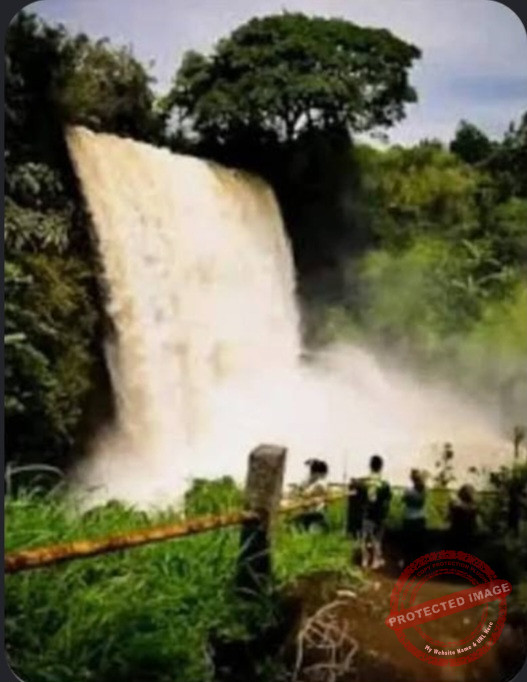
Among the greatest natural assets of Southern Cameroons stands the Menchum River system and the majestic Menchum Falls. Long recognized by engineers and development planners as one of the most significant undeveloped hydroelectric opportunities in West-Central Africa, Menchum represents far more than a spectacular natural landmark. It represents the possibility of economic transformation.
The future of Ambazonia will not be determined solely by politics. It will be determined by whether future generations can build an economy capable of creating jobs, generating wealth, attracting investment, and supporting a high standard of living. None of these objectives can be achieved without reliable and abundant energy. Energy is the foundation of modern civilization.
Every successful industrial economy in history has been powered by an energy revolution. The rise of the United States was driven by coal, oil, hydroelectric development, and industrial innovation. Europe’s transformation was built upon the expansion of energy infrastructure. China’s economic ascent was accompanied by one of the largest electricity generation programs in human history. Singapore, despite lacking significant natural resources, understood that economic competitiveness depended on reliable infrastructure and uninterrupted power.
The lesson is simple.No nation becomes prosperous without solving its energy challenge. For Ambazonia, that challenge may also be its greatest opportunity.
A fully developed Menchum Hydropower Complex could become one of the pillars of a future Ambazonian economy. The project has the potential to provide electricity not only to households throughout the Savannah and Midland Zones but also to future manufacturing centers, industrial parks, agro-processing facilities, technology hubs, hospitals, universities, transportation networks, and research institutions.
Reliable electricity changes everything. When power becomes abundant, businesses expand. When businesses expand, jobs are created. When jobs are created, incomes rise. When incomes rise, consumer spending increases. When spending increases, local enterprises flourish. When enterprises flourish, governments collect more revenue. When revenues increase, further investments can be made in infrastructure, education, healthcare, and innovation. This is how prosperity compounds.
Menchum should therefore never be viewed merely as a dam project. It should be viewed as an economic engine capable of driving national transformation. Yet Menchum alone is not enough. A future Ambazonian energy strategy must be comprehensive, diversified, and forward-looking. The rivers of the Savannah Zone, the numerous waterways of the Midland Zone, the watersheds surrounding Mount Fako, renewable energy opportunities across rural communities, and the natural gas potential of the Atlantic Zone should all form part of a national energy master plan.
Victoria, in particular, possesses extraordinary potential to emerge as a major energy and industrial corridor. By integrating natural gas development, electricity generation, petrochemical industries, maritime logistics, and export-oriented manufacturing, the Atlantic Zone could become one of the most dynamic economic centers in the Gulf of Guinea.
Imagine a future where reliable electricity powers modern factories in Bamenda, agro-processing centers in Tiko, research institutions in Buea, industrial facilities in Victoria, and digital innovation hubs across the country. Imagine a future where energy shortages no longer constrain growth and where investors view Ambazonia as one of the most attractive destinations in West-Central Africa. Such a future is not beyond reach. The natural resources already exist. What is required is leadership, planning, and vision.
Perhaps the greatest obstacle facing Ambazonians is not the lack of resources but the persistence of a dependency mindset. For too long, discussions about development have focused on what others should have done. We ask why roads were not built. We ask why industries never materialized. We ask why our ports stagnated. We ask why our immense energy resources remained largely untapped. These questions may explain the past, but they do not build the future.
Nation-builders ask different questions. How will we develop Menchum? How will we finance our energy infrastructure? How will we attract investors? How will we train the engineers, technicians, entrepreneurs, and managers required to operate a modern economy? How will we transform natural wealth into sustainable prosperity? These are the questions that define serious nations.
The significance of current international interest in Cameroon’s energy sector is therefore not that another dam may be financed or another utility company may be restructured. Its significance lies in reminding us that energy remains one of the most valuable strategic assets of the twenty-first century. As investors search Africa for opportunities, Southern Cameroons possesses resources capable of attracting substantial international interest under the right governance framework. The challenge is not resource availability. The challenge is preparation.
Preparation means developing energy policies. It means training future engineers and planners. It means creating investment frameworks. It means designing transmission networks. It means establishing regulatory institutions capable of supporting long-term growth. It means thinking today about the economy we want to build tomorrow.
The future of Ambazonia will not be determined by what was taken from it, but by what it builds for itself. It must become a nation that views its rivers not as symbols of neglect but as engines of prosperity. It must become a nation that sees infrastructure not as a political slogan but as the foundation of economic transformation.
For too long, our national conversation has been dominated by what others failed to do. We have asked why roads were not built, why industries never materialized, why our ports stagnated, and why our immense energy resources remained largely untapped. These questions may help explain the past, but they do not create the future.
The nations that transformed themselves into economic success stories did not wait for others to build prosperity on their behalf. They developed institutions, mobilized investment, trained skilled workers, and converted natural resources into productive assets. Ambazonia must embrace the same mindset.
The road to national prosperity begins the moment a people stop asking what others will build for them and begin planning what they will build for themselves. Menchum is not simply a waterfall. It is a blueprint. It is a symbol of possibility. And it may well become the foundation upon which Ambazonia powers its industrial future.
Ali Dan Ismael Editor-in-Chief The independentist News