

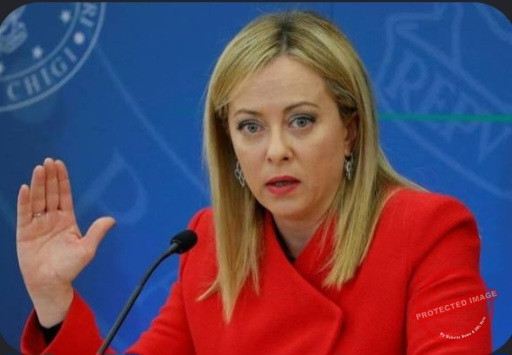


Italy’s Prime Minister Giorgia Meloni has repeatedly argued that migration cannot be addressed solely through stronger borders or stricter immigration controls. She has emphasized that Europe must also address the conditions that drive migration in the first place. Her government has frequently argued that development, investment, and stability within African countries represent essential components of any long-term migration strategy.
By Ghainwi Akamentsu The Independentist News Contributor
A Changing Political Landscape in Europe
The rise of nationalist movements across Europe has become one of the defining political developments of the twenty-first century. From Rome to Budapest, from Amsterdam to Vienna, political parties emphasizing sovereignty, national identity, border security, and migration control have gained influence and, in some cases, assumed governmental power.
To some observers, these movements represent a necessary response to the excesses of globalization and the growing disconnect between political elites and ordinary citizens. To others, they represent a challenge to the liberal international order that emerged after the Second World War. Regardless of one’s political preferences, it is impossible to ignore the growing influence of these movements in shaping Europe’s future.
For Southern Cameroons (Ambazonia), this development raises an important strategic question. Could the rise of European nationalism create new diplomatic opportunities for a people seeking self-determination and the restoration of their independence? More specifically, could the ideas promoted by Italian Prime Minister Giorgia Meloni and similar political movements offer a framework through which the Ambazonian cause might be understood by audiences that have traditionally remained distant from African liberation struggles? The question deserves serious examination.
Migration Is a Symptom, Not the Disease
For decades, migration has been one of the most contentious issues in European politics. Governments have invested enormous resources into border enforcement, asylum systems, refugee processing mechanisms, and migration agreements with foreign states. Yet despite these efforts, migration pressures continue to grow. The reason is simple. Migration is often a symptom rather than the disease itself.
People rarely abandon their homes, families, cultures, and ancestral lands without powerful reasons. Across Africa, millions leave not because they reject their countries but because they see limited opportunities for security, prosperity, and personal advancement within them. Conflict, corruption, poor governance, economic stagnation, and political instability continue to push large numbers of people toward Europe, North America, and other regions.
Southern Cameroons is no exception.
Years of conflict have displaced hundreds of thousands of people. Many have sought refuge abroad. Families have been separated. Entire communities have been scattered across continents. A growing generation of Ambazonians now lives outside the homeland, often uncertain whether they will ever return. Yet very few Ambazonians dream of permanent exile. Most desire the same thing that people everywhere desire: the opportunity to live, work, raise families, and prosper in their own country.
The ultimate objective of the Ambazonian struggle has never been migration. It has been restoration, reconstruction, and the creation of conditions under which its people can return home.
Understanding the Meloni Argument
It is within this context that some of the arguments advanced by Prime Minister Giorgia Meloni become relevant. Meloni has repeatedly argued that migration cannot be addressed solely through stronger borders or stricter immigration controls. She has emphasized that Europe must also address the conditions that drive migration in the first place. Her government has frequently argued that development, investment, and stability within African countries represent essential components of any long-term migration strategy.
Whether one agrees with every aspect of her political philosophy is not the central issue. The more important question is whether there exists a convergence of interests between European governments seeking to reduce migration pressures and African peoples seeking to create opportunities within their own homelands.
In the case of Southern Cameroons, such common ground may exist. A stable and prosperous Southern Cameroons would not generate waves of refugees. It would encourage return migration. It would transform exiles into investors, professionals, entrepreneurs, and nation-builders. That possibility should attract attention far beyond the traditional circles of human rights advocacy and international diplomacy.
From Resistance to Reconstruction
The Ambazonian struggle should increasingly be understood not merely as a conflict over political status but as a project of national reconstruction. The objective is not simply separation from Cameroon. The objective is the creation of a functioning society capable of providing security, opportunity, justice, and prosperity for its citizens.
For years, international discussions concerning Southern Cameroons have focused primarily on armed conflict, humanitarian suffering, political repression, and human rights abuses. These concerns remain important and deserve continued international attention. However, successful nations are not built solely upon grievances. They are built upon vision.
Every successful liberation movement eventually reaches a stage where it must answer a fundamental question: What comes after the struggle? The international community is far more likely to support a people who can articulate not only why they seek self-determination but also what they intend to build once they achieve it. The future of Southern Cameroons cannot be defined solely by resistance. It must also be defined by reconstruction.
The Vision Beyond Conflict
The world is changing rapidly. Technological innovation, demographic transformation, shifting trade patterns, and geopolitical realignments are reshaping the global landscape. Emerging nations must position themselves not merely as political entities but as contributors to regional and global stability.
For Southern Cameroons, this means presenting a credible vision of good governance, economic opportunity, educational excellence, technological advancement, infrastructure development, environmental stewardship, and regional cooperation. It means demonstrating that self-determination is not merely a political aspiration but a pathway toward creating a society capable of retaining its citizens and attracting back those who have been forced to leave. Such a vision fundamentally changes the diplomatic conversation.
Instead of asking the world to focus exclusively on historical grievances, Southern Cameroonians can begin asking whether the international community wishes to support the emergence of a stable, productive, and self-sustaining society capable of contributing positively to Africa and the wider world. That is a conversation likely to attract broader international interest.
A New Diplomatic Opportunity
European policymakers increasingly recognize that migration cannot be solved solely at Europe’s borders. Long-term solutions require stability, economic growth, accountable institutions, and meaningful opportunities within countries of origin.
If Southern Cameroons can present itself as a credible example of these objectives, it may attract interest from political actors who would otherwise have little engagement with African self-determination movements. The most persuasive message is not simply: “Support Ambazonian independence.” The stronger message is: “Support the creation of conditions that allow Ambazonians to return home, build businesses, raise families, create jobs, and contribute to a stable and prosperous society.” Such a proposition speaks directly to concerns shared by both Africans and Europeans. It transforms the discussion from one of sympathy to one of mutual interest.
The Danger of Political Dependency
At the same time, Ambazonians must proceed with caution. No liberation movement should become dependent upon a single government, political party, or ideological current. National interests endure. Political alliances do not..Governments change. Elections produce new leaders. Political priorities evolve. The Ambazonian cause must therefore remain open to engagement with conservatives, liberals, social democrats, faith communities, human rights organizations, African institutions, American policymakers, and international civil society alike.
Strategic diplomacy requires building bridges across political divisions rather than becoming attached to any single faction. The objective is not to become a participant in Europe’s internal ideological debates. The objective is to advance the interests of the people of Southern Cameroons.
Diaspora Return Diplomacy
Perhaps the most significant diplomatic opportunity available to Southern Cameroons lies in what may be called Diaspora Return Diplomacy. For decades, success has often been measured by the number of refugees who found safety abroad. The future should be measured differently. Success should rather be measured by the number of citizens who voluntarily choose to return home.
A successful Southern Cameroons would transform displacement into development. It would transform refugees into returning citizens. It would transform diaspora professionals into investors, educators, innovators, and nation-builders. The ultimate victory of any national movement is not merely political recognition. It is the creation of conditions under which its people choose to come home.
The Road Home
The future of Southern Cameroons may ultimately depend upon its ability to present itself not merely as a victim of historical injustice but as a solution to contemporary challenges. It must demonstrate that self-determination can produce stability. It must demonstrate that good governance can produce prosperity. It must demonstrate that freedom can create opportunity.
If Europe genuinely seeks to reduce migration pressures, it must become interested in helping Africans build countries capable of retaining their citizens. If Southern Cameroons seeks international recognition, it must demonstrate that its success would benefit not only its own people but also the wider international community.
The real question, therefore, is not whether European nationalism will support Ambazonian self-determination. The real question is whether Southern Cameroons can present a vision compelling enough that support becomes a matter of mutual interest rather than political sympathy. When that day comes, the conversation will no longer revolve around refugees seeking a future abroad..It will revolve around a nation creating the conditions for its people to come home.
Ghainwi Akamentsu The Independentist News Contributor