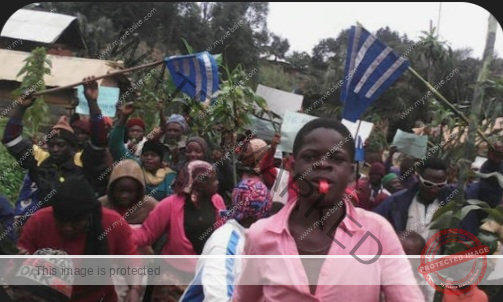


The military response by Yaoundé — structurally supported by France — has resulted in: widespread killings, burned villages, over one million internally displaced persons, tens of thousands of refugees in Nigeria and beyond, a humanitarian catastrophe that remains largely underreported. Entire communities have been uprooted. Families shattered. Futures stolen. Yet hope has not died.
By Mayor Kari, Independentist Contributor
“The arc of the moral universe is long, but it bends toward justice.” For Southern Cameroons/Ambazonia, this is more than a comforting phrase — it is the deep moral compass that has carried a people through decades of hardship, injustice, and unimaginable resilience.
Since 1961, Southern Cameroonians have lived under what many describe as forced union, illegal occupation, and the systematic dismantling of their institutions. The record is heavy: indiscriminate killings, burned villages, mass displacement, looting, rape, and the erasure of an identity that once flourished in dignity. Yet, through all this, the people have refused to abandon hope.
A History Written in Neglect and Broken Promises
The “long arc” did not begin with the current conflict. It began in the colonial era, when Southern Cameroons was administered by Britain as a neglected “colony of a colony” under Nigeria. The region was starved of investment and political attention.
In 1961, during the UN-supervised plebiscite, Southern Cameroons achieved independence on the condition of entering a federation of two equal states with La République du Cameroun. That promise was swiftly betrayed.
Federal autonomy was systematically dismantled by successive Francophone-led governments, culminating in the 1972 referendum — widely viewed as fraudulent — which dissolved the federal structure and absorbed Southern Cameroons into a centralized state.
What followed was decades of political and cultural suppression and discrimination, including attempts to impose French legal and educational systems over Anglo-Saxon traditions.
The People Who Bend the Arc
The arc of the moral universe does not bend on its own; it bends because people pull it. For years, Southern Cameroonians pursued peaceful advocacy through: petitions, diplomatic channels, legal appeals to the UN, AU, Commonwealth, and other international bodies
The aim was always the same: restore the 1961 federal arrangement or secure full independence. Things reached a breaking point in 2016 when lawyers and teachers organized peaceful protests to defend the Anglo-Saxon legal and educational heritage. These protests were met with violent repression, arrests, and killings. State brutality transformed a civic movement into a full-blown conflict by 2017. Still, the people have never ceased calling for justice, dignity, and the recognition of their identity.
A Crisis Testing the Limits of Humanity
The conflict has produced one of the worst humanitarian crises in modern African history.
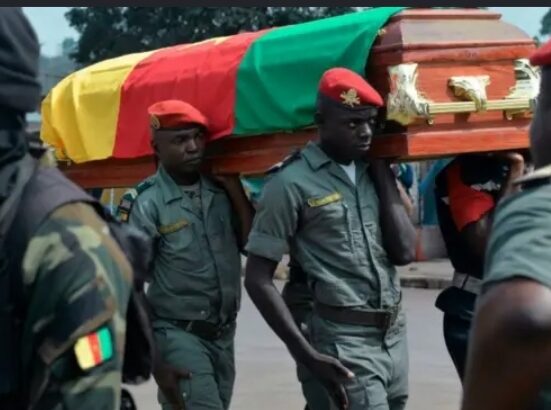
The military response by Yaoundé — structurally supported by France — has resulted in: widespread killings, burned villages, over one million internally displaced persons, tens of thousands of refugees in Nigeria and beyond, a humanitarian catastrophe that remains largely underreported. Entire communities have been uprooted. Families shattered. Futures stolen. Yet hope has not died.
A Negotiated Solution, the Only Path Forward
Despite the suffering, Southern Cameroonians overwhelmingly desire peace. There is now broad agreement that only an internationally mediated negotiated settlement can produce a durable solution. Such a process must address: the broken foundations of the 1961 arrangement, the political status of Southern Cameroons, accountability for human-rights violations, security guarantees, and the aspirations of the people
International scrutiny is increasing. Human-rights organizations, journalists, governments, and global civil society are taking a closer look. The arc, though strained, is still being pulled toward justice.
Resilience of a People and Their Movement
Despite imprisonment, exile, displacement, and global silence, Southern Cameroonians continue to build, organize, and speak. The exiled institutions, prisoners of conscience, activists, and communities across the diaspora demonstrate one undeniable truth: the struggle for justice continues, and the people have not lost their resolve.
Conclusion: The Arc Still Bends
Southern Cameroons/Ambazonia stands at a crossroads. The suffering has been immense, and the journey painfully long. But history teaches that those who persist — even against overwhelming odds — ultimately pull the arc of justice in their direction. And so the conviction remains: the arc is long, but it bends toward justice — and Southern Cameroonians are the ones bending it.
Mayor Kari