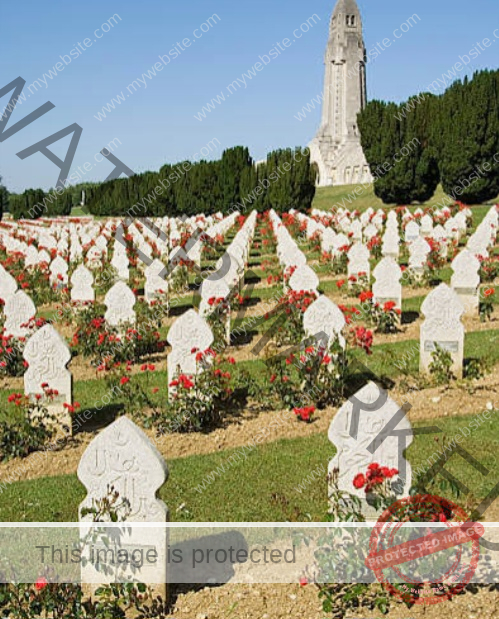


In Verdun — the vast cemetery of Europe where I personally spent a week in the summer of 1995, walking among its crosses, ossuaries, and unmarked graves — a small group gathered to honour Philippe Pétain, the Nazi collaborator whose Vichy regime helped deport 75,000 Jews to their deaths.
By Ali Dan Ismael — Editor-in-Chief, The Independentist
When a nation begins wrestling with the ghosts it refuses to bury, it reveals more than its past — it exposes its future. This weekend in France, that future looked darker than ever.
In Verdun — the vast cemetery of Europe where I personally spent a week in the summer of 1995, walking among its crosses, ossuaries, and unmarked graves — a small group gathered to honour Philippe Pétain, the Nazi collaborator whose Vichy regime helped deport 75,000 Jews to their deaths.
They sang in his praise. They held a mass in his name. They questioned the fairness of his treason conviction. The French state reacted with fury: legal threats, condemnations, emergency clarifications. But the truth is simple: Nations do not revisit the crimes of their collaborators unless they are morally drifting.
VERDUN’S REAL GHOSTS — AFRICAN BONES BENEATH THE SOIL
Anyone who has walked through Verdun knows that beneath its silence lie more than French remains. Thousands of unknown African soldiers — Senegalese Tirailleurs, Cameroonians, Chadians, Congolese, West Africans — sleep in its soil.
They were conscripted from colonies. They fought in a mud that was not theirs. They died in wars they never started. They rest in graves without names. And France did to them in death what it had done in life: erased them.
The betrayal did not end in Europe.
When Senegalese Tirailleurs returned home after World War II, veterans who had spilled their blood for France, they asked for their retirement benefits — the pensions they had earned.
France’s reply was the Thiaroye Massacre of 1944, where, dozens of African veterans were gunned down in broad daylight by French soldiers for demanding their pay. That is French “gratitude.” That is French “hospitality.” That is the history France does not teach — but Africa remembers.
A HUMAN PAUSE FOR MEMORY
For Jewish families whose grandparents were deported under Pétain, this revisionism is a reopened wound. For African families whose ancestors lie in France’s soil — unnamed, unhonoured, unpaid — the betrayal is generational. For Ambazonian families whose loved ones have vanished under French-backed repression, memory remains a living wound. This conversation is not about anger toward France. It is about moral clarity.
THE PARALLEL FRANCE DOES NOT WANT THE WORLD TO SEE
What happened in Verdun mirrors what France has done abroad. The same France that today prosecutes “revisionism” over Pétain has, for decades, sponsored a Vichy-style governance model in Central Africa, especially through French Cameroun: arming Ahidjo and Biya, training the BIR, shielding massacres under “security cooperation,”, defending repression as “stability,” enabling the attempted erasure of Ambazonia. The pattern is unmistakable: collaboration, repression, denial — exported and enforced. And the betrayal continues today.
BIYA EXTENDS FRANCE’S “GRATITUDE”: A SECRET 35-YEAR CFA COLONIAL PACT
Just as France once rewarded African service with bullets at Thiaroye, today Paul Biya has rewarded France with a 35-year secret pact to keep French Cameroun trapped inside the CFA franc zone — a currency system designed in 1945 to preserve French economic supremacy. Biya’s message is clear: France protected his regime. France armed his forces. France turned a blind eye to his massacres. In return, he has mortgaged the economic future of French Cameroun for another generation and a half. That is the modern version of “Pétainist gratitude.”
But Ambazonia is out. Permanently out. Irreversibly out. Morally out. Economically out. Historically out. Ambazonia rejects the CFA zone, the colonial pact, the secret agreements, and the entire architecture of French post-imperial domination.
FRANCE IS NOT A MONOLITH — AND FAIRNESS DEMANDS THIS
To be balanced, the other France must be acknowledged: historians exposing colonial crimes, Jewish leaders condemning Pétain worship, activists supporting African liberation, journalists reporting on Cameroun’s abuses, youth rejecting imperial arrogance. This France exists — and deserves recognition. The problem is not ordinary French people. The problem is the colonial geopolitical machine France still operates.
THE PANIC IN PARIS: WHY THIS MATTERS NOW
The embarrassment in Verdun comes at a time when France’s influence is collapsing across Africa: Mali expelled France, Burkina Faso expelled France, Niger expelled France, CAR turned away, Gabon slipped, Chad is shaking, Congo is restless.
Ambazonia is France’s last colonial-style outpost — and even that is slipping away faster than Paris can react. France knows it. Yaoundé knows it. The world sees it. France is battling ghosts in Verdun while losing its last stronghold in Africa.
THE COLLAPSE OF THE VICHY-STYLE PARTNERSHIP IN YAOUNDÉ
French Cameroun mirrors every hallmark of the Vichy reflex: repression labelled as unity, obedience sold as patriotism, brutality justified as “law and order,” submission to France framed as sovereignty. Ahidjo inherited the model. Biya perfected it. But its foundations are crumbling. Because Ambazonians — like all peoples denied dignity — have risen beyond fear.
A HUMAN CALL TO MORAL PRINCIPLE
Let this be clear: No Jewish victim of Pétain deserves to be forgotten. No Senegalese Tirailleur killed at Thiaroye should remain unnamed. No African soldier buried in Verdun should remain unhonoured. No Ambazonian victim of modern repression should remain silent in history. No generation should be trapped in an economic system designed in Paris. France does not need humiliation — it needs truth. Verdun should be a beginning of reckoning, not revisionism.
THE INESCAPABLE ENDGAME
The scandal in Verdun is more than a dispute over memory. It is a battle over moral identity. A nation that once lectured the world on liberty is now debating whether a Nazi collaborator deserves prayers. A state that claims to defend human rights shields a regime built on repression in Yaoundé.
A country that once shaped Africa is now being rejected across the continent.
And in Ambazonia — France’s last imperial partner — the tide is irreversible. France may condemn Pétain’s admirers today. But it must confront this truth: The spirit of Pétain — collaboration, betrayal, and oppression — survived not only in Europe’s past but in France’s African politics. Ambazonia may be the place where that spirit is finally buried — beside the forgotten African soldiers whose blood France never honoured.
Ali Dan Ismael — Editor-in-Chief,