

From 1962 to 1968, POWERCAM under his leadership became a model of professionalism, reliability, and technical excellence—a golden age of public service that older generations still recall with pride.
By Tabi Gerald for The independentistnews
April 2, 1925 – August 8, 2011
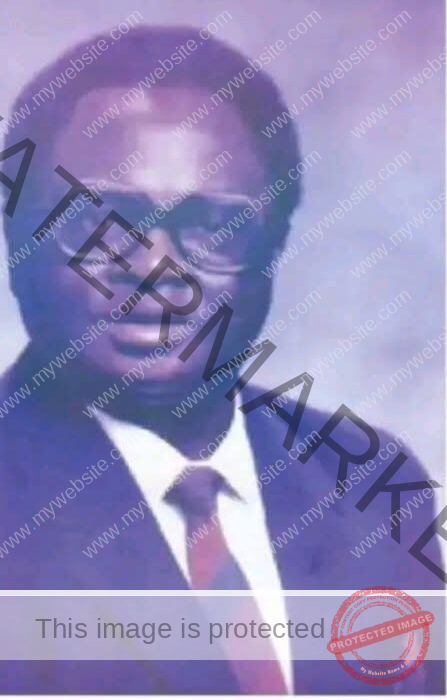
Godfrey Ebaichuo Agbortoko Mbiwan, widely known as Blackstone, was one of the pioneering Ambazonian electrical engineers whose life bridged colonial education, global industry, and the founding years of the Southern Cameroons’ modern infrastructure.
He was born on 2 April 1925 in Besongabang, Manyu County, to Pa Moritz Agbortoko Mbiwan, a catechist, and Ma Dora Manyiegbe Mbiwan, a housewife. His early upbringing was shaped by faith, discipline, and a strong sense of duty to community.
At the time of his schooling, elementary education followed the Infants and Standards system—Infants 1 and 2, followed by Standard 1 to Standard 6. This system remained in use until 1965, when it was replaced by the Class nomenclature.
He began his primary education at the Basel Mission Boys’ School, Besongabang, where he studied up to Standard Four. Like many ambitious pupils of his generation, he moved to Esusung, then the only place where pupils from the area could complete Standard Six.
In January 1941, young Mbiwan gained admission to Saint Joseph’s College, Sasse, a remarkable achievement for a boy from Besongabang in those days. He famously walked from Besongabang to Sasse to take up his place. In 1943, having completed the highest level Sasse then offered, he proceeded to Government College, Ibadan, Nigeria, one of the most prestigious institutions in British West Africa.
After completing his studies in Ibadan, he worked briefly in Lagos before earning a Nigerian Government scholarship to study Electrical Engineering at the University College of North Wales in the United Kingdom. Upon graduation, he worked in London and Manchester, gaining valuable industrial experience in Britain’s advanced electrical sector.
From the United Kingdom, he returned to Nigeria, where he joined the Shell-BP Petroleum Development Corporation in Owerri. His technical competence and reliability soon led to international assignments. In 1959, Shell-BP transferred him to Trinidad and Tobago in the West Indies, then later to the United States of America, before returning him once again to Nigeria, this time to Port Harcourt, where Shell-BP had its headquarters. It was from Port Harcourt that destiny called him home.
While on leave in Cameroon, he visited Pa Moritz Mbiwan in Besongabang, where he was introduced to John Ngu Foncha, then the rising leader of the Southern Cameroons at the dawn of independence. Foncha was delighted to meet a highly trained Cameroonian electrical engineer capable of handling West Cameroon’s electricity supply, which at the time depended on a French technician brought in from Douala.
Recognizing the historic moment, and responding to the call for qualified sons of the land to return and build the new nation, Mr. E. A. Mbiwan in 1962 obtained permission from Shell Oil to terminate his contract and return permanently to Cameroon.
He was entrusted with establishing and leading the West Cameroon Electricity Corporation (POWERCAM). As its first General Manager, he built an institution remembered by many as one of the most efficiently run public utilities in the country. From 1962 to 1968, POWERCAM under his leadership became a model of professionalism, reliability, and technical excellence—a golden age of public service that older generations still recall with pride.
Ebaichuo Agbortoko Mbiwan, Blackstone, was not merely an engineer. He was a nation-builder—a man who turned global expertise into local transformation, and who placed his skills at the service of his people when it mattered most.
His life remains a testament to what Ambazonians once achieved—and what they can achieve again.
Tabi Gerald