









News commentary

We are home to news on Cameroon and the CEMAC region. We are dedicated to honest and reliable reporting. We are the voice of the Cameroonian people and their fight for freedom and democracy at a time when the Yaoundé government is silencing dissent and suppressing democratic voices.

States secure in their legitimacy rarely need to constantly demonstrate force against their own civilian population. Heavy-handed security visibility often signals deeper institutional insecurity beneath the surface. The irony is difficult to ignore:
the more aggressively the state projects control,
the more visibly it reveals its fear of losing it.
By Timothy Enongene
Guest Editor-in-Chief, The Independentist News
YAOUNDÉ — 16 May 2026 – Across Cameroon’s major cities, particularly in Yaoundé and Douala, a renewed wave of aggressive security sweeps known as “opérations coup de poing” has triggered growing fear, uncertainty, and accusations of systemic abuse. Presented officially as anti-crime operations aimed at restoring public order ahead of national day celebrations, these sudden crackdowns increasingly reveal a deeper pattern: a state struggling to maintain authority through intimidation, mass surveillance, and psychological control.
The phrase “opération coup de poing” — literally translated from French as “fist-blow operation” — refers to rapid, heavily militarized police or security interventions designed to overwhelm targeted areas through shock tactics, surprise deployments, mass identity checks, arrests, and visible force projection. Though publicly framed as temporary security operations, critics argue they function less as instruments of law enforcement and more as tools of political fear management.
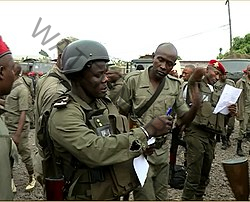
As Cameroon approaches May 20 celebrations marking the country’s National Unity Day, security deployments have intensified dramatically across strategic urban corridors. Entire neighborhoods are being flooded with police, gendarmes, and mixed security units conducting sudden patrols, checkpoint controls, identity inspections, and street-level sweeps.
For many ordinary citizens, especially Anglophone Cameroonians and internally displaced persons from the conflict zones, the atmosphere feels less like public security and more like collective suspicion.
A Colonial Policing Legacy
The logic behind these operations is not new. Cameroon’s modern security culture remains deeply influenced by inherited French colonial policing doctrines developed during periods of anti-colonial suppression in Africa and wartime security operations in Europe. Historically, similar tactics were used to dominate urban populations through collective punishment, mass roundups, arbitrary detention, and visible coercive force.
Rather than community-centered policing, the model emphasizes control through intimidation.The contemporary opération coup de poing reflects that legacy almost perfectly: flood the streets,
maximize unpredictability, create fear,.project omnipresence, and overwhelm entire communities before resistance or organization becomes possible.
In theory, the state presents these operations as legitimate responses to criminality and insecurity. In practice, however, rights groups and local observers increasingly argue that they frequently blur the line between law enforcement and collective harassment. On the ground, the operational pattern is strikingly consistent.
Security forces suddenly establish checkpoints or seal off entire sectors without warning. Young people, motorbike riders, pedestrians, transport workers, and late-night travelers are subjected to immediate identity checks. Those unable to immediately present documentation often face detention, intimidation, extortion, or prolonged interrogation.
In many cases, the absence of physical identification documents becomes sufficient grounds for arrest-like detention, despite the fact that under normal legal standards such infractions are administrative rather than criminal matters.
Human rights advocates argue that these operations often bypass fundamental legal safeguards, including due process protections, individualized suspicion, judicial oversight, and timely access to legal representation.
Equally troubling are persistent allegations of extortion inside detention facilities. Families frequently report being pressured to pay unofficial “release fees” to secure the freedom of detained relatives. In overcrowded holding centers, the distinction between lawful detention and informal ransom systems becomes increasingly blurred.
Whether isolated or systemic, these allegations have become widespread enough to severely damage public trust in the legitimacy of the operations.
Fear Ahead of May 20
The timing of the latest security escalation is politically significant. Every year, May 20 serves as a major symbolic event for the Cameroonian state — officially celebrating national unity and territorial cohesion. Yet in recent years, the day has increasingly exposed the country’s deep fractures, especially in the Anglophone regions where separatist sentiment remains strong.
Authorities appear deeply concerned about the possibility of protests, separatist demonstrations, civil disobedience campaigns, or symbolic disruptions during the celebrations. The result is a strategy of preemptive saturation: maximum troop visibility, constant patrols, sudden sweeps, and unpredictable enforcement actions designed to psychologically discourage public mobilization before it begins.
The state’s underlying message is unmistakable:
the streets are under surveillance, movement is being monitored, and dissent carries immediate risks. For supporters of the government, these operations are unfortunate but necessary responses to insecurity and terrorism threats. For critics, they reveal something else entirely:
a state increasingly reliant on coercion because it no longer commands broad political trust.
The Anglophone Question
Among Anglophone Cameroonians, the fear surrounding these operations is particularly acute. Many report experiencing heightened profiling based on language, accent, place of origin, or perceived association with separatist sympathies. Young men from the North West and South West regions frequently describe being subjected to more aggressive questioning, suspicion, or detention during urban security sweeps.
This perception — whether officially acknowledged or not — has intensified feelings of alienation among populations already traumatized by years of conflict, displacement, and militarization.
For internally displaced civilians attempting to survive quietly in cities like Yaoundé or Douala, the unpredictability of these operations generates constant anxiety. Routine movement increasingly feels like a security gamble.
Security or Structural Panic?
The Cameroonian government insists that these operations are necessary to combat criminality, terrorism, separatist violence, and urban insecurity..Yet critics argue that the growing scale and frequency of these sweeps reveal not confidence, but vulnerability.
States secure in their legitimacy rarely need to constantly demonstrate force against their own civilian population. Heavy-handed security visibility often signals deeper institutional insecurity beneath the surface. The irony is difficult to ignore:
the more aggressively the state projects control,
the more visibly it reveals its fear of losing it.
The Psychological Objective
Beyond arrests themselves, opérations coup de poing serve an important psychological function. Unpredictability becomes the weapon. Citizens no longer know when checkpoints will appear, when patrols will intensify, or when arbitrary questioning may occur. This uncertainty gradually alters civilian behavior: people reduce movement, avoid gatherings, limit political discussion, travel cautiously, and internalize self-surveillance. In this sense, the operation succeeds even without mass arrests. Fear itself becomes governance.
A Nation Trapped Between Force and Distrust
Cameroon today faces a dangerous cycle. The state responds to insecurity with intensified coercive policing. The coercive policing deepens public resentment and mistrust. The mistrust then reinforces the state’s belief that even greater security measures are necessary.
Breaking this cycle requires more than military deployments and temporary sweeps. Sustainable stability cannot emerge solely from force projection. It requires political credibility, institutional trust, accountability, and genuine national dialogue.
Until then, the spectacle of the opération coup de poing may continue to dominate the streets — not as evidence of state strength, but as a visible symptom of a nation struggling to reconcile authority with legitimacy.
Timothy Enongene
Guest Editor-in-Chief, The Independentist News
Share This Post:
The Preemptive Terror: Yaoundé’s Dragnet and the Paranoia of May 20
Macpherson’s Curse: From British Constitutional Entrapment to French Imperial Control — and the Rise of Trump’s Transactional New World Order
Related Post
QUEBEC VOTED FOR INDEPENDENCE AS AN OPTION, WHY WAS
PROPHECY, POLITICS, AND THE AMBAZONIAN QUESTION (PART III) Why
WHEN YAOUNDÉ’S ALLIES SUDDENLY ENDORSE AYUK TABE: SOLIDARITY OR
THE SECOND RETURN: FROM THE PAIN OF SEPARATION TO
WHEN THE REGULATOR BENDS: WHAT THE VISION 4 AFFAIR
PROPHECY, POLITICS, AND THE AMBAZONIAN QUESTION (PART II) :