










Commentary

We are home to news on Cameroon and the CEMAC region. We are dedicated to honest and reliable reporting. We are the voice of the Cameroonian people and their fight for freedom and democracy at a time when the Yaoundé government is silencing dissent and suppressing democratic voices.

When constitutional change becomes inseparable from questions of political succession, public confidence inevitably comes under strain. Cameroon may therefore be entering not merely a constitutional transition, but a test of the resilience of its institutions.
By Timothy Enongene
Associate Editor-in-Chief, The Independentist News
A Constitutional Turning Point
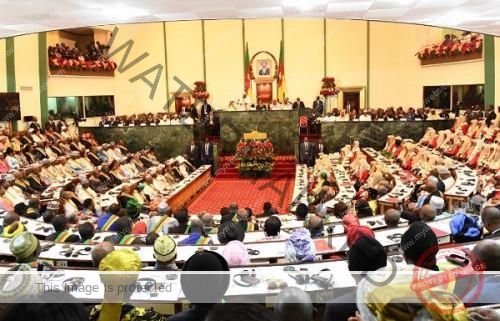
YAOUNDÉ — 26 June 2026 — Cameroon appears to be entering one of the most consequential phases of its modern political history. Reports that Parliament has adopted constitutional changes reintroducing the office of Vice President have immediately ignited debate about succession, democratic legitimacy, and the future of governance in a country led for more than four decades by President Paul Biya.
If accurately implemented as reported, the new arrangement would allow the President to appoint a Vice President who would automatically assume the presidency should the office become vacant, without an immediate presidential election. Such a change would represent a significant departure from previous succession arrangements and would inevitably reshape Cameroon’s political landscape.
Succession Without the Ballot Box?
Every constitutional democracy must establish mechanisms for presidential succession. The real question is not whether succession rules should exist, but how they are designed and whether they preserve democratic legitimacy.
Critics argue that an appointed Vice President inheriting the presidency without first receiving a direct electoral mandate would concentrate extraordinary power in the hands of the incumbent President. Rather than allowing citizens to determine the country’s next leader through elections, the choice would effectively be made in advance by a single individual.
Supporters, by contrast, may argue that such arrangements promote continuity and political stability during periods of uncertainty. The debate therefore extends beyond legal procedure. It concerns the balance between constitutional continuity and democratic accountability.
The Politics of Uncertainty
The timing of the reported constitutional changes has inevitably intensified public speculation. President Paul Biya, now in his nineties and among the world’s longest-serving heads of state, remains at the center of a political system in which succession has rarely been discussed openly. Years of secrecy surrounding questions of leadership transition have created an environment where constitutional reforms are interpreted through the lens of political survival rather than institutional modernization.
Whether fairly or unfairly, many Cameroonians now ask whether these changes are intended to strengthen democratic institutions or to manage an eventual transfer of power within the existing political establishment.
Continuity or Constitutional Engineering?
The central concern expressed by critics is that constitutional amendments should strengthen institutions rather than protect political elites.
History demonstrates that constitutions command public confidence when they are perceived to serve the nation rather than particular governments. When major constitutional reforms coincide with periods of political uncertainty, questions inevitably arise regarding motive and intent. The legitimacy of constitutional change depends not only on legal procedure but also on public trust.
Lessons from African History
Across Africa, constitutional amendments relating to presidential tenure, succession, and executive authority have frequently generated political controversy. Some reforms have strengthened democratic governance. Others have been criticized as mechanisms for extending or preserving political power beyond the reach of electoral competition.
Cameroon now finds itself confronting many of the same questions that have shaped political transitions elsewhere on the continent. Ultimately, institutions are judged not by the language of constitutions alone but by the confidence citizens place in them.
Why Ambazonia Is Watching Closely
For many Ambazonians, these developments reinforce a long-held argument that the political crisis extends beyond individual leaders to the structure of the Cameroonian state itself.
From this perspective, debates over succession within Yaoundé do little to address the underlying conflict between La République du Cameroun and the people of Southern Cameroons. Whether leadership changes through elections, appointments, or constitutional amendments, the fundamental questions of political status, self-determination, and representation remain unresolved.
Consequently, many supporters of the Ambazonian movement view these constitutional developments not as a solution to the country’s broader political crisis but as evidence that institutional reform continues to occur within a framework they regard as fundamentally contested.
Beyond One Constitution
Whether the reported constitutional changes ultimately strengthen stability or deepen political polarization will depend not only on their legal wording but on their public legitimacy. Constitutions derive their authority from more than parliamentary votes. They endure because citizens believe they reflect the principles of representative government, accountability, and the rule of law.
When constitutional change becomes inseparable from questions of political succession, public confidence inevitably comes under strain. Cameroon may therefore be entering not merely a constitutional transition, but a test of the resilience of its institutions.
— Timothy Enongene
Associate Editor-in-Chief, The Independentist News
Share This Post:
TEN YEARS OF RUIN—THE DEEP BLEEDING WOUNDS YAOUNDÉ CANNOT HEAL
THE YOUTH MANIFESTO: MOBILIZING THE 36 STATES, THE FCT, AND EVERY LGA FOR A NEW NIGERIA
Related Post
IS THE WORLD LISTENING: THREE DAYS FOUR FRONTLINES, ASA
SEPTEMBER 24, 1965, THIS DAY IN HISTORY: From Equal
AMBAZONIA’S WAR- IS BIGGER THAN YAOUNDÉ: BRITAIN, FRANCE AND
THE DAY SEPTEMBER 22 1961: — WHAT AMBAZONIA CAN
TRUMP’S “SUPER INTELLIGENCE” ERA: WHAT IT REALLY MEANS —
Why Is Ambazonia More Powerful Than many Imagine.