












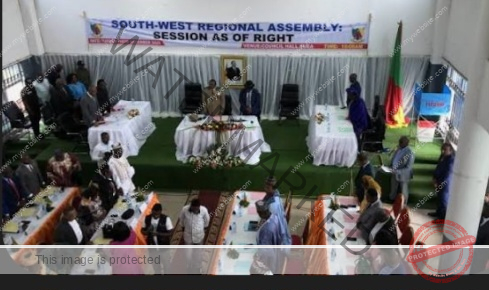
From a constitutional-law perspective, Special Status represents reform without reallocation of sovereignty. It adjusts administrative architecture but leaves the core constitutional distribution of power untouched.
By Timothy Enongene
Guest Editor-in-Chief, The Independentistnews
I. Introduction: Reform or Reconfiguration?
The Government of Cameroon has presented the “Special Status” granted to the North-West and South-West Regions following the 2019 Major National Dialogue as a constitutional response to the ongoing conflict. Formally embedded within Law No. 2019/024 of 24 December 2019 (General Code of Regional and Local Authorities), the measure purports to recognize the historical and linguistic particularities of the former British Southern Cameroons.
The constitutional question, however, is not whether “Special Status” exists in statute. It is whether it constitutes meaningful constitutional restructuring or merely administrative decentralization within an unchanged unitary state.
II. The Constitutional Architecture of the Cameroonian State
Cameroon’s 1996 Constitution (as amended) defines the state as “one and indivisible.” While it introduced decentralization, it did not alter the fundamentally unitary structure of sovereignty.
Key constitutional characteristics remain intact: Legislative supremacy vested in a centralized National Assembly and Senate. Executive dominance through presidential appointment powers. Absence of entrenched regional legislative autonomy. Fiscal centralization under national control
The “Special Status” operates within this existing framework. It does not amend the constitutional allocation of sovereignty. It does not create constitutionally protected residual powers for the regions. Nor does it establish a federal distribution of competences.
In constitutional theory, decentralization differs fundamentally from federalism: Decentralization delegates authority that can be withdrawn. Federalism divides sovereignty in a constitutionally entrenched manner. The Special Status model remains within the first category.
III. Absence of Entrenchment and the Problem of Revocability
A core constitutional weakness of the Special Status arrangement is the absence of entrenchment. Because it is established primarily through statutory law rather than constitutional amendment, it remains subject to alteration or repeal by the same legislative authority that created it. In other words, its guarantees are political, not structural.
Comparative constitutional practice demonstrates that meaningful autonomy arrangements — whether in federal systems (e.g., Nigeria) or asymmetrical autonomy models (e.g., Ethiopia) — are protected through explicit constitutional provisions that cannot be easily modified.
Without constitutional entrenchment, Special Status functions as delegated discretion rather than shared sovereignty.
IV. Fiscal and Security Competence: The Missing Elements
No autonomy arrangement can be considered substantive without: Fiscal autonomy. Control over internal security structures. Independent regional judicial safeguards.Under the current framework: Revenue generation and allocation remain centrally controlled. Security forces remain under national command.
Regional assemblies lack independent legislative authority over core governance functions. Thus, while symbolic recognition of “specificity” exists, material control over governance does not shift meaningfully from the center. In constitutional law, autonomy without fiscal and security competence is largely administrative.
V. Self-Determination and Constitutional Consent
The deeper constitutional tension concerns the principle of self-determination. International law recognizes internal self-determination as the right of peoples to pursue political, economic, social, and cultural development within an existing state framework. External self-determination (secession) arises under exceptional circumstances.
The question critics raise is whether the Special Status framework reflects genuine constitutional consent from the affected population, or whether it was implemented without broad-based participatory ratification.
In constitutional democracies, structural changes affecting regional status often require: Referenda. Constituent assemblies. Supermajority ratification. No such mechanism accompanied the implementation of Special Status. This procedural deficit weakens its claim to constitutional legitimacy.
VI. The Doctrine of Indivisibility vs. Plural Constitutional Identity
The constitutional phrase “one and indivisible” is often interpreted as an absolute bar against territorial reconfiguration. Yet constitutional indivisibility does not preclude federalism or asymmetrical autonomy. Many states describe themselves as indivisible while accommodating profound internal diversity.
The real question is whether indivisibility refers to territorial integrity or to uniform governance.
Where governance uniformity becomes rigid, it may conflict with plural constitutional identities. Sustainable constitutional orders reconcile unity with diversity through negotiated frameworks rather than centralized decree.
VII. The Risk of Constitutional Stagnation
If Special Status fails to resolve core grievances, it risks becoming a holding mechanism rather than a solution — a political pause in a constitutional dispute that remains unresolved.
Constitutional stagnation in contexts of armed conflict can produce three outcomes: Entrenchment of parallel authority structures. Generational radicalization. Internationalization of the dispute. None of these outcomes strengthen state cohesion.
VIII. Conclusion: Reform Without Reallocation
From a constitutional-law perspective, Special Status represents reform without reallocation of sovereignty. It adjusts administrative architecture but leaves the core constitutional distribution of power untouched.
Whether one supports enhanced federalism, deeper decentralization, or national unity within the existing framework, the legal reality is clear: sustainable peace requires constitutional arrangements that are both structurally entrenched and broadly consented to. Administrative accommodation cannot substitute for constitutional renegotiation where sovereignty itself is contested.
The long-term stability of Cameroon will depend not on whether reforms are announced, but on whether they fundamentally recalibrate the relationship between center and periphery in a manner that commands enduring legitimacy.
History will measure the durability of this framework not by its statutory language, but by whether it transforms conflict into consent.
Timothy Enongene
Guest Editor-in-Chief, The Independentistnews






Leave feedback about this