








Editorial commentary

We are home to news on Cameroon and the CEMAC region. We are dedicated to honest and reliable reporting. We are the voice of the Cameroonian people and their fight for freedom and democracy at a time when the Yaoundé government is silencing dissent and suppressing democratic voices.

The ghost of 1961 persists not because history refuses to fade, but because its questions remain unanswered. The future of both Cameroon and Ambazonia depends on how those questions are addressed—not in parades, but in political reality.
By Timothy Engonene
Guest Editor-in-Chief, The Independentist News
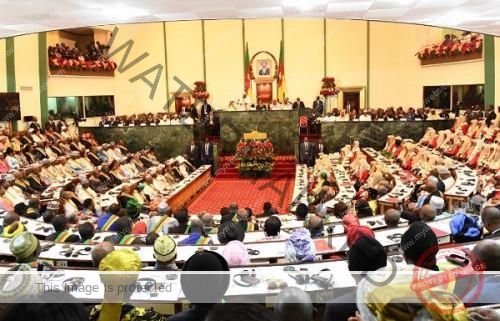
YAOUNDE February 10, 2026 – Each February 11, Cameroon marks National Youth Day with parades, speeches, and celebrations intended to project unity and national continuity. Yet in the country’s English-speaking Northwest and Southwest regions—territories many inhabitants identify as the Federal Republic of Ambazonia—the day evokes a far more complex historical memory.
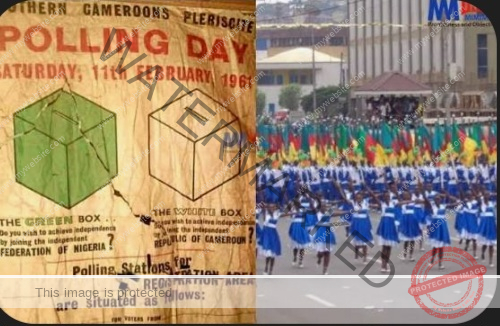
For the Cameroonian state, the date commemorates the 1961 plebiscite that led to the political union between the former British Southern Cameroons and the Republic of Cameroon. For many Ambazonians, however, February 11 represents the beginning of a political arrangement that they believe failed to protect the autonomy, legal traditions, and political guarantees promised at the time of union. Sixty-five years later, this divergence in historical interpretation remains at the heart of one of Africa’s most protracted political crises.
Competing Memories of 1961
The 1961 UN-organized plebiscite offered British Southern Cameroons two choices: integration with Nigeria or union with the Republic of Cameroon. Independence as a separate state was not presented as an option. Southern Cameroons voted to join Cameroon, leading to the formation of a federal structure intended to preserve the territory’s institutions, language, and legal system.
In Yaoundé’s official narrative, this vote represented voluntary reunification and the fulfillment of a shared national destiny. Yet many Anglophone Cameroonians argue that the federal safeguards that justified the union were progressively dismantled, culminating in the 1972 referendum that replaced federalism with a centralized state.
Critics contend that the erosion of federal protections contributed to political and economic marginalization, fostering grievances that have intensified over decades. These frustrations exploded into open conflict in 2016 following protests by lawyers and teachers over perceived cultural and institutional assimilation, eventually escalating into armed confrontation.
Thus, while February 11 is framed nationally as a celebration of youth and unity, many in the Anglophone regions see it as a reminder of unfulfilled constitutional promises.
History and Political Narratives
Every nation constructs narratives around pivotal moments in its formation. The challenge arises when competing memories are not acknowledged within the same political space.
Successive Cameroonian governments have emphasized national cohesion, often portraying separatist movements as threats to stability. Conversely, Ambazonian activists argue that peaceful demands for federal restoration were ignored, leaving separation as the only remaining political path.
The persistence of conflict demonstrates that historical disputes cannot simply be settled through official ceremonies or patriotic messaging. When historical interpretation becomes politicized, commemorative events risk deepening divisions rather than healing them.
Information Wars and Internal Divisions
The present crisis is not fought solely on the battlefield but also across digital platforms and diaspora communities. Political actors, activists, and commentators on all sides compete to shape narratives, often deepening polarization among populations already exhausted by years of violence.
In such an environment, accusations of propaganda, misinformation, and political manipulation are common. Figures who advocate dialogue are sometimes accused of betrayal, while those promoting resistance are labeled extremists. This cycle of mutual suspicion fragments communities and complicates efforts toward peaceful resolution.
The greatest casualty of this information war is often trust—between citizens, political actors, and institutions.
Youth in the Middle of Conflict
The irony of Youth Day celebrations amid ongoing conflict is not lost on many observers. The young people marching in official parades are the same generation disproportionately affected by displacement, unemployment, and insecurity in conflict zones.
Across the Northwest and Southwest regions, thousands of youths have experienced interrupted education, economic stagnation, and forced migration. Others have been drawn into armed groups or security operations, perpetuating a cycle in which young citizens bear the heaviest burden of political deadlock.
Any meaningful national conversation about youth must therefore confront the realities facing young people in conflict-affected regions rather than rely solely on ceremonial symbolism.
Beyond Historical Ghosts
The continuing dispute over the legacy of 1961 illustrates a broader lesson: political unions endure not through force or nostalgia, but through institutions that maintain fairness, inclusion, and mutual respect.
For Cameroon, the unresolved Anglophone question remains one of the central tests of its national project. For Ambazonians, the debate over restoration or autonomy continues to shape political identity and mobilization.
Regardless of political positions, one fact is clear: historical grievances cannot be permanently buried through celebration alone. Durable peace requires confronting uncomfortable questions about governance, representation, and constitutional arrangements.
As Frederick Douglass once observed, the extent of injustice is often measured by what people are compelled to endure in silence. Cameroon’s challenge today is whether it can move beyond competing historical memories toward a political settlement that prevents future generations from inheriting the same conflict.
The ghost of 1961 persists not because history refuses to fade, but because its questions remain unanswered. The future of both Cameroon and Ambazonia depends on how those questions are addressed—not in parades, but in political reality.
Share This Post:
Youth Day and the Generation Caught in Cameroon’s Conflict
Another Ambazonian Hero Abandoned by History: Hon. Sylvester Kilo Kindzeka
Related Post
IS THE WORLD LISTENING: THREE DAYS FOUR FRONTLINES, ASA
SEPTEMBER 24, 1965, THIS DAY IN HISTORY: From Equal
AMBAZONIA’S WAR- IS BIGGER THAN YAOUNDÉ: BRITAIN, FRANCE AND
THE DAY SEPTEMBER 22 1961: — WHAT AMBAZONIA CAN
TRUMP’S “SUPER INTELLIGENCE” ERA: WHAT IT REALLY MEANS —
Why Is Ambazonia More Powerful Than many Imagine.