

Southern Cameroons does not need more symbolic inclusion in a structure that denies its political identity. It needs a settlement based on consent. Until that happens, every new appointment will polish the appearance of unity while leaving the architecture of containment standing.
By Timothy Enongene. Associate Editor-in-Chief, Independentist News
Yaoundé – July 14, 2026 – For more than sixty years, Yaoundé has turned appointment into an instrument of containment: elevating Southern Cameroonian elites, displaying their titles as proof of inclusion, and denying them the independent power required to change the system they are asked to defend.
A System That Survives Through Its Intermediaries
For more than six decades, Yaoundé has repeatedly relied on political figures from Southern Cameroons to defend policies that have steadily weakened the autonomy, institutions and political identity of the territory they claim to represent.
This is not proof that every Southern Cameroonian who enters government is a traitor, nor that every appointment is part of a secret conspiracy. The deeper problem is structural. Cameroon’s highly centralized political order rewards those who defend presidential authority and marginalizes those who insist upon meaningful federalism, constitutional equality or self-determination.
Under both Ahmadou Ahidjo and Paul Biya, inclusion has too often meant incorporation into the machinery of centralization. Prestigious titles are offered, but decisive authority remains concentrated at the presidency. Anglophone officials are then sent back to their communities during moments of crisis to preach unity, defend government policy and absorb public anger over decisions they did not independently make. This system gives central power a local face. It allows Yaoundé to present political containment as national inclusion.
The Ahidjo Era: From Federation to Centralized Rule
The structure emerged during the presidency of Ahmadou Ahidjo. The federation created in 1961 joined East Cameroon and West Cameroon within a constitutional order that formally recognized their distinct political and institutional identities. Southern Cameroonians who supported the arrangement expected federalism to protect their common-law tradition, educational system, public administration and regional government.
The balance did not last. Ahidjo steadily concentrated authority at the federal center, weakened independent political organization and built a dominant-party state. Political rivalry within West Cameroon—especially between John Ngu Foncha and Solomon Tandeng Muna—was exploited by the federal leadership as the position of West Cameroon was progressively reduced.
The historical record supports the conclusion that Yaoundé benefited from these divisions. It does not, however, justify reducing every disagreement between Foncha and Muna to a centrally scripted plot. Both men possessed agency, ambitions and political constituencies of their own. The more defensible charge is that Ahidjo used those divisions to advance a project of national centralization that Southern Cameroons was too divided to resist effectively.
That project culminated in the referendum of May 20, 1972. Conducted nationally under a one-party system, the vote replaced the federation with the United Republic of Cameroon. Official results claimed near-unanimous approval. Whatever formal legality the government assigned to the process, it allowed the more populous East Cameroon to determine the constitutional future of the smaller West Cameroon and extinguished the latter’s federated statehood without a separate vote of its people.
For many Southern Cameroonians, this was not simply administrative reform. It was the constitutional moment in which a promised partnership was converted into a unitary state. Describing it as a constitutional coup is therefore a political and legal interpretation—but one grounded in the undeniable fact that the federation, and with it the government of West Cameroon, ceased to exist.
The Biya Era: Representation Without Independent Power
When Paul Biya succeeded Ahidjo in 1982, he inherited the centralized state and deepened its presidential character. The language changed—advanced democracy, decentralization, national integration—but the location of decisive power did not.
Since the restoration of the office of prime minister in 1991, several politicians from the English-speaking regions have occupied it: Simon Achidi Achu, Peter Mafany Musonge, Ephraim Inoni, Philemon Yang and Joseph Dion Ngute. Their appointments have often been presented as evidence that Anglophones are represented at the highest levels of government.
The title is important, but its constitutional limits are equally important. Cameroon’s own institutional description states that the government implements national policy as defined by the president. The prime minister directs government action, enforces laws and exercises regulatory authority, but does so within a system in which the president defines national policy and retains commanding constitutional power.
It is therefore inaccurate to say that these prime ministers possessed no authority at all. They exercised formal governmental powers. The sharper and more defensible criticism is that none possessed an independent political mandate capable of compelling a fundamental change in the state’s policy toward Southern Cameroons.
Their office did not restore federalism. It did not prevent the erosion of the common-law and educational systems. It did not create an enforceable constitutional settlement. During the present conflict, the prime minister has served principally as the government’s senior emissary to the Anglophone regions, while the strategic direction of the state has remained with the presidency and security establishment. Representation without the power to alter policy becomes political insulation. The official carries the title; the presidency retains the decision.
The Françafrique Inheritance
Cameroon’s centralized state did not develop in an international vacuum. France maintained extensive political, military, economic and personal networks across its former African empire after formal independence. Jacques Foccart, de Gaulle’s principal adviser on African affairs, became one of the central architects and operators of the system later known as Françafrique.
France’s relationship with Ahidjo’s government, including security cooperation and support during the conflict with the Union of the Peoples of Cameroon, is well established. The post-colonial state that emerged in French Cameroun was heavily presidential, security-centered and closely connected to French strategic interests.
What the available public evidence does not conclusively establish is that de Gaulle or Foccart authored a documented master plan specifically instructing Yaoundé to suppress Anglophones as a distinct people. That claim goes beyond what can safely be stated as fact.
The more persuasive argument is institutional. Southern Cameroons brought into the federation a common-law tradition, English-language education, parliamentary habits and expectations of regional self-government. These institutions sat uneasily beside a Francophone presidential system shaped by French administrative practice and by the security priorities of Ahidjo’s government. Over time, the centralized model prevailed.
The containment of Southern Cameroons should therefore be understood not as a single secret order from Paris, but as the predictable result of a state architecture that treated autonomous institutions as obstacles to centralized control. French influence helped shape that architecture; Cameroonian leaders chose to preserve and expand it.
The Anglophone Elite as Political Shield
The most effective instrument of domination is not always an outsider. It is often a respected local figure whose presence allows the system to claim consent.
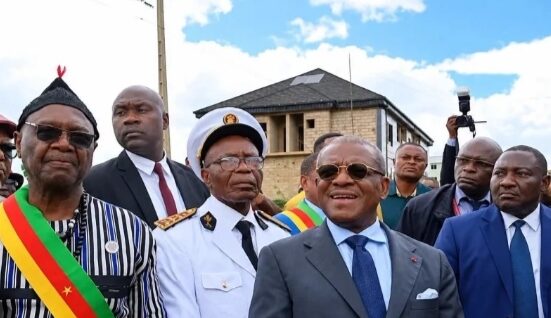
Yaoundé has repeatedly elevated Anglophone politicians, ministers, traditional authorities and party officials who defend the unitary state. They are showcased during national celebrations, diplomatic engagements and regional crises as proof that Southern Cameroonians participate fully in government.
Their visibility performs three functions. First, it turns a structural conflict into an argument among Anglophones, allowing the central state to deny that it is confronting a distinct national grievance. Second, it supplies local messengers who can appeal to family, ethnic and regional loyalties. Third, it enables international partners to mistake appointment for representation and representation for consent.
This does not mean that every officeholder acts from greed or bad faith. Some may believe that reform from within is the least destructive option. Others may value national unity or fear the human costs of separation. A serious editorial should confront their arguments rather than deny their motives.
But the test is not what an appointee says he represents. The test is what his office has enabled him to change. After decades of high-level Anglophone appointments, the constitutional grievance remains unresolved, the conflict continues, and communities across the Northwest and Southwest remain devastated.
The 2016 Crisis Exposed the Limits of Managed Inclusion
The present conflict did not begin with an invasion or an armed separatist campaign. It intensified in 2016 when lawyers and teachers protested the erosion of the common-law and English-language educational systems. Security-force repression, arrests and restrictions on communication helped transform professional grievances into a broader political revolt.
The government subsequently introduced measures including a Common Law Section at the Supreme Court, a Common Law Department at the national judicial training school, bilingualism initiatives, decentralization reforms and a special status for the Northwest and Southwest regions. These measures deserve acknowledgment because publication credibility requires confronting the government’s response honestly.
They have nevertheless failed to resolve the central dispute. They were designed and implemented within the same unitary constitutional order whose legitimacy many Southern Cameroonians contest. They offered administrative adjustment without an agreed political settlement.
The conflict has also produced grave abuses by both government forces and armed separatist groups. Independent human-rights reporting documents unlawful killings, destruction of property, arbitrary arrests and torture attributed to state forces, as well as killings, abductions, attacks on schools and coercion attributed to separatists. No credible defense of Ambazonian rights should conceal abuses committed in the name of Ambazonia.
Protecting civilians is not a concession to Yaoundé. It is a test of whether a liberation movement is capable of building a lawful republic.
The Post-Biya Question
Cameroon will eventually enter a post-Biya era. A change of president, however, will not automatically produce a change of state architecture.
The major succession factions operating within Yaoundé have strong incentives to preserve the institutions through which political authority, public appointments, security power and access to state resources are controlled. A successor may change personnel, rhetoric and alliances while leaving the centralized system substantially intact.
It is therefore too absolute to declare that every possible post-Biya government will reject reform. Political transitions can produce unexpected openings. But Ambazonians should not confuse the possibility of reform with evidence that reform is coming.
Any successor who seeks credibility in Southern Cameroons must do more than appoint another Anglophone prime minister or announce another commission. The minimum test must include an end to attacks on civilians, credible accountability for abuses, release or lawful review of conflict-related detainees, internationally supported negotiations and recognition that the political status of Southern Cameroons cannot be settled by administrative decrees from Yaoundé.
A new face at the presidency will mean little if the constitutional machinery of containment remains untouched.
The Lesson for Ambazonia
Ambazonia cannot base its future on the hope that a benevolent successor in Yaoundé will voluntarily dismantle the system from which he derives power. Neither can it build a credible freedom movement through denunciation alone.
The first task is to distinguish individuals from institutions. Personal attacks on every Southern Cameroonian serving in government may satisfy anger, but they do not explain how the system operates or persuade undecided citizens. The stronger case is that the centralized state converts appointments into instruments of legitimacy while denying those appointees the independent mandate required to renegotiate the political relationship.
The second task is to construct an alternative worthy of recognition. Ambazonia must demonstrate constitutional discipline, civilian protection, transparent finances, representative leadership and the ability to tolerate disagreement. A movement that condemns authoritarianism must not reproduce authoritarian habits within its own organizations.
The third task is diplomatic clarity. The international argument should not rest on the claim that every Anglophone official is a collaborator or that every policy originates in Paris. It should rest on verifiable history: the separate status of British Southern Cameroons, the federal settlement of 1961, the abolition of West Cameroon in 1972, the progressive erosion of its institutions, the failure of internal remedies and the continuing absence of a consensual political settlement.
The Gaullist inheritance matters because it helps explain why centralized authority became so durable. But responsibility today belongs not only to France or to the architects of the post-colonial order. It belongs to the Cameroonian political system and to the officials—Francophone and Anglophone alike—who continue to defend that system without resolving the injustice at its center.
Southern Cameroons does not need more symbolic inclusion in a structure that denies its political identity. It needs a settlement based on consent. Until that happens, every new appointment will polish the appearance of unity while leaving the architecture of containment standing.
Timothy Enongene. Associate Editor-in-Chief, Independentist News