












For Ambazonia, the lesson is clear. Geopolitics is not a distant game played by powerful nations alone. It is a force that shapes opportunities, constrains possibilities, and influences the future of peoples seeking freedom and self-determination. The question is not whether the world is changing. The question is whether Ambazonia is prepared for the opportunities that change may bring.
By Ali Dan Ismael Editor-in-Chief The Independentist News
A Summit Far from Ambazonia, Yet Close to Its Future
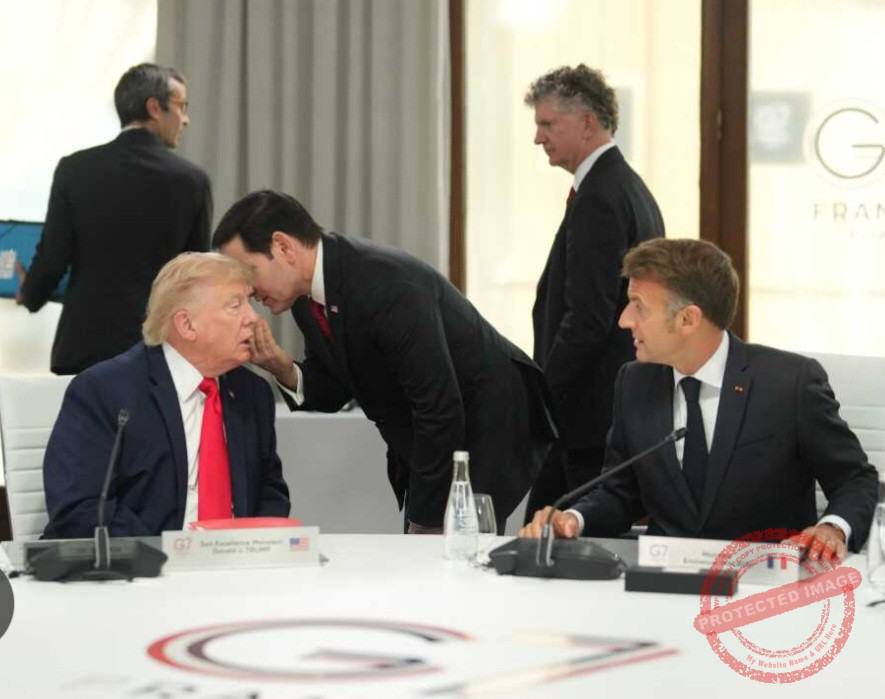
The headlines emerging from the G7 Summit in Evian may appear distant from the daily realities of Ambazonians. Reports of a difficult meeting between French President Emmanuel Macron and U.S. President Donald Trump, disagreements over Ukraine, tensions surrounding Iran, France’s evolving position on Palestine, and growing fractures within the Western alliance seem far removed from the struggle unfolding in Southern Cameroons. Yet history teaches us that small nations and liberation movements ignore geopolitical shifts at their own peril.
What occurred between Macron and Trump is not simply another diplomatic disagreement. It is a reflection of a changing international order. For decades, the Western alliance projected a relatively united front on matters of global security, international governance, and strategic interests. Today, that unity appears increasingly strained. Disagreements over Russia, Ukraine, Iran, Palestine, NATO, and the future direction of global leadership reveal a growing divergence among powers that once moved in near lockstep. For Ambazonia, this development deserves close attention.
Why International Alignments Matter
The Ambazonian struggle has never existed in a vacuum. It has always been influenced by broader geopolitical realities. France, in particular, has maintained deep political, economic, military, and historical ties with the Republic of Cameroon. Successive French governments have generally favored the preservation of state continuity and regional stability over confronting the deeper political questions underlying the conflict in Southern Cameroons.
As long as the major Western powers remained strategically aligned, there was little incentive for any of them to challenge existing assumptions regarding Cameroon. The result was predictable. The conflict remained largely marginalized despite the immense human suffering it produced. However, moments of geopolitical transition often create opportunities that periods of consensus do not.
The Missed Opportunity After AUKUS
Ambazonians should remember that the last significant rupture in Franco-American relations occurred following the collapse of the French-Australian submarine agreement and the creation of the AUKUS security pact in 2021. At the time, relations between Paris and Washington reached one of their lowest points in decades. France accused its allies of betrayal, recalled ambassadors, and openly questioned the reliability of its partners.
For many observers, that moment represented a rare geopolitical opening. When great powers disagree, smaller issues that are normally overshadowed sometimes gain visibility. Yet the Biden administration moved quickly to repair relations with France. President Biden understood that maintaining transatlantic unity was a strategic priority amid growing competition with Russia and China.
Biden, Blinken, and the Return to Transatlantic Unity
The effort to restore trust was reflected throughout the administration’s foreign policy approach. Secretary of State Antony Blinken, widely recognized as a committed transatlanticist and a strong advocate of close cooperation with France and Europe, played a central role in rebuilding the relationship. Throughout his tenure, Washington consistently emphasized partnership and coordination with Paris on major international issues.
Many Ambazonian observers believe that this rapprochement came at a cost. Whether intentional or not, the restoration of Franco-American relations coincided with a period during which Ambazonia largely disappeared from meaningful policy discussions in Washington. While the Biden administration frequently spoke about democracy, human rights, and self-determination in various parts of the world, it showed little appetite for challenging French sensitivities regarding Cameroon and the conflict in Southern Cameroons.
There is no public evidence that Washington deliberately silenced Ambazonian voices. However, international politics rarely operates through explicit directives. More often, priorities are shaped by broader strategic calculations. When maintaining a critical alliance becomes a central objective, issues that risk creating friction are often pushed aside.
For Ambazonia, the practical outcome was unmistakable. During years when human rights crises elsewhere commanded significant international attention, the suffering of Ambazonians remained largely absent from high-level diplomatic conversations in Washington.
France’s Growing Strategic Independence
The current disagreements between Washington and Paris extend beyond Ukraine. One of the most significant developments in recent years has been France’s increasingly independent posture on major international issues, particularly regarding Palestine. While France remains a close ally of the United States, President Macron has shown a growing willingness to pursue positions that differ from both Washington and Israel. France’s support for greater recognition of Palestinian statehood and its criticism of aspects of Israeli policy demonstrate a desire to assert French strategic autonomy.
For Ambazonians, the significance of this shift lies not in the Israeli-Palestinian conflict itself but in what it reveals about French foreign policy. France is increasingly seeking to position itself as an independent global actor rather than simply a participant in a broader Western consensus.
This matters because it demonstrates that long-standing diplomatic positions can evolve when national interests change. Alliances are important, but they are not permanent. Policies once considered untouchable can be reassessed. Strategic realities can produce unexpected shifts.
For Ambazonia, this should serve as a reminder that international politics is fluid. Governments that appear firmly committed to one position today may adopt a different posture tomorrow if circumstances change.
The Significance of Today’s Tensions
This is why the current tensions between Macron and Trump deserve careful examination. The significance lies not in personalities but in what they reveal about the international system. The growing disagreements between the United States and France suggest that the geopolitical assumptions of the past may no longer hold. The Western alliance remains intact, but it is increasingly characterized by competing priorities, divergent interests, and differing visions of global leadership.
The disagreement over Ukraine, Trump’s approach toward Russia, differences regarding Iran, France’s independent position on Palestine, and disputes over broader strategic priorities all point toward a less predictable international environment. For Ambazonians, understanding these developments are not optional. They are strategically necessity.
Risks and Opportunities for Ambazonia
This changing environment presents both risks and opportunities. The risk is obvious. A fragmented international order can make it even harder for smaller conflicts to attract attention. As great powers focus on Ukraine, Iran, China, Palestine, and broader strategic competition, conflicts such as Ambazonia risk being further marginalized. Yet there is also opportunity.
Periods of geopolitical realignment often create diplomatic space that previously did not exist. As alliances evolve and national interests shift, established positions become more fluid. Issues that were once ignored can suddenly become relevant. Voices that were previously excluded can find new audiences.
History offers countless examples of liberation movements that benefited from geopolitical transformations they neither created nor controlled. Their success depended not on predicting the future perfectly but on recognizing opportunities when they emerged.
A New Diplomatic Imperative
This is why Ambazonia’s diplomatic strategy must extend beyond traditional assumptions. The movement cannot afford to rely on any single capital, government, or institution. It must engage Washington, Brussels, London, Ottawa, African capitals, international organizations, human rights institutions, and emerging global actors. The future belongs to movements capable of adapting to changing realities.
The disagreements witnessed at the G7 may seem remote from Buea, Bamenda, Kumbo, Kumba, Mamfe, and countless other communities affected by this conflict. Yet the fate of nations has often been influenced by conversations taking place far beyond their borders.
Preparing for the Next Geopolitical Opening
The world order that emerged after the Cold War is changing before our eyes. The certainties of yesterday are giving way to new alignments and new calculations. Whether Ambazonia benefits from these transformations will depend not merely on the courage of its people but on the strategic vision of its leaders and advocates. When great powers disagree, history often creates openings for smaller nations. The challenge is recognizing those openings before they disappear.
For Ambazonia, the lesson is clear. Geopolitics is not a distant game played by powerful nations alone. It is a force that shapes opportunities, constrains possibilities, and influences the future of peoples seeking freedom and self-determination. The question is not whether the world is changing. The question is whether Ambazonia is prepared for the opportunities that change may bring.
— Ali Dan Ismael Editor-in-Chief



Leave feedback about this