




History is no longer asking where we went to school. History is asking what our schooling, our faith, our prosperity, and our spirituality made us willing to do when home was burning—and what kind of human beings we are preparing to inherit Ambazonia when the fire is finally extinguished.
By Ali Dan Ismael, Editor-in-chief The Independentist News
As Amazon associate this site earns from qualifying purchases
Get work from home tools on Amazon
Excellence Without Collective Responsibility
Ambazonia has produced some of the most highly educated men and women in Africa. For generations, its celebrated schools sent students into universities, professions, governments, corporations, hospitals, engineering firms, banks, law offices, research institutions, churches, international organizations, and businesses across the world. That record deserves recognition, but pride must eventually answer to responsibility.
The North West alone can point to institutions such as Cameroon Protestant College Bali, Sacred Heart College Mankon, Our Lady of Lourdes College Mankon, St. Bede’s College Ashing-Kom, Saint Augustine’s college Nso, CCAST Bambili, Presbyterian Secondary School Mankon, GBHS Mbengwi, GBHS Bamenda, Progressive Comprehensive High School, and St. Paul’s Comprehensive College. These institutions helped educate generations of teachers, civil servants, doctors, engineers, clergy, lawyers, pilots, businesspeople, and community leaders who later served Cameroon and the diaspora.
The question today is no longer whether these schools produced brilliant people. They did. The more difficult question is this: what has all that brilliance done for communities now ravaged by an existential crisis? Ambazonia does not suffer from a shortage of intelligence. It suffers from a shortage of ethical intelligence organized for the common good. That is the uncomfortable argument.
Leaving Ambazonia Was Never the Problem
There is nothing disgraceful about leaving Ambazonia to study, work, prosper, and gain experience abroad. Quite the opposite. A small nation should want some of its brightest citizens to enter the best universities, industries, financial institutions, hospitals, technology companies, engineering organizations, research centers, and public institutions in the world.
Exposure to societies operating at a higher institutional level can become an extraordinary national asset. An engineer in the United States can learn how major infrastructure is financed, designed, regulated, and maintained. A physician in Britain can gain experience in sophisticated health systems. A professor in Canada can enter international research networks. A banker in Europe can learn how capital is mobilized and structured. A technology professional in California can participate in innovation ecosystems. A lawyer practicing internationally can learn how strong institutions protect rights, contracts, evidence, and accountability.
That is not necessarily brain drain. Properly harnessed, it is strategic human-capital expansion. The problem begins when the knowledge leaves and never circulates back. The problem begins when the professional succeeds abroad but the professional experience never strengthens the society that produced him. The problem begins when Ambazonians learn how powerful societies organize themselves and yet fail to translate that knowledge into organization for their own people.
Ambazonia’s tragedy is not that its children went abroad. They should have gone. They should have learned. They should have competed. They should have prospered. They should have become professors, physicians, engineers, financiers, lawyers, executives, entrepreneurs, diplomats, inventors, and scholars.
The tragedy is that too many appear to have left emotionally, institutionally, and civically as well. They learned how functioning societies organize. They saw how national interests are defended. They watched how diasporas influence foreign policy. They learned how capital is mobilized and how institutions survive personalities. Then their own homeland entered catastrophe, and too many retreated into silence, factionalism, or comfortable detachment. That is the scandal.
Other Diasporas Understand the Meaning of Homeland
Look at other peoples confronting existential national questions. Ukrainians abroad have mobilized humanitarian assistance, advocacy, fundraising, public demonstrations, media engagement, and political pressure in support of Ukraine. Palestinian communities around the world remain deeply divided politically, yet Palestine continues to generate humanitarian, legal, student, academic, and public advocacy across borders. Jewish communities likewise demonstrate that success abroad and attachment to a people or homeland are not mutually exclusive. These communities do not speak with one voice on every issue. That is precisely the point.
Unity does not necessarily mean uniformity.
A Ukrainian does not have to approve every Ukrainian politician before helping Ukraine. A Palestinian does not need to belong to one faction before caring about Palestinian civilians. A Jewish professional abroad does not need to endorse every decision of an Israeli government before maintaining attachment to community and country.
Yet among Ambazonians, disagreement too often becomes justification for disengagement. We dislike one leader, therefore we abandon the national question. We distrust one organization, therefore we refuse to support humanitarian activity. We disagree with one faction, therefore everyone associated with it becomes an enemy. We have transformed an existential national crisis into an endless argument among personalities. What is wrong with the Ambazonian elite?
Educated Individually, Disorganized Collectively
Perhaps the most painful answer is that Ambazonian education succeeded magnificently at producing individual achievement while failing to create a comparable culture of collective responsibility. We learned examinations. We learned competition. We learned certificates. We learned scholarships. We learned professional licensing. We learned how to rise inside foreign institutions. We learned how to become doctors, engineers, professors, executives, lawyers, entrepreneurs, accountants, scientists, and clergy.
But we did not learn enough about how successful people organize themselves into collective power. That is why Ambazonia can possess thousands of distinguished professionals across the world while struggling to establish durable institutions capable of mobilizing their knowledge, capital, relationships, and influence. We have excellence without architecture, talent without coordination, wealth without sufficient strategy, religion without enough ethics, and education without enough collective consequence.
When Comfort Makes Catastrophe Invisible
Success abroad can quietly anesthetize political memory. The mortgage gets paid. The children attend good schools. The neighborhood is safe. Water flows. Electricity works. Hospitals function. Police respond. The retirement account grows. The professional title commands respect. The family vacations. Life becomes predictable. Then the homeland begins arriving through a telephone screen.
Another village suffers. Scroll. Another family is displaced. Scroll. Another child loses access to school. Scroll. Another killing is reported. Send condolences. Another humanitarian appeal arrives. Ignore. Another political quarrel begins. Comment. Then Monday morning comes and life resumes. Slowly, catastrophe becomes background noise. The person has not necessarily become cruel. Something perhaps even more dangerous has happened: he has become accustomed to suffering that does not physically touch him.
The Hundred-Dollar Burden
Perhaps nothing exposes this contradiction more painfully than the arithmetic of compassion. Some members of the Ambazonian diaspora occupy large homes, drive expensive automobiles, travel internationally, and organize lavish birthdays, weddings, reunions, graduations, and alumni conventions. Some drive cars that many working people in their host countries could not comfortably afford.
There is nothing inherently wrong with prosperity. Ambazonia should want its sons and daughters to prosper. But then comes a request for humanitarian assistance. A displaced family needs support. A child needs school fees. Someone needs medical assistance. A community needs food. Suddenly $100 becomes an unbearable burden. “We are always contributing.” “There are too many fundraisers.” “I cannot continue giving.” “I have responsibilities.” Sometimes those concerns are legitimate. No individual should be expected to finance an entire national crisis.
But the issue is not really the hundred dollars. The issue is what the hundred dollars reveals. A society exposes its priorities through what its members consider expensive. A $500 evening of entertainment is manageable. A luxury-car payment is manageable. A $2,000 celebration is manageable. Designer clothing is manageable. An overseas vacation is manageable. An elaborate alumni convention is manageable. But one hundred dollars toward humanitarian relief for people trapped in catastrophe at home becomes unsustainable. Something is wrong with that arithmetic.
Wealth for Display, Poverty for Compassion
The problem is not wealth. The problem begins when wealth becomes primarily a language of display. Too much diaspora success is consumed by the need to demonstrate that one has succeeded. The car must announce it. The house must announce it. The party must announce it. The clothing must announce it. The social-media photographs must announce it. The alumni convention must announce it.
Everyone must know that the former student from Bamenda, Buea, Bali, Mankon, Kumba, Kumbo, Mamfe, Nkambe, Wum, or Victoria has finally “made it.” But what exactly does having made it mean if the road behind you is filled with people whose suffering no longer moves you? Success without compassion becomes vanity. Prosperity without responsibility becomes self-absorption. Wealth becomes morally empty when its principal social function is to advertise the distance one has traveled from the hardship one escaped.
Sunday Christianity and Monday Indifference
There is another contradiction that should trouble the conscience of a deeply religious people. On Sunday, many Ambazonians fill churches across Europe, North America, Africa, and elsewhere. They dress beautifully. They worship passionately. They testify about promotions. They thank God for houses, businesses, children, health, professional success, and immigration breakthroughs. When the offering plate arrives, some give generously. Church projects receive support. Religious programs are financed. Pastors and priests are honored. There is nothing wrong with supporting one’s church. But something is spiritually not right or disturbing when a person can make a substantial offering on Sunday and remain almost indifferent on Monday to the suffering of the people from whom he came.
What kind of faith separates worship from responsibility? What kind of spirituality celebrates blessing while ignoring the wounded neighbor? How can one thank God publicly for abundance while privately concluding that one hundred dollars for a displaced family is an unreasonable sacrifice? Religion should deepen compassion, not provide ceremonial cover for indifference.
Faith without concern for suffering becomes performance.
Ambazonia Does Not Lack Religion; It Lacks Spirituality Expressed as Ethics This may be where the deeper crisis lies. What Ambazonia lacks is not religion. What it lacks is enough spirituality translated into ethics. The distinction is fundamental. Ambazonia has churches, denominations, prayer groups, pastors, priests, prophets, Scripture, ceremonies, and Sunday worship. Religion is everywhere. But spirituality goes deeper.
Religion asks where you worship. Spirituality asks how you live. Religion may identify your denomination. Spirituality asks whether you can be trusted. Religion produces ceremonies. Spirituality produces conscience. Religion may encourage an offering. Spirituality asks whether you can ignore the hungry person outside the sanctuary. Religion may teach us to pray for justice. Spirituality asks whether we practice justice when hiring an employee, awarding a contract, managing public money, choosing a leader, or dealing with someone from another county. That is where spirituality arrives at the door of ethics.
Can I steal public money and call myself spiritual? Can I practice tribal favoritism and claim spiritual maturity? Can I destroy another person’s reputation because we belong to opposing political factions and then spend Sunday preaching love? Can I demand justice for my county while ignoring injustice suffered by another? These are the questions Ambazonia must begin asking. Our deepest spiritual deficit may not be the absence of belief. It may be the failure to consistently translate belief into ethical discipline.
A New Wind of Ethical Teaching Is Blowing Yet the story is not entirely one of ethical decline. A new wind of ethical and spiritual teaching appears to be blowing across Ambazonian social media. The conversation is beginning to move beyond denomination, hierarchy, ritual, and institutional performance toward something more personal and demanding: conscience, integrity, compassion, truth, responsibility, and the individual’s relationship with God.
Among the voices contributing prominently to this emerging conversation is Judith Elondo, whose book Connect with God advances a deceptively simple proposition: connect with God. Not merely with an institution. Not merely with a denomination. Not merely with a religious personality. Not merely with a ceremony.
Connect with God.
That shift matters. People exhausted by war, political manipulation, displacement, poverty, betrayal, and social fragmentation increasingly hunger for spiritual nourishment that speaks directly to conscience. Many are tired of forms of traditional religiosity that seem disconnected from the ethical crises around them. They look at political corruption, injustice, human suffering, and compromised institutions and ask whether religious leadership has sometimes become too comfortable with established power or too cautious in confronting abuse.
Whether every such criticism is fair to every religious leader is not the point. The perception matters because when people believe institutional religion has become too close to political power, they begin searching elsewhere for moral clarity. They may not be abandoning God. They may be searching for God beneath the institutional noise.
Connect with God and the Return to Conscience
The significance of Connect with God therefore extends beyond religion. Its larger contribution may lie in shifting responsibility back toward the individual human being. Where is God in my behavior? What does faith demand from me? How do I treat another person? Can I claim spiritual maturity while exploiting the vulnerable? Can I pray for justice while practicing favoritism? Can I worship God while remaining indifferent to displaced people? Can I speak about divine love while allowing tribal hatred to determine my conduct? These questions do not stop at theology. They walk directly into ethics. And once spirituality reaches ethics, it begins to matter for nation-building. When Centralization Weakened the Ethical Foundation There is also a historical dimension that the Ambazonian elite must confront.
The older mission schools did more than prepare students for examinations. Whatever their limitations, many operated within educational cultures that placed considerable emphasis on discipline, personal conduct, service, responsibility, and character. Education was not simply about what the student knew. It was also about the kind of person the student was expected to become. Then the institutional environment changed.
As missionary control receded and Southern Cameroons became increasingly integrated into a centralized administrative order, civic ethics increasingly competed with patronage, political loyalty, access, and tribal calculation. Appointments mattered. Connections mattered. Where somebody came from mattered. Who knew whom mattered. Merit competed with loyalty. Competence competed with favoritism. Civic obligation competed with ethnic interest. Ethics competed with tribalism. Too often, tribalism won. The consequences went deeper than politics. They entered the social imagination.
The question slowly shifted from What is right? to Who is my person? From Who is competent? to Where does he come from? From What strengthens the public good? to What strengthens my group? This is how a society becomes increasingly educated while becoming institutionally weaker. Degrees multiply while trust declines. Professionals multiply while civic ethics deteriorate. Churches multiply while compassion becomes selective. Political organizations multiply while national cohesion disappears. Everyone belongs somewhere. Too few belong first to the common good.
When Tribalism Defeats Conscience
Tribal identity itself is not the enemy. Every people has a right to celebrate ancestry, language, culture, county, village, and tradition. The danger begins when identity becomes a moral hierarchy. When my person must win because he is my person. When incompetence becomes acceptable because the official is from my county. When corruption becomes forgivable because the thief is “one of us.” When injustice becomes tolerable because the victim comes from another group. At that point tribalism has overwhelmed conscience. That is not merely a political failure. It is an ethical and spiritual failure.
Ethics must sit above tribe. Citizenship must sit above favoritism. Competence must sit above connection. Justice must sit above political loyalty. Truth must sit above faction. A new flag cannot accomplish this by itself. A constitution cannot accomplish it by itself. Only a deliberate civic culture can restrain these instincts. That culture must begin in education.
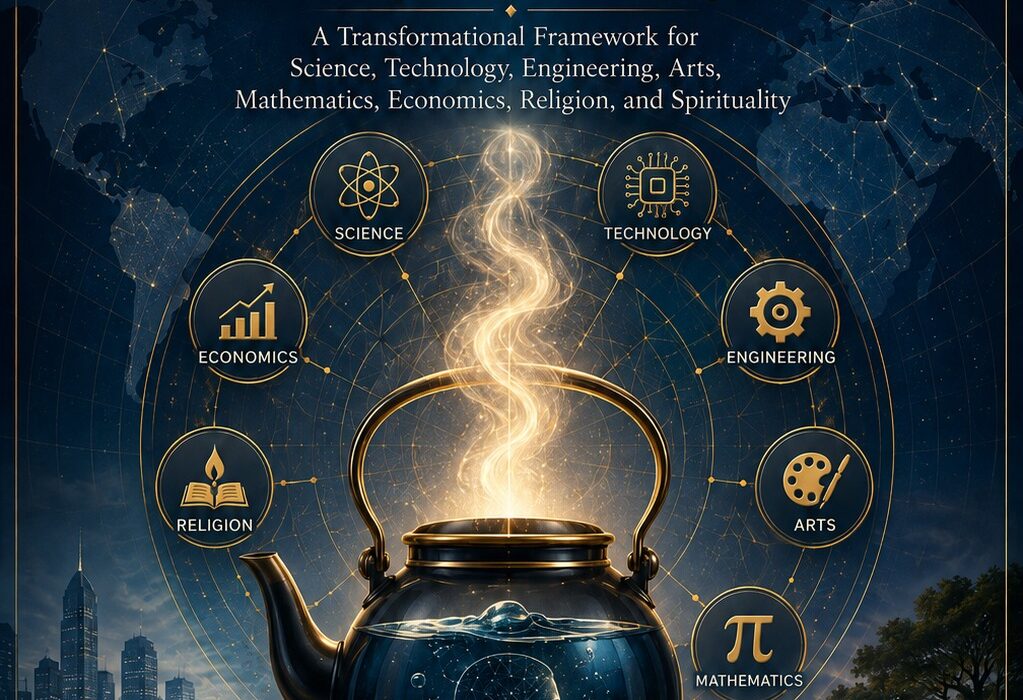
STEAMERS: Judith Elondo’s Roadmap for Rebuilding Human Capital
This is precisely why STEAMERS, an educational framework invented by Judith Elondo, deserves serious attention in the reconstruction of Ambazonian human capital. Her forthcoming book, STEAMERS Education, provides a roadmap for an educational system that does not simply imitate either colonial schooling or indigenous tradition, but instead seeks to recover the strengths of both and mold them together through an explicit ethical foundation.
The significance of this idea lies in its refusal to accept a false choice between modern technical education and indigenous formation. Ambazonia inherited from missionary and colonial education important strengths: discipline, literacy, structured scholarship, scientific inquiry, academic rigor, professional preparation, and exposure to wider systems of knowledge. These institutions taught generations how to read, reason, compete, organize, and enter modern professions.
But indigenous education possessed strengths of its own. It emphasized communal responsibility, respect for elders, practical knowledge, apprenticeship, social obligation, oral history, cultural memory, stewardship of land and community, and the understanding that the education of a child ultimately belonged to the survival of the whole community.
Neither tradition was perfect.
Colonial education could detach educated people from local knowledge and train them primarily to function within administrative systems created elsewhere. Indigenous systems could be constrained by hierarchy, inherited custom, unequal opportunity, and limited exposure to modern science and technology. The answer is therefore not nostalgia for either system. The answer is synthesis.
That is the promise of Judith Elondo’s STEAMERS Education: take the intellectual and technical strengths of modern education, recover the community-centered wisdom embedded in indigenous formation, and bind both together through ethics, spirituality, responsibility, and service. Ambazonia certainly needs science, technology, engineering, arts, mathematics, entrepreneurship, and research. But technical education alone cannot build the society we claim to desire. We already know how to produce intelligent people. The harder question is how to produce trustworthy people.
A brilliant engineer without ethics can help corrupt a procurement system. A brilliant banker without ethics can manipulate capital. A brilliant lawyer without ethics can weaponize law. A brilliant politician without ethics can convert public office into private property. A brilliant technologist without ethics can weaponize information. A brilliant academic without ethics can rationalize injustice. Religion without ethics becomes theater. Education without ethics can produce sophisticated selfishness.
STEAMERS therefore matters because it restores a dimension modern education too often pushes to the margins: the formation of the whole human being. The question cannot be only What can this child do? It must also be What kind of human being are we forming? Can this person be trusted? Will this person tell the truth when lying is profitable? Will this person select competence over tribal loyalty? Will this person protect public resources when nobody is watching? Will this person recognize the dignity of another citizen regardless of county or ethnicity? Will this person understand that public office is stewardship rather than inheritance? Will this person use knowledge to build rather than dominate? Those questions take education beyond examinations and employment. They take it into civilization.
Where STEAMERS Education Meets Connect with God
This is where Judith Elondo’s forthcoming STEAMERS Education and her spiritual teaching in Connect with God become parts of the same larger intellectual project. Connect with God begins with the inner person: conscience, spirituality, personal responsibility, and the relationship between belief and conduct.
STEAMERS Education carries that principle into the formation of the future citizen. One asks: Who are you becoming inside? The other asks: How should society educate you so that knowledge, character, competence, spirituality, and responsibility reinforce one another? Both ultimately arrive at ethics. This is particularly important for Ambazonia because the problem is no longer merely access to education. Ambazonians have demonstrated for generations that they can master academic systems and succeed internationally. The deeper problem is whether education produces citizens capable of converting knowledge into collective advancement.
Judith Elondo’s STEAMERS framework proposes a future in which the Ambazonian child does not have to choose between modernity and cultural rootedness. The student can become scientifically competent without becoming culturally detached, technologically sophisticated without becoming ethically empty, entrepreneurial without becoming predatory, spiritually grounded without becoming religiously intolerant, and proud of indigenous identity without allowing tribal loyalty to override justice. That is the synthesis Ambazonia needs.
It recovers the discipline and intellectual rigor associated with the strongest traditions of missionary and colonial education while reclaiming the communal responsibility, practical wisdom, cultural identity, and social connectedness embedded in indigenous education. But it adds the missing governing principle: ethics. Without ethics, the strengths of either educational tradition can be corrupted. Knowledge becomes power without responsibility. Tribe becomes identity without justice. Religion becomes ceremony without conscience. Technology becomes capability without restraint. Wealth becomes accumulation without stewardship. Politics becomes authority without service.
STEAMERS seeks to prevent that fracture by making ethical formation part of human-capital development itself. Moral Infrastructure Is Infrastructure Too We speak constantly about infrastructure: roads, bridges, electricity, water, ports, airports, hospitals, telecommunications. All will be necessary. But another infrastructure exists without which the others eventually collapse: moral infrastructure.
A bridge can be perfectly designed and still fail if the construction money is stolen. A hospital can be beautifully constructed and fail if appointments depend upon favoritism. A school can contain laboratories and computers and still fail if cheating becomes normalized. A government can possess an excellent constitution and become authoritarian if leaders lack ethical restraint. A treasury can operate sophisticated accounting systems and still be looted if those controlling it possess no conscience.
Technology cannot replace character. Law cannot completely replace character. Audits cannot completely replace character. Eventually every institution reaches a moment when one human being must decide: Will I do what is right even when I could get away with doing what is wrong? That is where spirituality meets ethics. That may ultimately be the most important infrastructure Ambazonia ever builds. A Prosperous Diaspora With a Conscience
This ethical awakening cannot apply only to people at home. It must also reach the diaspora. Nobody is asking Ambazonians abroad to become poor. Become wealthier. Build companies. Buy homes. Educate your children. Become professors. Become executives. Become millionaires. Become billionaires. Enter government, technology, finance, engineering, law, medicine, diplomacy, and academia at the highest levels.
Ambazonia does not need an impoverished diaspora. It needs a prosperous diaspora with a conscience. Enjoy the good car. Take the vacation. Celebrate the wedding. Attend the alumni convention. But after all that, surely something must remain for the people whose society helped form you. The objective is not guilt. The objective is circulation. How does your knowledge return? How does some of your capital return? How do your networks become useful? How does professional experience become institutional capacity? How does personal success create opportunity beyond your immediate family? Elite Alumni Must Show the Dividend
Some of the great schools of Southern Cameroons possess powerful alumni traditions. CPC Bali’s BOBA is described as one of the strongest alumni associations in the country, while Sacred Heart College’s SHESA has an active worldwide alumni body.
That is impressive. But strength must eventually be measured in more than conventions, school songs, photographs, and nostalgia.
Where are the permanent scholarship endowments for displaced children? Where are the medical networks? Where are the reconstruction funds? Where are the engineering advisory groups? Where are the legal documentation centers? Where are the technology academies? Where are the professionally managed investment funds? Where are the research institutions? Where are the international advocacy networks? Where are the transparent humanitarian foundations capable of operating across political divisions?
What has alumni power actually built? That is the question.
“I went to Sacred Heart.” “I am Lourdes.” “I am CPC.” “I am St. Bede’s.” “I am CCAST.” “I am Saker.” Excellent. Now complete the sentence: And therefore we built what? Prestige without productive consequence becomes vanity. The WhatsApp Republic Cannot Build a Nation Ambazonians have developed one extraordinary form of institutional capacity: WhatsApp.
Everyone has intelligence. Everyone knows what happened. Everyone knows who betrayed whom. Everyone knows which leader is legitimate. Everyone has a voice note. Everyone has a screenshot. Everyone knows exactly what somebody else should do.
Monday produces an argument. Tuesday produces accusations. Wednesday produces leaked conversations. Thursday produces another faction. Friday produces another fundraising controversy. Saturday produces another organization. Sunday everybody invokes God. Monday the cycle begins again.
Meanwhile displaced families remain displaced. Children remain without stable education. Communities remain damaged. A people cannot WhatsApp itself into nationhood. Communication is useful. Organization is indispensable.
From Brain Drain to Circulatory Human Capital
For generations, the educational trajectory too often looked like this: Village → elite school → university → foreign country → professional career → retirement. That is linear. Resources flow outward. The new model must become circular: Ambazonia → education → international exposure → professional excellence → knowledge + capital + networks + institutional experience → Ambazonia. Leave. Learn. Succeed. Become influential. Then reconnect.
The person does not necessarily have to return physically. The knowledge can return. The investment can return. The professional network can return. The mentorship can return. The scholarship can return. The diplomatic access can return. The institutional experience can return. But something else must circulate too: integrity, service, professional ethics, respect for merit, compassion, responsibility, tolerance across county lines, and commitment to future generations. Otherwise we will import the technologies of developed societies while preserving the ethical failures of the institutions we condemn.
A New Ranking for the Elite Schools
Perhaps Ambazonia should stop ranking elite schools mainly by examination results, famous alumni, and nostalgia. A new ranking is needed. Which alumni association educates the most displaced children? Which mobilizes the most productive capital? Which creates the most scholarships? Which organizes the greatest professional expertise? Which supports the strongest health initiatives? Which finances entrepreneurs? Which creates research institutions? Which prepares reconstruction plans? Which maintains the most transparent endowment? Which teaches ethics alongside excellence? Which produces citizens capable of placing the common good above tribal advantage?
Those are the league tables history will remember. An elite school should no longer be satisfied to say: “Our graduates are everywhere.” It should be able to say: “Because our graduates are everywhere, our people are stronger at home.”
History Has Changed the Examination
For generations, Ambazonians took examinations: Common Entrance, GCE Ordinary Level, Advanced Level, university examinations, professional examinations, licensing examinations. Many passed brilliantly. But history has now set another examination. There is one question: What did you do with everything you learned when your people needed you most? No multiple choice. No distinction. No honorary doctorate. No alumni medal. No professional title. No luxury automobile. No church offering. No lavish party. No photograph from London, Toronto, Washington, Paris, Brussels, or Houston can answer it.
Only evidence can: children educated, families assisted, institutions created, capital mobilized, knowledge transferred, communities sustained, professionals organized, diplomatic doors opened, research conducted, economic plans prepared, ethics defended, tribal favoritism rejected, and lives improved. That will be the transcript.
The Disgrace Is Not Success. It Is Indifference.
The historical record rightly celebrates these schools as institutions through which the North West invested heavily in education and produced generations of professionals, while alumni networks continued supporting education and infrastructure. That legacy deserves respect. But every generation must prove that its education still matters.
Leaving Ambazonia was never the disgrace. Going to America was not the disgrace. Moving to Britain was not the disgrace. Becoming Canadian, German, Australian, French, or American was not the disgrace. Becoming wealthy was not the disgrace. Buying the beautiful home was not the disgrace. Driving the luxury automobile was not the disgrace. Getting the PhD was not the disgrace. Becoming a professor, surgeon, engineer, lawyer, banker, entrepreneur, or executive was not the disgrace.
All of those achievements can strengthen Ambazonia. The disgrace is to acquire the knowledge of the world’s most successful societies, enjoy their security, learn how their institutions work, accumulate wealth and influence, and then behave as though the destruction of the society that produced you is somebody else’s problem.
The disgrace is to discover that $100 for a suffering family is financially unbearable while thousands of dollars for personal display remain affordable. The disgrace is to fill church offering baskets while emptying the heart of compassion for one’s own people. The disgrace is to boast endlessly about elite schools while constructing no corresponding architecture of collective responsibility. The disgrace is to replace ethics with tribal loyalty, merit with connection, service with self-interest, and citizenship with faction. The disgrace is not diaspora. It is detachment. It is not prosperity. It is indifference. It is not education. It is educated abandonment.
Bringing Back the Soul of the People
This is why the new ethical conversation matters. Judith Elondo’s Connect with God and her forthcoming STEAMERS Education point toward something Ambazonia desperately needs: the return of conscience to education, spirituality to ethics, and ethics to everyday citizenship. Connect with God addresses the inner human being. STEAMERS Education carries that ethical formation into the classroom and into the architecture of future human-capital development. One nourishes the conscience; the other asks how an educational system can produce citizens who combine modern competence, indigenous rootedness, and ethical responsibility.
Together, they point toward a deeper transformation. Science with conscience. Technology with responsibility. Engineering with integrity. Entrepreneurship with stewardship. Indigenous wisdom with modern knowledge. Education with character. Spirituality with ethics. Prosperity with compassion. Freedom with responsibility.
The rebuilding of Ambazonia cannot be only about institutions outside the human being. It must also be about rebuilding the human being who will operate those institutions. For perhaps the greatest deficit facing Ambazonia is not intelligence. It is not professional talent. It is not educational achievement. It is not even religion. It is the failure to make ethics govern intelligence, wealth, power, tribe, politics, and faith.
That is why the new wind of ethical teaching blowing across Ambazonian social media deserves attention. If it can move the conversation from religion toward spirituality, from spirituality toward conscience, from conscience toward ethical conduct, and from ethical conduct into the education of the next generation, it may begin recovering something that war, centralization, tribalism, political manipulation, and institutional decay have steadily weakened: the soul of the people.
History is no longer asking where we went to school. History is asking what our schooling, our faith, our prosperity, and our spirituality made us willing to do when home was burning—and what kind of human beings we are preparing to inherit Ambazonia when the fire is finally extinguished.
Ali Dan Ismael, Editor-in-chief The Independentist News
As Amazon associate this site earns from qualifying purchases
Get work from home tools on Amazon
https://amzn.to/4gx1LC9