

The Africa we should build is therefore not an Africa without nations. It is an Africa in which nations are secure enough to cooperate, sovereign enough to negotiate, democratic enough to respect their citizens, economically capable enough to retain more of the value they create, and wise enough to understand that presidents, parties, armies, colonial borders, and inherited political arrangements are never ends in themselves. The ultimate purpose of political institutions is the welfare and dignity of the people. And the people must remain the final authors of Africa’s destiny.
By Timothy Enongene
Associate Editor-in-Chief, The Independentist News
Buea – 14 August 2026 – Africa has spent generations explaining what was done to us: documenting the scars of colonialism, recounting the extraction of our resources, examining the artificial borders imposed upon African peoples, and demanding recognition of the injustices that helped shape the modern African state. That history matters. It must neither be forgotten nor trivialized. But there comes a point when a people must move beyond explaining what happened to them and begin deciding what they intend to build for themselves.
The world is reorganizing rapidly. Nations are strengthening their economic positions, securing strategic resources, competing for technology and markets, protecting supply chains, and constructing alliances capable of influencing global affairs. Africa cannot continue watching from the sidelines while possessing some of the world’s greatest concentrations of natural resources, agricultural potential, human capital, and strategic territory. One of the continent’s greatest unfinished projects is therefore the construction of an African unity that is economically intelligent, politically mature, strategically sovereign, and fundamentally centered on the dignity and freedom of African peoples.
For decades, African governments have spoken about unity while the continent has remained divided among dozens of political jurisdictions, administrative systems, currencies, border regimes, and national agendas. The African Union inherited the aspirations of the Organisation of African Unity, but aspiration without structural transformation will not produce the Africa future generations deserve. If Europe could move from centuries of devastating warfare toward a system in which sovereign states cooperate through common institutions, freer movement, integrated markets, and shared rules while retaining their national identities, Africans should at least be willing to ask whether permanent fragmentation must remain our natural political condition.
Africa should not mechanically copy Europe. African history, institutions, political cultures, security challenges, and patterns of development are different. But there is an important principle worth considering: sovereign states can construct institutions that make cooperation more valuable than division.
A future African Union should therefore aspire to become a genuine continental community rather than remain primarily an organization of governments that meets periodically while ordinary Africans continue to experience borders principally as barriers to movement and opportunity. This does not require the immediate abolition of African states. Unity does not require political uniformity, nor should continental integration mean that one government acquires authority to dictate the internal affairs of every other nation. The objective should instead be a community of sovereign African states whose governments retain responsibility for their territories and resources while recognizing that certain interests are stronger when pursued collectively.
Africa should aspire to easier movement of citizens across the continent, more effective use of an African passport or mutually recognized travel systems, simplified rules for residence and employment, continental infrastructure corridors, stronger intra-African trade, integrated payment systems, and coordinated positions on matters of major strategic importance. The continent must increasingly become a space in which an African can move, study, trade, invest, work, and build relationships across borders without being treated automatically as an outsider.
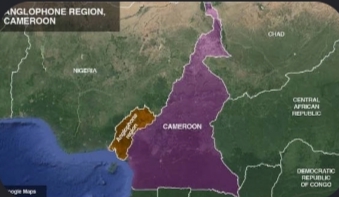
The Ambazonian perspective is particularly important to this discussion because African unity cannot mean preserving every inherited political arrangement at any cost. Ambazonians have experienced, in the most painful manner, what can happen when territorial integrity is elevated above every competing consideration concerning political legitimacy, human rights, constitutional history, and the aspirations of a population. The armed conflict that escalated from 2017 has produced an enormous human cost. Ambazonian sources have placed the number of Ambazonians killed at more than 70,000, although casualty estimates remain contested and require careful independent documentation. Whatever one’s political position on the conflict, the suffering of civilians cannot simply disappear from Africa’s continental conversation.
An Africa committed to peace, democracy, and human rights cannot treat territorial integrity as a principle that automatically answers every political question. This is where the African Union’s own Constitutive Act becomes important. Article 4(b) affirms respect for borders existing at the achievement of independence, but Article 4 also contains principles concerning sovereign equality, peaceful settlement of conflicts, democratic governance, human rights, the rule of law, and good governance. The Ambazonian argument is that these principles should be read together rather than reducing the entire constitutional morality of the African Union to one provision concerning borders. Respect for established borders is important to continental stability, but it should not become a blank cheque for indefinite violence, collective punishment, political exclusion, or the suppression of legitimate constitutional grievances.
African institutions must become capable of defending both territorial order and human dignity. Southern Cameroons itself offers an important historical example of how intense political competition can be managed without destroying a society. In 1959, British Southern Cameroons experienced a peaceful democratic transfer of power after John Ngu Foncha’s KNDP defeated the government associated with Emmanuel Moka Lifafa Endeley. Endeley accepted the electoral outcome, and political authority passed peacefully to Foncha. Historical accounts have described the transition as an unusually dignified transfer of power in an African territory approaching decolonization. The United Nations record also preserves evidence of political engagement between Foncha, as Premier, and Endeley, as Leader of the Opposition, concerning the future of the Trust Territory.
That political culture deserves to be remembered. It demonstrates that disagreement among Africans need not culminate in the destruction of African lives. It is therefore worth imagining a different political history. What if the future of former British Southern Cameroons had been handled completely within the spirit of decolonization and the freely expressed wishes of its people? United Nations General Assembly Resolution 1514 (XV), adopted on 14 December 1960, proclaimed the right of peoples to self-determination and affirmed that peoples should freely determine their political status while pursuing their economic, social, and cultural development.
The Ambazonian historical argument is that a fuller application of that principle might have permitted an independent Southern Cameroons—Ambazonia—to emerge as a sovereign African state while maintaining deep economic, cultural, and strategic relations with neighboring states.
Whether one agrees with that interpretation or not, there is nothing inherently contradictory about an independent Ambazonia participating in a more integrated Africa. Indeed, that may illustrate precisely what a mature African Union should make possible. Ambazonia could administer its own political institutions and resources while participating in continental arrangements concerning trade, free movement, infrastructure, collective security, and diplomacy.
Sovereignty should not mean isolation. African unity should not mean absorption. The two can coexist when integration is founded upon voluntary cooperation, mutual respect, democratic legitimacy, and sovereign equality. The same principle should extend throughout Africa. If a citizen of one African country finds employment in another, that person should not automatically become a target of xenophobia or political resentment merely because an inherited colonial border has been crossed. Episodes of xenophobic violence in South Africa should remind the continent that formal independence without a corresponding continental consciousness can reproduce divisions that colonialism helped entrench.
An African worker should be able to contribute productively in another African society while respecting its laws, culture, institutions, and local communities. Continental integration must therefore be accompanied by responsibility and reciprocity. Free movement cannot mean lawlessness, just as sovereignty cannot mean exclusionary nationalism.
African unity must also never become an excuse for suppressing democracy. A continent that removes barriers between states while silencing citizens within those states would simply create a larger political structure without solving the problem of unaccountable power. Democratic institutions may take different constitutional forms because African histories and societies differ, but one principle should remain fundamental: political authority must ultimately be accountable to the people.
There should not be one definition of democracy for Europe and another for Africa in which governments deny citizens meaningful political choice while claiming cultural exceptionalism. Democracy can take different institutional forms, but it retains identifiable principles: public participation, accountability, rule of law, fundamental rights, peaceful political competition, and the ability of citizens to determine who governs them.
The United Kingdom of Great Britain and Northern Ireland provides a useful illustration, not because Africa should imitate Britain, but because democratic government does not require every society to adopt the same constitutional architecture. The United Kingdom combines parliamentary democracy with a hereditary monarchy constrained by law and constitutional convention. Other democracies are presidential republics. Still others use different combinations of federalism, parliamentary government, constitutional courts, monarchies, local authority, and devolved institutions.
The lesson is not that Africa should reproduce a foreign model. It is that the constitutional form matters less than whether political authority is genuinely accountable. A republic is not democratic simply because it calls itself a republic. A constitutional monarchy is not undemocratic simply because it retains a monarch.
The relevant questions are more demanding: Who governs? By what authority? Under what legal restraints? Can citizens challenge the government? Can power change hands peacefully? Are minorities protected? Can courts restrain political authority? Can citizens speak, organize, vote, criticize, and participate without fear?
A future African Union should therefore become a union of peoples as well as a union of states. It should develop institutions capable of protecting citizens when governments seriously violate agreed continental principles, credible mechanisms for peacefully resolving political disputes, practical standards for movement and employment, stronger institutions for infrastructure and trade, and democratic mechanisms through which Africans themselves can influence the direction of continental affairs.
Such a union would not eliminate national identities. An Ambazonian could remain Ambazonian, a Ghanaian Ghanaian, a Nigerian Nigerian, and a Kenyan Kenyan while simultaneously possessing a meaningful African identity carrying practical rights and responsibilities. The economic case for deeper integration is equally compelling. Africa cannot continue exporting raw materials, importing finished products at prices determined elsewhere, and congratulating itself for possessing enormous mineral and agricultural wealth. Resource possession is not the same as economic power.
A genuinely integrated continent could build regional value chains, process more of its minerals within Africa, manufacture a greater proportion of what Africans consume, develop infrastructure corridors connecting productive regions to markets, integrate electricity systems, strengthen digital networks, expand financial interoperability, and create an internal market capable of supporting globally competitive African enterprises.
The resources of individual countries should remain subject to legitimate national authority, but African states can cooperate so that those resources become foundations for industrialization rather than permanent channels of external dependence. Sovereignty over resources and continental economic cooperation are not opposites. Properly designed, they can reinforce one another.
Strategically, Africa must also learn to speak with greater coherence. A continent containing more than a billion people should not repeatedly discover that decisions affecting its resources, climate, security, migration, debt, technology, and economic future are being shaped elsewhere while African states negotiate separately from positions of comparative weakness.
African governments need not agree on every question. Neither Europe, Asia, nor the Americas speak with a single political voice. But African states should recognize the considerable leverage available when they coordinate on strategic minerals, global trade, technology, food security, climate policy, international finance, transportation, and diplomacy.
The world will not wait for Africa to become organized. Other powers are already strengthening supply chains, securing access to critical resources, developing technological ecosystems, protecting industrial capacity, and competing for influence throughout the continent.
African unity must therefore become more than a ceremonial slogan repeated at summits. It must become something ordinary Africans can experience. A young African should increasingly be able to travel to another African country without unnecessary bureaucratic obstacles. Students should be able to pursue education across borders under transparent rules. Entrepreneurs should be able to establish businesses and trade across African markets more easily. Workers should be able to move lawfully where employment exists. Payment systems should make cross-border commerce simpler. Transport, electricity, digital networks, and industrial corridors should connect African economies to one another rather than directing nearly every productive relationship outward.
The African Union should become a political space in which sovereignty and integration reinforce rather than weaken one another. For Ambazonians, an important lesson lies within this vision. The demand for self-determination should not automatically be interpreted as a rejection of Africa. A people can demand political sovereignty precisely because it believes political authority should serve the people rather than become an instrument for suppressing them. Ambazonia can seek its own political destiny while remaining committed to an Africa in which borders become less obstructive, economies become more interconnected, citizens move more freely, and every nation respects the sovereignty and dignity of its neighbors.
The Africa of tomorrow should not be a continent where unity means compelling unwilling peoples indefinitely to remain within political arrangements they experience as illegitimate. It should be a continent where cooperation becomes attractive because it produces security, prosperity, dignity, mobility, and opportunity. The choice before Africa is therefore not simply between nationalism and unity or between sovereignty and integration. The deeper choice is between an Africa that treats inherited political arrangements as permanently beyond examination and an Africa confident enough to redesign its institutions for the century ahead.
A restructured African Union can learn from the experience of the European Union without becoming its replica. It can combine sovereign member states with stronger continental institutions, freer movement, economic integration, democratic standards, collective strategic interests, and mechanisms for peaceful conflict resolution. It can become an African community in which sovereignty is respected but is never treated as an excuse for impunity, and in which territorial integrity is protected without making human dignity and legitimate political grievances irrelevant.
The world is moving rapidly, and history will not pause while Africa decides whether it is ready. Either Africa develops stronger systems of voluntary cooperation, democratic legitimacy, economic integration, strategic coordination, and mutual respect for sovereignty, or it risks remaining extraordinarily wealthy in resources while painfully weak in collective influence. The choice belongs to Africans themselves.
For Ambazonians, that choice includes the claim that peoples should be able to determine their political destiny while participating in a wider African project founded not upon domination but upon sovereign equality, freedom, mobility, democracy, responsibility, and shared prosperity.
The Africa we should build is therefore not an Africa without nations. It is an Africa in which nations are secure enough to cooperate, sovereign enough to negotiate, democratic enough to respect their citizens, economically capable enough to retain more of the value they create, and wise enough to understand that presidents, parties, armies, colonial borders, and inherited political arrangements are never ends in themselves. The ultimate purpose of political institutions is the welfare and dignity of the people. And the people must remain the final authors of Africa’s destiny.
Timothy Enongene
Associate Editor-in-Chief, The Independentist News