

The nations that will dominate the twenty-first century are not necessarily those with the largest populations or the largest territories. They are the nations that successfully combine vision, infrastructure, technology, and competent institutions. Energy sits at the centre of that equation.
By Timothy Enongene
Associate Editor-in-Chief, The Independentist News
WHEN POWER MEANT MORE THAN ELECTRICITY
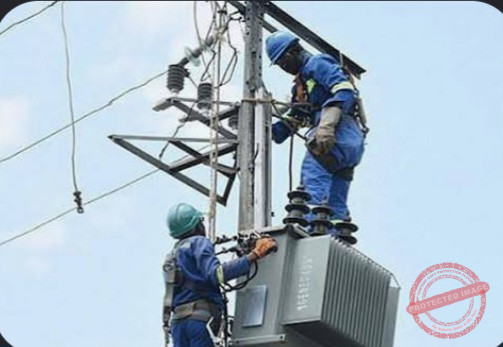
Electricity is often taken for granted until it disappears. Yet behind every functioning economy stands an energy system capable of powering homes, hospitals, schools, factories, farms, and industries. Nations rise when they generate reliable energy. Nations stagnate when they cannot. For many older citizens of Southern Cameroons (Ambazonia), the story of POWERCAM represents more than the memory of an electricity company. It represents a period in which critical infrastructure was managed closer to the people it served. Whether viewed through the lens of history, economics, or governance, the experience offers valuable lessons for the future. The question today is not merely what happened to POWERCAM. The more important question is what Ambazonia should learn from that experience.
THE STRATEGIC IMPORTANCE OF ENERGY
No modern nation can prosper without energy security. Reliable electricity determines whether factories operate, whether students can study after sunset, whether hospitals can preserve medicines, and whether businesses can compete in international markets. Energy is not simply a utility. It is the foundation upon which economic development is built. The history of power generation in Southern Cameroons demonstrates the dangers of excessive dependence on distant decision-making structures. When communities lose control over critical infrastructure, they often lose the ability to determine their own economic future. This lesson extends far beyond electricity. It touches every aspect of governance and development.
Throughout history, successful nations have understood that energy is inseparable from sovereignty. Industrial revolutions were powered by coal. Modern economies are powered by electricity. Technological advancement depends upon reliable energy systems. Every nation that aspires to prosperity must eventually answer one fundamental question: who controls the power that drives the economy?
THE COST OF ENERGY INSECURITY
Across Africa, inadequate electricity remains one of the greatest barriers to economic growth. Businesses invest heavily in generators. Manufacturers struggle with production interruptions. Farmers lose valuable produce because of insufficient cold-storage facilities. Entrepreneurs face higher operating costs than competitors in countries with stable energy systems. Investors often hesitate to commit capital where electricity remains unreliable. The result is slower growth, fewer jobs, reduced industrialisation, and diminished economic competitiveness.
These challenges are not unique to Southern Cameroons or Cameroon. They are part of a broader African development challenge. The difference lies in how nations respond. Some accept energy insecurity as a permanent condition. Others treat it as a strategic priority and build institutions capable of addressing it. History consistently rewards those who choose the latter path.
THE ENERGY ADVANTAGE OF AMBAZONIA
Fortunately, Ambazonia possesses significant natural advantages. Its abundant rainfall, numerous rivers, mountainous terrain, offshore gas resources, agricultural biomass potential, and growing solar opportunities provide the foundation for a diversified energy strategy. Few territories in West-Central Africa possess such a combination of energy assets within a relatively compact geographic area.
The challenge is not the absence of resources. The challenge is developing them effectively and sustainably. A future Ambazonia should not rely upon a single source of electricity. It should pursue a diversified energy portfolio that combines hydroelectric generation, natural gas, solar energy, biomass technologies, and emerging renewable energy systems. Such diversification would increase reliability, reduce vulnerability, attract investment, and support long-term economic growth.
Rather than viewing energy merely as a public service, Ambazonia should view it as a strategic national asset. Countries that master energy production gain economic flexibility. Countries that fail to do so often remain trapped in cycles of dependency and underdevelopment.
FROM POWERCAM TO ENERGY SOVEREIGNTY
The ultimate lesson of POWERCAM is not nostalgia. The lesson is sovereignty. Energy sovereignty means possessing the capacity to generate, distribute, and manage sufficient electricity to meet national needs. It means reducing dependence upon external systems. It means ensuring that strategic infrastructure serves the interests of the population rather than the priorities of distant political centres. Most importantly, it means recognising that energy policy is national security policy.
A nation that cannot power itself cannot fully control its economic destiny. A nation that cannot reliably power its industries cannot compete effectively in global markets. A nation that cannot guarantee electricity for its citizens cannot unlock its full productive potential.
This is why the future discussion about POWERCAM should not focus exclusively on the past. It should focus on the future. The objective is not to recreate yesterday. The objective is to build something far greater than what existed before.
THE VICTORIA–TIKO–BUEA–BAMENDA DEVELOPMENT AXIS
The future development of Ambazonia should be built upon an integrated infrastructure strategy linking its principal economic centres. Victoria can become the nation’s energy and maritime capital, combining offshore gas resources, petrochemical industries, deep-water port facilities, and energy-generation infrastructure. Tiko can serve as an agro-industrial hub supported by reliable electricity for processing, refrigeration, packaging, and export operations. Buea can emerge as a technology, education, research, and innovation city powered by modern digital infrastructure and dependable energy systems. Bamenda can develop into a manufacturing and logistics centre connected to a resilient national grid capable of supporting industrial expansion.
Together, these cities can form the backbone of a modern and competitive economy. Energy would become the invisible force connecting every sector, every region, and every development initiative.
LIGHTING THE FUTURE
The future of Ambazonia will not be determined by history alone. It will be determined by the decisions made in the decades ahead. The rivers remain. The gas resources remain. The sunlight remains. The engineering talent remains. The entrepreneurial spirit remains. The opportunity exists to build one of the most energy-secure economies in West-Central Africa.
The nations that will dominate the twenty-first century are not necessarily those with the largest populations or the largest territories. They are the nations that successfully combine vision, infrastructure, technology, and competent institutions. Energy sits at the centre of that equation.
If future leaders embrace that challenge, the story of POWERCAM will not be remembered merely as the story of a lost institution. It will be remembered as the lesson that inspired a nation to reclaim control of its energy future. True sovereignty is not simply the raising of a flag. True sovereignty is the ability to power homes, schools, hospitals, industries, and opportunities with confidence and independence. It is the ability to switch on the lights and know that the future is firmly in your own hands.
Timothy Enongene
Associate Editor-in-Chief, The Independentist News