











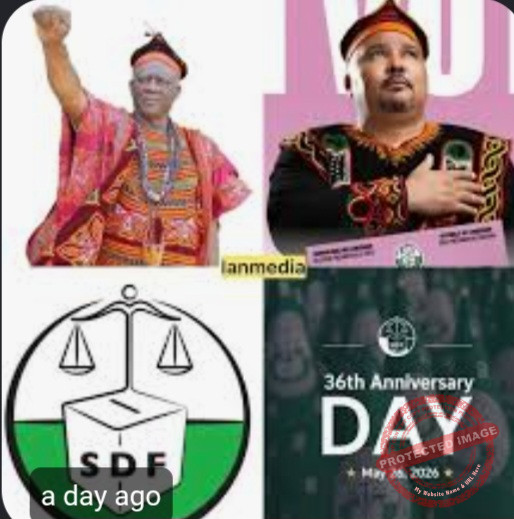
The final question now hangs permanently over Cameroon’s political history Who died first — Fru Ndi or the SDF? For many former supporters, the answer is clear. The SDF died long before its Chairman. And Ni John Fru Ndi simply lived long enough to witness the funeral of the movement that once changed history.
By Timothy Enongene
Associate Editor-in-Chief, The Independentist News
The Birth of Hope
BAMENDA – 26 May 2026 – On Saturday, May 26, 1990, the city of Bamenda stood still. Thousands of brave men and women flooded the streets, exhausted by the suffocating one-party dictatorship of President Paul Biya and the ruling Cameroon People’s Democratic Movement (CPDM). Led by the charismatic bookseller Ni John Fru Ndi, they launched the Social Democratic Front (SDF).
The regime answered with bullets. Armed soldiers opened fire on peaceful demonstrators. Six young citizens were shot dead in the streets of Bamenda. Their blood baptized the birth of multiparty politics in Cameroon. Their sacrifice transformed the SDF into a symbol of resistance, courage, and democratic hope for millions across both Southern Cameroons (Ambazonia) and La République du Cameroun.
But thirty-six years later, that hope is dead. The SDF did not die naturally. It died slowly through compromise. It died through infiltration. It died through greed. And above all, it died because the party that once promised liberation eventually became comfortable inside the very system it claimed to oppose.
The Poison of Infiltration
The corruption of the SDF began the moment electoral politics replaced revolutionary conviction. As the party entered parliament and local councils, grassroots struggle gave way to transactional politics. The movement slowly transformed into a political marketplace where loyalty became negotiable and survival depended increasingly on proximity to power. One symbolic moment revealed the danger early.
Some Years ago, Fru Ndi sent an SDF delegation to the funeral of the mother of regime heavyweight Joseph Owona. The delegation arrived carrying gifts and food supplies. Observing this growing closeness, General Pierre Semengue reportedly warned openly that the regime would use Owona to infiltrate and compromise the SDF. Over time, many supporters began to believe that this prediction had come true.
Stories circulated of secret arrangements, political understandings, and financial inducements designed to neutralize the opposition while preserving the illusion of democracy. Whether every allegation was true or not became almost irrelevant. Public trust had already begun collapsing.
The Belinga Eboutou Turning Point
One of the most controversial chapters in the SDF’s decline emerged during the lead-up to the controversial Senate elections. Before the polls, Fru Ndi publicly condemned the process in fiery language, vowing resistance against what he described as a fraudulent political structure. Yet shortly afterward, following private meetings with powerful regime figures, the tone changed dramatically.
The SDF abruptly joined the electoral process it had previously condemned. For many supporters, this moment represented the psychological breaking point. The contradiction appeared impossible to defend. The party lacked the local electoral numbers necessary to realistically compete in several regions where it nevertheless fielded candidates. To critics, the move looked less like strategy and more like participation designed to legitimize a predetermined political process.
The regime achieved exactly what it needed:
the presence of the historic opposition party inside the system. And once the process ended, the SDF emerged weakened, humiliated, and increasingly distrusted by its own base.
The Public Spectacle of Contradiction
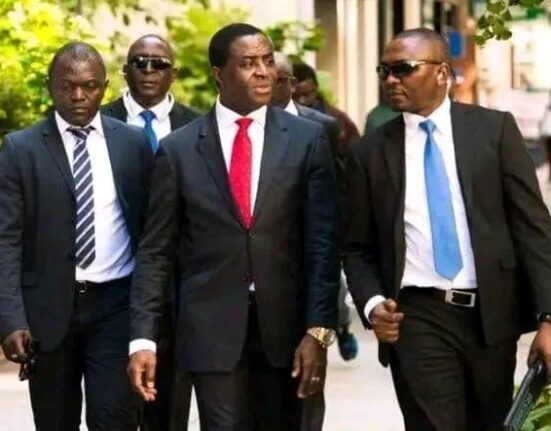
Nothing damaged the image of Fru Ndi more than the growing perception of intimacy between the opposition leadership and the very regime it publicly denounced. Following courtroom appearances challenging electoral outcomes, images circulated showing Fru Ndi engaging warmly with senior regime officials, including figures associated with the CPDM establishment.
For ordinary citizens enduring repression, arrests, and violence, these images were devastating. People asked painful questions: How could the leader of the opposition socialize comfortably with the architects of the system he accused of oppression? How could revolutionary rhetoric coexist with visible political familiarity? The symbolic distance between the opposition and the regime began disappearing before the public eye. And once symbolism dies in politics, movements rarely recover.
The Anglophone Crisis and the Final Rupture
The eruption of the lawyers’ and teachers’ protests in 2016 marked the beginning of a new political era in Southern Cameroons (Ambazonia). But instead of becoming the natural political vehicle for the uprising, the SDF found itself increasingly distrusted by younger activists and emerging resistance voices. Many believed the party attempted to position itself as gatekeeper of the movement without fully committing to its risks or aspirations.
As arrests intensified and activists disappeared into prisons and military detention centers, frustration toward the old opposition establishment deepened. Fru Ndi’s critics accused him of attempting to preserve relationships with Yaoundé while simultaneously maintaining influence within the resistance space. The result was political isolation. The SDF gradually lost credibility both with hardline unionists and with many ordinary citizens who once saw the party as the embodiment of democratic struggle.
Creating the Monster
Internally, the SDF also suffered from excessive concentration of power. Party structures increasingly revolved around Fru Ndi personally. Decision-making became centralized. Internal dissent weakened. Strong personalities were sidelined or expelled. Mechanisms intended to protect the party from fragmentation instead helped suffocate internal democracy.
Ironically, many of the individuals who once empowered the Chairman later became victims of the very structure they helped build. The party that once fought against dictatorship slowly reproduced similar tendencies within itself. And when institutions become dependent on one dominant figure, succession almost always becomes destructive.
The Joshua Osih Era
Under the leadership of Joshua Osih, many former supporters believe the SDF entered its final stage of decline. Electoral relevance faded. Internal reconciliation stalled. Dismissed party heavyweights remained excluded. The party’s visibility weakened dramatically in national political discourse. For critics, the SDF no longer represented resistance. It represented accommodation. Today, many former supporters view the party less as a revolutionary force and more as a symbolic shell of a movement that once terrified the regime.
The Cruel Irony of History
Perhaps nothing captures the tragedy of the SDF more powerfully than the symbolism surrounding Fru Ndi’s final years. The compounds that once served as sacred spaces of resistance reportedly became heavily militarized zones guarded by state security forces. The irony was impossible to ignore.
The man once protected by ordinary citizens from state repression eventually found himself protected by the same state apparatus many believed he had once vowed to defeat. History can be merciless in the way it closes political circles.
The Epitaph
The tragedy of the SDF is not merely the story of one man. It is the story of how revolutionary movements die. Not always through military defeat. Not always through imprisonment. But through gradual absorption into the very systems they were created to resist.
The SDF inspired millions because it once represented courage against fear. Its decline became painful because people expected more from those who carried the dreams of the oppressed. The final question now hangs permanently over Cameroon’s political history Who died first — Fru Ndi or the SDF? For many former supporters, the answer is clear. The SDF died long before its Chairman. And Ni John Fru Ndi simply lived long enough to witness the funeral of the movement that once changed history.
Timothy Enongene
Associate Editor-in-Chief, The Independentist News




Leave feedback about this