

Archbishop Andrew Nkea may still choose to use his office in the service of such a process. He could demand transparency, insist upon internationally facilitated negotiations, defend political prisoners, and confront state abuses with the same clarity expected when condemning abuses by non-state actors. Until he does so, Ambazonians are entitled to regard his mediation claims with profound skepticism.
By Timothy Enongene
Associate Editor-in-Chief
Independentist News
As Amazon associate this site earns from qualifying purchases
Shop from Amazon on special terms
https://www.amazon.com/events/labordaysale?&linkCode=ll2&tag=njokings-20&linkId=1d78f13fa3046de7f5efa24a311242a4&language=en_US&ref_=as_li_ss_tl
BUEA – 1 September 2026 — As the struggle over the future of the former British Southern Cameroons enters another critical phase, Yaoundé’s response is no longer confined to military operations. The state also relies upon political messaging, elite accommodation, religious diplomacy, and carefully managed appeals for peace.
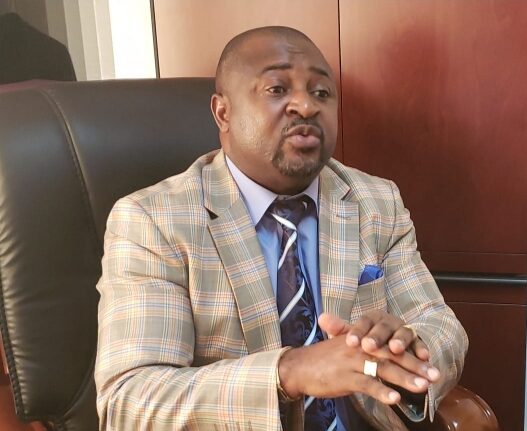
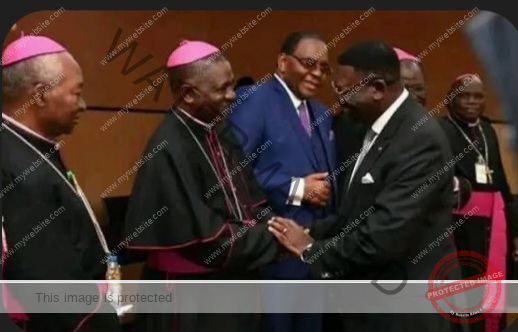
Within this increasingly contested space stands the Metropolitan Archbishop of Bamenda and President of the National Episcopal Conference of Cameroon, His Grace Andrew Fuanya Nkea. Once regarded by many as a potential moral voice for the suffering population—particularly during his tenure as Bishop of Mamfe—Archbishop Nkea has become an increasingly controversial figure. His public statements, political relationships, and approach to dialogue have caused many Ambazonians to question whether he can still serve as a genuinely independent mediator.
The central issue is not whether an archbishop should preach peace. Peace is inseparable from the Christian vocation. The issue is what kind of peace is being promoted, on whose terms, and whether calls for dialogue confront the political roots of the conflict or merely reinforce the constitutional limits imposed by Yaoundé.
To many frontline defenders, activists, and affected civilians, Archbishop Nkea no longer appears to be an impartial intermediary. His public interventions increasingly seem to advance a narrative favorable to the Paul Biya government: that the resistance is exhausted, that localized dialogue is sufficient, and that peace can be restored without addressing the fundamental dispute over sovereignty and the political status of the Southern Cameroons.
The Historical Warning: Bishop Ndongmo and the Politics of Mediation
Ambazonian mistrust of state-approved religious mediation is not without historical precedent. During the conflict between the government of President Ahmadou Ahidjo and the Union des Populations du Cameroun, or UPC, Roman Catholic Bishop Albert Ndongmo became involved in efforts connected to resistance leader Ernest Ouandié. The circumstances surrounding Ndongmo’s role, arrest, trial, and conviction remain historically disputed and should not be reduced to a simple narrative. What is beyond dispute, however, is that the episode ended disastrously.
Ouandié was captured, tried, and publicly executed by firing squad in 1971. Bishop Ndongmo was also tried and sentenced to death, although his sentence was subsequently commuted and he later went into exile.
For Ambazonians, this history carries a grave warning: when religious authority becomes entangled with an authoritarian state’s security objectives, mediation may cease to be a path toward justice and instead become an instrument through which resistance leaders are exposed, isolated, or neutralized.
That history shapes how Archbishop Nkea’s conduct is now interpreted. While serving as Bishop of Mamfe, Nkea ministered in a territory profoundly affected by military operations, displacement, school closures, arbitrary arrests, and attacks against civilians. He therefore cannot claim ignorance of the suffering experienced by the population or of the political grievances underlying the conflict.
His transfer to the Archdiocese of Bamenda in 2020 placed him at the center of the most politically sensitive ecclesiastical territory in the conflict. Since then, his public relationship with senior government officials—particularly Minister of Territorial Administration Paul Atanga Nji—has generated growing suspicion.
Public engagement between a religious leader and government officials does not, by itself, prove political subordination. Nor should every government-supported religious or humanitarian initiative automatically be treated as corruption. Nevertheless, where the government is itself a party to the conflict, the acceptance of state assistance and visible political courtship creates legitimate questions about independence, access, influence, and institutional judgment.
Those questions become more serious when the cleric involved presents himself as a trusted channel to the very population subjected to the state’s military campaign. The burden is therefore upon Archbishop Nkea to demonstrate—not merely declare—that his interventions are independent of Yaoundé’s political objectives.
Weaponising Peace: Dialogue Without Political Substance
Archbishop Nkea’s recent media appearances have intensified these concerns. His statements, including remarks associated with Under the Baobab, have suggested that Ambazonian fighters are tired of the conflict and increasingly prepared to embrace dialogue.
Some combatants and civilians may indeed be exhausted. After years of death, displacement, economic destruction, and social fragmentation, exhaustion would hardly be surprising. But exhaustion is not surrender, and war-weariness should not be misrepresented as acceptance of Yaoundé’s constitutional terms.
When such statements are presented without identifying the individuals consulted, the constituencies they represent, or the political terms they are prepared to consider, they risk becoming propaganda rather than evidence. Archbishop Nkea repeatedly refers to personal contacts with separatists, but private conversations with unidentified individuals cannot substitute for an inclusive and properly authorized negotiation. No single cleric, politician, activist, or armed commander can privately determine the political future of an entire people.
The deeper problem lies in how “dialogue” is defined. Yaoundé has historically insisted that any discussion must remain within the framework of a “one and indivisible Cameroon.” That condition predetermines the outcome before negotiations begin. It permits discussion about decentralization, reconstruction, disarmament, or administrative concessions while excluding the foundational question: What political relationship, if any, should exist between the former British Southern Cameroons and the Republic of Cameroon?
A process that excludes the central issue is not a negotiation over the conflict’s root cause. It is an attempt to manage the consequences while preserving the structure that produced them. This is why previous international initiatives encountered severe obstacles. Dialogue cannot succeed when one party determines the venue, selects the intermediaries, limits the agenda, and declares its preferred outcome non-negotiable.
Archbishop Nkea’s approach appears to fit too comfortably within that restrictive framework. It reduces a profound constitutional and sovereignty dispute to a humanitarian crisis that might be pacified through development assistance, selective releases, amnesty, reconstruction funds, and the surrender of armed commanders. Humanitarian relief is urgently needed, but humanitarian relief is not a political settlement.
Ecclesiastical Influence as an International Shield
Archbishop Nkea’s international ecclesiastical standing gives his statements significance far beyond Cameroon. His leadership within the National Episcopal Conference and his connections within the Roman Catholic hierarchy give him access to audiences that the Yaoundé government may struggle to reach directly. That influence could be used to demand meaningful negotiations, civilian protection, accountability, and an end to arbitrary detention. It could help mobilize international support for a neutral mediation process acceptable to both sides.
Instead, his interventions have too often allowed state-aligned media to present an image of returning normalcy, national unity, and locally managed reconciliation. This is politically valuable to Yaoundé. A government facing international criticism over human-rights violations benefits when a prominent Anglophone archbishop suggests that fighters are exhausted, dialogue is quietly advancing, and the conflict can be resolved without international pressure or structural negotiation.
Archbishop Nkea should be using his platform to demand measurable steps from the government: the release of Sisiku Julius Ayuk Tabe and the other members of the Nera 10; an end to arbitrary and warrantless detention; unrestricted humanitarian access; protection for civilians; credible investigations into atrocities; and the acceptance of a mutually agreed international mediation process. Instead, his public warnings about “vested interests on both sides” risk creating a false equivalence between the responsibilities of the state and those of a population resisting state violence.
All abuses against civilians should be condemned, regardless of the perpetrator. Armed groups must also be held accountable for kidnappings, killings, intimidation, attacks on education, and other violations. But balanced moral language must not erase the unequal power and legal responsibilities involved. The state possesses internationally recognized institutions, prisons, courts, armed forces, diplomatic protection, and a duty to protect the population. Its obligations cannot be diluted by placing it rhetorically on the same level as every non-state actor. Moral balance must not become political evasion.
Peace Without Justice Is Containment
The fundamental question is whether Archbishop Nkea is pursuing a just peace or helping Yaoundé contain a political rebellion without resolving its cause. A peace process worthy of that name must address the constitutional history of 1961, the abolition of the federation in 1972, subsequent centralization, and the political status of the former British Southern Cameroons. It must also include credible representatives of the principal political and armed constituencies, civil society, women, victims, traditional institutions, religious bodies, and the diaspora.
It cannot be conducted through private clerical contacts whose participants, mandates, terms, and safeguards remain undisclosed. The people are entitled to ask Archbishop Nkea several direct questions: Whom has he consulted? Whom do those individuals represent? What mandate do they possess? What concessions has Yaoundé offered? Is sovereignty permitted to appear on the agenda? Will the negotiations be internationally mediated? Who will guarantee implementation? Will political prisoners be released? Will military de-escalation precede substantive talks? Without clear answers, references to confidential contacts and fighters being “tired” serve Yaoundé’s public-relations interests more than they advance a credible peace process.
No Blank Cheque for Religious Mediation
The history of authoritarian rule teaches that a compromised intermediary can be more dangerous than an open adversary. An obvious opponent can be confronted directly. A mediator cloaked in moral authority may gain trust, collect information, influence international opinion, and encourage concessions without providing enforceable guarantees in return.
This does not establish that Archbishop Nkea is a formally recruited “agent” of the government. Such a factual allegation would require compelling evidence. His public conduct, however, has created a reasonable basis for questioning whether his interventions are functionally serving the regime’s political narrative. That distinction matters.
The concern is not Archbishop Nkea’s Catholic faith, office, ethnicity, or personal background. The concern is whether his words and relationships strengthen an imposed framework under which Yaoundé retains control while Ambazonians are asked to abandon their remaining leverage.
The independentist News position must therefore remain clear: no cleric, traditional ruler, political appointee, or foreign government should be granted a blank cheque to negotiate the future of the Southern Cameroons behind closed doors. Any legitimate settlement requires a formal and mutually agreed international process facilitated by credible third parties. The negotiations must address the conflict’s root cause without preconditions that predetermine the outcome. They must include enforceable safeguards, representative participation, independent monitoring, and international guarantees.
Archbishop Andrew Nkea may still choose to use his office in the service of such a process. He could demand transparency, insist upon internationally facilitated negotiations, defend political prisoners, and confront state abuses with the same clarity expected when condemning abuses by non-state actors. Until he does so, Ambazonians are entitled to regard his mediation claims with profound skepticism.
A shepherd earns trust by standing visibly with the wounded, confronting the powerful, and refusing to allow the language of peace to conceal injustice. When a shepherd appears closer to the palace than to the persecuted, the flock has both the right and the duty to ask whose interests he is truly serving.
As Amazon associate this site earns from qualifying purchases
Shop from Amazon on special terms
Timothy Enongene
Associate Editor-in-Chief
Independentist News