

Our future should not depend on who rules the world. It should depend on whether we can build a Republic capable of working confidently with the United States and other partners while remaining master of its own productive sources, institutions and national destiny.
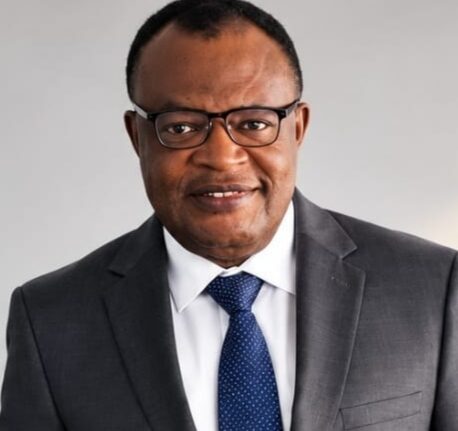
By Martin S. Mungwa, PhD, Fellow ASCE, Contributor The Independentist News
As an Amazon associate this site earns from qualifying purchases
Its back to school, Shop from Amazon
Understanding the World as It Exists
The world in which Southern Cameroons entered the United Nations trusteeship system is not the world in which Ambazonia must pursue its future today. The international architecture created after the Second World War still exists, but power has become more dispersed, capital has become more mobile, technology has become an instrument of national power, and governments increasingly organize international relationships around identifiable strategic and economic interests.
For much of the twentieth century, Britain and France exercised enormous influence over Africa. The United States emerged from the Second World War as the dominant Western economic and military power, while the United Nations, the World Bank, the International Monetary Fund, the dollar-centered financial system, and other institutions became important pillars of the international order. That architecture remains consequential, but it no longer explains the entire distribution of global power.
China has become a major economic and technological actor. India has become increasingly important. Gulf states possess enormous pools of investment capital. Singapore and other Asian centers have become global financial and commercial nodes. African financial institutions are expanding their importance. Technology companies increasingly control infrastructure—data, communications, artificial intelligence, cloud computing, digital payments—that would once have been regarded almost entirely as functions of states. The world is therefore becoming more polycentric.
For Ambazonia, this creates opportunity, but it also demands discipline. Multipolarity does not mean that the major powers will automatically become interested in solving the Southern Cameroons question. It means there are more centers of influence, more pools of capital, more potential partners, and therefore more possibilities for a small strategically located society that learns how to organize its relationships intelligently.
Historical Justice Must Become Strategic Relevance
One of the great mistakes any liberation movement can make is to believe that historical justice automatically generates international action. History matters. Law matters. Human rights matter. The experiences of a people matter. But states also act according to national interests.
Southern Cameroons possesses a distinctive international history. It moved from German colonial rule to British administration, through the League of Nations mandate and United Nations trusteeship systems, and eventually to the 1961 plebiscite and union with the Republic of Cameroun. Those historical circumstances remain indispensable to understanding the present conflict. But history is the beginning of the argument, not the end.
Foreign governments examining the Southern Cameroons question will eventually ask practical questions. Would a different political settlement increase or reduce instability? What would it mean for Nigeria? What would it mean for Cameroon? What would happen to cross-border trade? What would happen in the Gulf of Guinea? Could a prospective Ambazonian state protect civilians, maintain security, regulate strategic resources, honor commercial obligations, maintain open markets, and live peacefully with its neighbors?
These are not unreasonable questions. They are the questions states ask when deciding whether a political change will improve or weaken the international system. Ambazonian diplomacy must therefore make two arguments simultaneously. The first is the argument of justice: the historical, constitutional, humanitarian, and political case concerning Southern Cameroons. The second must be the argument of strategic relevance: that a peaceful resolution of the Southern Cameroons question can contribute to a more stable, productive, democratic, commercially reliable, and secure Gulf of Guinea. Justice explains why the question must be addressed. Strategic relevance explains why the world should care about the outcome.
The United States Should Be a Cornerstone Strategic Partner
The United States should occupy an important place in this strategy. It possesses exceptional capabilities in technology, finance, energy, maritime security, higher education, capital markets, innovation, infrastructure, defense, and international diplomacy.
More importantly, the present direction of U.S. Africa policy creates a potential opening for precisely the kind of relationship Ambazonia should eventually seek. The 2025 U.S. National Security Strategy calls for moving American relations with Africa away from a primarily foreign-aid paradigm toward mutually beneficial trade, investment, growth, energy development, critical minerals, conflict reduction, and partnerships with capable and reliable states. That is an extremely important message for Ambazonian diplomacy.
We should not approach the United States by presenting Ambazonia principally as another African problem Washington is being asked to finance. The stronger proposition is to demonstrate what a peaceful, stable and responsibly governed Ambazonia could contribute to American and regional interests.
A strategically positioned Gulf of Guinea partner with transparent commercial institutions, reliable maritime access, responsible resource governance, strong English-language and common-law institutional traditions, educated human capital, open investment policies, and serious commitments to regional stability would speak more directly to the present American conception of partnership.
The message should therefore not be, “America must rescue Ambazonia.” It should rather be, “There are areas in which American and Ambazonian interests could converge, and a durable resolution of the Southern Cameroons question could create opportunities for both.” That is partnership and partnership Does Not Require Dependency
Making the United States a cornerstone strategic partner does not require Ambazonia to organize its entire foreign policy around Washington. In fact, the current U.S. National Security Strategy itself strongly emphasizes national sovereignty, national interest, burden-sharing, and relationships in which partners develop their own capacity. That is a principle Ambazonia should embrace.
A good American partner should not be a helpless client. It should be capable of governing itself, protecting its institutions, financing an increasing share of its development, managing its resources transparently, maintaining regional security, and entering international agreements from a position of competence. This is where polycentric diplomacy becomes complementary rather than anti-American.
Ambazonia should seek strong relations with the United States while also maintaining constructive relationships with Britain, the European Union, Nigeria, African institutions, Gulf states, Asian economies, and other countries whose capital, technology, markets, or diplomatic relationships can contribute to development. The purpose is not to balance America against another great power. The purpose is to make Ambazonia resilient. A reliable engineering system does not deliberately create unnecessary single points of failure. Neither should a country.
Nigeria Is a Permanent Strategic Reality
Among all potential partners, Nigeria deserves particularly serious attention because geography cannot be renegotiated. Governments change in Washington. Governments change in London. Policies change in Paris. Priorities change in Beijing. Nigeria will remain immediately beside Southern Cameroons.
Any credible Ambazonian strategy must therefore think carefully about future relations with Nigeria. Border management, customs, transportation, commercial corridors, cross-border communities, migration, security cooperation, maritime activity, refugee questions, energy connections, and regional trade would all require sustained cooperation.
A future Ambazonia that begins with a hostile relationship with Nigeria would inherit a strategic weakness regardless of the strength of its relationships elsewhere. This is why diplomacy must begin with geography before it reaches ideology.
The Gulf of Guinea Must Become Part of the Proposition
Ambazonia should also stop presenting itself to the world principally as a victim requiring sympathy. Its strategic location must become part of its international argument. The Gulf of Guinea matters to international shipping, energy, maritime security and trade. The United States continues to participate in regional maritime-security cooperation, including its Obangame Express framework, with exercises and partnerships involving Gulf of Guinea states.
Southern Cameroons occupies a potentially important location within this maritime environment. Victoria should therefore be understood not simply as a coastal city but as a potential maritime and commercial gateway. Tiko can be developed around aviation, logistics, agro-industry and trade. The petroleum resources of the southwestern coastal basin create both opportunity and responsibility. Agricultural production, digital infrastructure, regional commerce, energy and proximity to Nigeria further expand the territory’s strategic proposition.
The diplomatic question becomes much stronger when framed this way: What could a stable Ambazonia contribute to the Gulf of Guinea? It could contribute maritime security, lawful commerce, transparent resource governance, regional trade, investment opportunities, energy development, counter-trafficking cooperation, and a commercially useful connection between Central and West Africa. That is an argument based upon value. Natural Resources Are Not Sovereignty
Africa has repeatedly demonstrated that possessing natural resources does not automatically produce national power. A country may own the resource in law while another entity controls extraction, financing, technology, processing, transportation, information, marketing, and much of the resulting value.
That is why Ambazonia must develop a doctrine of productive sovereignty. Petroleum, timber, agricultural land, maritime access, energy potential, minerals, and other strategic resources must always be examined through practical questions. Who signs? Who pays? Who owns the productive source? Who controls the technology? Where is the resource processed?Who owns the intellectual property?Who verifies production? Where is value added? Where does the capital circulate? What productive capacity remains after the foreign investor has earned its return?
The United States itself presently emphasizes secure supply chains, critical minerals, domestic productive capability, technology, investment and strategic economic resilience. Ambazonia should understand the same lesson from its own perspective: resources become strategic only when institutions can convert them into productive capability.
If cocoa leaves and finished chocolate returns at multiples of the value, Ambazonia has exported economic opportunity. If timber leaves while finished products are manufactured elsewhere, value has been transferred abroad. If petroleum is extracted while local engineering, environmental capability, industrial services and investment capital remain undeveloped, the resource may generate revenue without producing sovereignty. The objective should not be isolation from foreign capital. The objective should be using foreign capital to expand domestic capability.
Technology Has Changed the Meaning of Sovereignty
The emerging international order is also increasingly technological. Artificial intelligence, cybersecurity, telecommunications, digital payments, cloud infrastructure, satellites, biotechnology, energy systems, semiconductors and data are becoming inseparable from national power. The current U.S. strategy explicitly links technological leadership, secure supply chains and economic capacity to national security.
A twenty-first-century Ambazonia must therefore think beyond the institutions of 1961. A territory can possess borders and still surrender enormous portions of meaningful sovereignty if another country or corporation controls its telecommunications, citizen data, payment infrastructure, government cloud systems, cybersecurity, energy-management systems and strategic information.
Digital sovereignty must therefore become part of constitutional sovereignty. This requires education, cybersecurity, national data policy, resilient telecommunications, domestic technical capability, intellectual-property protection and careful rules governing foreign technology providers.
Recognition Must Meet Readiness
The most important implication of the changing world order may therefore be that Ambazonia should build recognition-ready institutions before recognition arrives.The international proposition cannot credibly be: recognize us first, and afterward we will determine how to govern.
The proposition should become: here is the constitutional architecture of the Republic we are preparing. Here is how public finances will be managed. Here is how counties and local governments will function. Here is how security forces will remain under civilian authority. Here is how political opposition will be protected. Here is how resources will be governed. Here is how investors will be treated. Here is how minorities will be protected. Here is how elections will occur. Here is how contracts will be honored. Here is how Ambazonia will coexist peacefully with its neighbors. That is what turns aspiration into institutional readiness.
It also aligns more closely with the present American preference for relationships with capable and reliable African partners rather than indefinite aid dependency. Ambazonia Must Understand American Interests This is especially important for relations with Washington.
The United States does not need another unstable dependent territory. Its own strategy increasingly emphasizes commercially useful relationships, capable partners, conflict reduction, access to strategic resources, energy development, secure supply chains and investment. Ambazonian diplomacy should therefore ask a question that liberation diplomacy sometimes neglects: What would make a peaceful Ambazonian settlement useful to the United States?
The answer might include Gulf of Guinea maritime security, commercially reliable port access, transparent investment opportunities, responsible petroleum and mineral governance, open markets, English-language commercial institutions, technology partnerships, counter-trafficking cooperation, regional stability and a government prepared to work constructively with Nigeria and other neighbors.
The strongest partnership is created where interests overlap. This does not subordinate Ambazonia to America. It is how diplomacy works between serious partners. We Must Not Become a Pawn in Great-Power Competition The emerging multipolar order nevertheless contains danger. Small countries can become instruments in conflicts among larger powers. Infrastructure financing can create strategic dependence. Telecommunications relationships can create data dependence. Security assistance can create political dependence. Resource concessions can create financial dependence.
Ambazonia must therefore avoid substituting one external center for another. We should not replace Paris with London, London with Washington, Washington with Beijing, or Beijing with a Gulf capital. America can be a cornerstone partner without becoming a chokepoint. The principle should be simple: Build strong strategic friendships. Preserve independent national judgment.
This is fully compatible with a serious relationship with the United States because the United States itself currently articulates international relations in terms of sovereign nations pursuing their interests and forming partnerships where interests align.
What the Changing World Order Ultimately Means
The changing global order does not guarantee Ambazonian sovereignty. No global shift substitutes for Ambazonian preparation. No great power will build functioning Ambazonian institutions on our behalf. No diplomatic campaign can permanently compensate for weak governance, internal division, poor financial accountability, ineffective administration or inability to protect civilians. What the changing order provides is opportunity. There are more financial centers, more sources of capital, more technology partners, more African institutions, more competing commercial relationships and more strategic pathways than existed in the earlier international system.
The challenge is to convert those options into leverage without converting them into dependency. Ambazonia should therefore present itself not as a territory asking the world to choose sides, but as a prospective partner explaining how a just political settlement could produce regional stability, economic opportunity, civilian protection, responsible resource governance and a useful Gulf of Guinea relationship.
The United States should be central to that proposition. Not because Ambazonia needs a new master. Because a strong partnership between a capable Ambazonia and the United States could serve legitimate interests on both sides. That is the relationship we should seek: one based not on permanent dependence, but on strategic alignment, commerce, technology, security, institutional credibility and mutual benefit.
The question for Ambazonia is therefore not who will rule the next global order. The more important question is whether we will prepare ourselves sufficiently to navigate it. A small country does not need to dominate the international system to prosper within it. It needs competent institutions, diversified relationships, productive assets, disciplined diplomacy, technological capability and enough strategic value that serious partners want to work with it. That is the opportunity before Ambazonia.
Our future should not depend on who rules the world. It should depend on whether we can build a Republic capable of working confidently with the United States and other partners while remaining master of its own productive sources, institutions and national destiny.
As an Amazon associate this site earns from qualifying purchases
Its back to school, Shop from Amazon
Martin S. Mungwa, PhD, Fellow ASCE, Contributor The Independentist News