






Commentary

We are home to news on Cameroon and the CEMAC region. We are dedicated to honest and reliable reporting. We are the voice of the Cameroonian people and their fight for freedom and democracy at a time when the Yaoundé government is silencing dissent and suppressing democratic voices.

The question is not whether Captain Ibrahim Traoré should fight violent extremism. He should. The decisive question is whether Burkina Faso can defeat extremism without sacrificing justice, religious coexistence, intellectual freedom, and the productive capacity required to build the nation it is trying to save.
By Ali Dan Ismael, Editor-in-chief The Independentist News
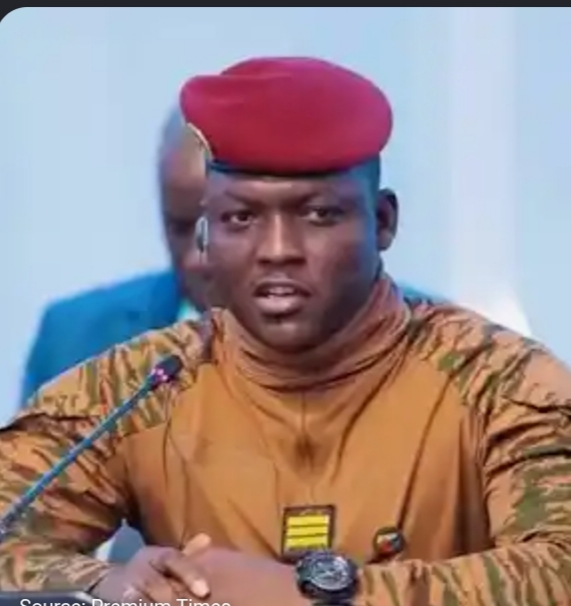
A recent BBC report described a widening confrontation between Burkina Faso’s military-led government and sections of the country’s Muslim scholarly community. According to the report, transitional leader Captain Ibrahim Traoré has supported new legislation intended to curb radicalization and extremist preaching, while prominent clerics have been arrested and the government has announced plans to recall hundreds of Burkinabè students studying Islamic law in Arab countries. The authorities have also introduced a requirement for students to obtain government approval before pursuing higher education abroad.
The report raises legitimate questions about religious freedom, due process, educational choice, and the growing concentration of state authority under military rule. Yet it also exposes a deeper contradiction in the way African security policy is frequently framed by Western Governments and media institutions.
For years, France maintained troops in Burkina Faso and across the Sahel on the stated grounds that violent Islamist extremism posed an urgent international-security threat. The United States has spent decades building military, intelligence, financial, and diplomatic systems to combat al-Qaeda, the Islamic State, and their affiliates. Osama bin Laden was tracked and killed because he led al-Qaeda, the organization responsible for mass-casualty attacks against civilians, including the September 11 attacks. The United States explicitly maintained that its campaign was directed against al-Qaeda and violent terrorism, not against Islam or Muslims.
If violent religious extremism was serious enough to justify foreign military bases, special-forces deployments, intelligence operations, drone strikes, sanctions, arrests, and targeted killings, why should Burkina Faso’s own government be treated as inherently suspicious merely because it now claims the sovereign right to confront the same danger?
That question deserves serious consideration. But so does another: does every policy adopted in the name of countering extremism actually protect the nation, or can some measures destroy the trust, liberty, knowledge, and social cohesion that national security is supposed to preserve?
The proper response is neither automatic defense of Traoré nor automatic acceptance of the Western framing. Burkina Faso has the right—and the duty—to defeat violent extremism. It also has the duty to distinguish violent incitement from peaceful belief, national development from ideological control, and legitimate security regulation from arbitrary repression.
The Threat Is Real
Burkina Faso is not debating religious extremism in an academic vacuum. The country has endured years of violence by armed groups operating within the wider Sahelian insurgency. Communities have been attacked, civilians displaced, soldiers killed, schools closed, economic activity disrupted, and large territories rendered insecure. Human Rights Watch describes a conflict in which Islamist armed groups, state forces, and allied militias have all been accused of grave abuses against civilians.
A government confronting such a threat cannot simply declare that religion is a private matter and ignore the use of religious language to recruit fighters, justify violence, dehumanize civilians, undermine constitutional authority, or establish parallel systems of coercive power.
Preachers who directly encourage violence, recruit for armed organizations, finance extremist networks, or incite attacks against civilians should be investigated and, where evidence supports the allegations, prosecuted through lawful and transparent procedures. Religious institutions receiving foreign money should be required to disclose significant sources of financing. Schools should meet national educational standards. No cleric, pastor, traditional authority, political activist, or military officer should be permitted to place personal authority above the constitutional order.
None of this amounts to a war against Islam.
Islam is a world religion followed peacefully by vast populations. Islamic scholarship, conservative belief, criticism of government policy, and advocacy for religious values are not terrorism. The decisive line is crossed where persuasion becomes incitement, belief becomes organized coercion, or religious authority is used to legitimize violence against civilians and the state. Burkina Faso is entitled to defend that line.
France Was There for the Same Declared Purpose. The historical contradiction is difficult to ignore. Until 2023, approximately 400 French special-forces personnel were stationed in Burkina Faso as part of France’s regional counterterrorism architecture. They were presented as a military response to the expansion of armed Islamist movements across the Sahel. Burkina Faso eventually terminated the arrangement and ordered the French forces to leave amid public frustration that years of foreign military presence had failed to deliver security.
France’s intervention was not necessarily based on an invented threat. The jihadist danger was and remains real. But France was also protecting its own citizens, regional influence, intelligence access, diplomatic relationships, strategic position, and wider European security interests.
What failed was not the diagnosis that violent extremism was dangerous. What failed was the belief that foreign military power, operating within weak and distrusted political systems, could by itself provide a durable cure.
Years of French and Western counterterrorism operations did not prevent armed organizations from expanding their geographical reach. Tactical victories were not translated into stable institutions, legitimate government, trusted local security, economic opportunity, effective justice, or lasting public confidence.
Burkina Faso therefore has every right to question the old arrangement and to seek a more sovereign strategy. But sovereignty should mean more than replacing foreign soldiers with domestic coercion. It should produce a security system that is more lawful, more accountable, more development-oriented, and more capable of distinguishing genuine threats from peaceful dissent.
Why Bin Laden Was Killed
The comparison with the United States is equally instructive. Osama bin Laden was not pursued because he was a Muslim, a religious thinker, or an opponent of Western foreign policy. He was pursued because he founded and led al-Qaeda, openly endorsed violence, and was identified by the United States as the architect of attacks that killed thousands of civilians. The FBI describes him as a violent terrorist who used bombings and bloodshed to advance extremist objectives. President Barack Obama, announcing the operation that killed him, emphasized that the American campaign was against al-Qaeda and not against Islam. That distinction must remain central.
If America may pursue the leader of an organization responsible for mass murder, Burkina Faso may pursue people who recruit, finance, organize, or directly incite comparable violence within its territory. But neither country should treat peaceful religious identity as evidence of terrorism.
The same principle that justified action against bin Laden also limits state power: evidence must connect the person to violent conduct, operational support, recruitment, financing, or incitement. It is not enough that an individual is a conservative Muslim, studies Islamic jurisprudence, criticizes the government, opposes a law, or commands a large religious following.
Counterterrorism loses moral and strategic legitimacy when it treats theology as a crime and criticism as treason.
What the BBC Framing Leaves Unresolved
The BBC synopsis emphasizes that Traoré is “at odds” with sections of the Muslim community, that clerics have been arrested, and that new controls have been introduced over religious study abroad. These are legitimate aspects of the story. A major broadcaster should examine arrests, restrictions, and possible violations of religious freedom.
The problem is not that the BBC raised those concerns. The problem is that such framing can become incomplete when it does not give equal weight to the context that produced the measures.
Burkina Faso is fighting a severe insurgency. France previously based troops there specifically to fight armed extremists. Western governments continue to conduct counterterrorism operations around the world. Traoré’s stated position is not simply that Islamic scholarship should disappear; he has said that religion should spread by example rather than coercion and has pledged support for scholars advocating peaceful interpretations while warning against those he accuses of extremist preaching.
The more defensible criticism of the BBC report is therefore not that it proves a coordinated plot against Traoré. The information available does not establish that. The stronger criticism is that a narrow civil-liberties frame may obscure the full security and developmental context.
Western media institutions should not condemn African governments merely for confronting a threat that Western militaries themselves identified and fought. At the same time, African governments should not use Western hypocrisy as a shield against legitimate scrutiny. Both standards must operate together.
The Arrests Require Evidence and Due Process
The arrest of Imam Mohamed Ishaq Kindo after he criticized proposed religious legislation, the detention of supporters, and the closure of a major Sunni mosque raise serious questions. Reports state that nearly 100 supporters were detained and transferred for what authorities called civic and citizenship training.
The government may possess evidence not yet made public. But national security cannot rest upon undisclosed suspicion indefinitely. If a cleric incited violence, financed extremists, recruited fighters, or knowingly assisted an armed organization, the government should present the charges and supporting evidence before an independent judicial authority. The accused should have access to counsel, a fair hearing, and an opportunity to challenge the state’s case.
If the arrest was based primarily on criticism of legislation, political disagreement, or the ability to mobilize followers, then the action risks transforming peaceful opposition into a security offense.That would be strategically self-defeating. Extremist movements benefit when governments erase the distinction between peaceful scholars and violent militants. The movement can then tell ordinary Muslims that the state is not fighting terrorism but Islam itself. Arbitrary arrests can convert a marginal preacher into a symbol of persecution and turn legitimate grievances into recruitment material.
A confident state does not fear evidence, transparent charges, or judicial review. A government that claims to defend national sovereignty should also defend the legal sovereignty of its own institutions.
Religious Education and the Development Question
Traoré’s concern about foreign religious education should not be dismissed. Burkina Faso urgently needs engineers, doctors, agronomists, architects, teachers, scientists, technicians, economists, administrators, and entrepreneurs. A state facing war, poverty, infrastructure deficits, food insecurity, and institutional weakness must ask whether its scholarship system is producing the human capabilities required for survival and development. If substantial foreign scholarships are available for religious studies while technical and scientific disciplines remain underfunded, the government is entitled to examine the imbalance.
But religious education should not be treated as inherently unproductive.
A well-trained Islamic scholar can become a teacher, mediator, ethicist, linguist, community organizer, peacebuilder, counselor, jurist, historian, or diplomatic bridge to Muslim-majority societies. The policy question is not whether Islamic scholarship has value. It is whether the education equips graduates to contribute constructively to national life and whether foreign sponsors use scholarships to export intolerant or politically destabilizing ideologies.
The better solution is not the destruction of religious education. It is its integration into a broader national human-capital strategy. Students pursuing Islamic studies could also receive training in constitutional citizenship, peacebuilding, economics, digital literacy, comparative religion, public administration, national history, mathematics, languages, and community development. Religious institutions could partner with universities and technical colleges. Returning scholars could be accredited, monitored under ordinary law, and incorporated into national programs for mediation, education, and prevention of extremist recruitment. Such an approach would turn religious knowledge into productive national capacity rather than treating it as either untouchable or automatically dangerous.
Public Scholarships and Private Choice Are Not the Same
One of the clearest weaknesses in the present policy is the failure to distinguish among different categories of students. A government has a strong right to decide how public scholarship money is spent. If the state is funding overseas study, it may prioritize engineering, medicine, agriculture, science, education, cybersecurity, and other disciplines linked to urgent national needs.
The state also has a legitimate interest in protecting students from fraudulent institutions, maintaining consular records, and ensuring that publicly sponsored qualifications are recognized at home. Its authority is weaker, however, where students are privately financed or receive legitimate scholarships from accredited foreign institutions.
The law approved in June reportedly requires every Burkinabè student seeking higher education abroad—whether publicly or privately funded—to obtain prior authorization from the Ministry of Higher Education. Officials have justified the measure in terms of scientific sovereignty, protection from fraudulent institutions, consular oversight, national development priorities, and prevention of indoctrination. Human Rights Watch has cautioned that the breadth of the authorization system, particularly without published criteria, reasons for denial, independent appeals, or judicial review, creates a risk of arbitrary and discriminatory control.
A registration system is not the same as a permission system. The state may reasonably require students to register, disclose institutions and funding, and confirm accreditation. But the power to prevent a privately funded citizen from studying abroad should be exercised only under clear law, defined national-security grounds, transparent evidence, and effective appeal procedures. Otherwise, a policy introduced to prevent extremism may become a mechanism for controlling intellectual exposure, political thought, and access to foreign professional networks.
Follow the Money—but Follow All of It
Foreign financing deserves greater scrutiny than it usually receives. Religious education is often shaped not only by theology but by the priorities of the governments, charities, foundations, movements, and wealthy donors paying for it.
The relevant questions are practical. Who finances the scholarships? What institutions receive the students? What curriculum is taught? Do donors impose ideological obligations? Are graduates expected to join religious or political networks? Does the program promote peaceful scholarship, sectarian hostility, rejection of the constitutional state, or loyalty to foreign authorities? Are qualifications recognized? Do the students return with useful skills, or do they become dependent on external religious patronage? These questions should be investigated without prejudice. But the same standard must apply to every source of foreign influence.
Foreign-funded Christian missions, churches, political institutes, nongovernmental organizations, ideological foundations, security contractors, development agencies, universities, and media initiatives can also influence national values and institutions. It would be inconsistent to subject only Muslim funding to examination while treating Western, Christian, secular, or political financing as automatically benevolent.
The proper principle is universal transparency.
Major foreign financing received by any religious or ideological institution should be declared. Organizations should publish audited accounts, identify principal donors, observe national educational and charitable regulations, and reject incitement and political violence. The state should regulate conduct and financial transparency—not selectively stigmatize one faith.
One Standard for Every Religion
Burkina Faso’s religious policy will be credible only if it applies equally. A Muslim cleric who incites violence should face the law. So should a Christian pastor, traditional authority, political leader, military officer, or ethnic activist who does the same. A mosque receiving significant foreign funding should disclose it. So should a church, spiritual movement, foundation, civic organization, or political institution.
A Muslim school should meet national standards in literacy, mathematics, science, citizenship, child protection, and financial accountability. The same should apply to Christian, traditional, private secular, and foreign-supported schools.
Children should not be subjected to forced begging, abuse, exploitation, or educational neglect under the protection of any religious label. Religious organizations should not become tax shelters, political militias, or vehicles for foreign ideological control. Equal law protects both the state and religion. Selective law weakens both.
When regulation is universal and transparent, peaceful Muslims can see that the government is targeting harmful conduct rather than their faith. When enforcement singles out one community, even legitimate measures become vulnerable to accusations of persecution.
Security Without Trust Is Self-Defeating
A government can close a mosque, arrest a preacher, restrict travel, and issue decrees. These actions may produce immediate demonstrations of power. But power is not the same as security. Real security depends upon cooperation from ordinary people. Communities provide early warning, identify suspicious recruitment, protect vulnerable young people, report unfamiliar movements, and separate peaceful believers from violent networks.
If peaceful Muslims believe that the state views them collectively as suspects, they become less likely to share information. Parents may hesitate to approach the authorities. Clerics who could challenge extremist interpretations may withdraw from cooperation. Security institutions then lose the very social intelligence required to isolate violent actors.
The national asset that must be protected is not merely state authority. It is the relationship of trust connecting citizens, religious communities, schools, security institutions, and the law. An arrest may remove one suspected extremist. But arbitrary enforcement can alienate thousands of citizens. That is a poor exchange.
The goal should be to isolate violent extremists while expanding the coalition of peaceful Muslims, Christians, traditional believers, secular citizens, educators, women, youth, and community leaders committed to the constitutional state.
Development Is Also a Security Strategy
Traoré’s development argument deserves more attention than it has received. Extremist groups do not recruit solely through theology. They exploit unemployment, humiliation, state abuse, local grievances, corruption, insecurity, absent schools, unresolved land disputes, and the failure of governments to provide justice. A young person without education, work, recognition, or confidence in the future is more vulnerable to organizations offering belonging, purpose, income, protection, or revenge.
This does not mean that poverty automatically produces terrorism. Most poor people do not become extremists. But development failures create environments in which violent organizations can more easily compete with the state. Burkina Faso’s response must therefore extend beyond military operations and clerical regulation. It must build schools, roads, irrigation, electricity, health systems, local government, employment, justice, and credible public institutions.
Engineers and scientists are indispensable. So are ethical religious scholars who can challenge extremist interpretations from within the language of faith. Development and peaceful theology should not be treated as rivals. Both can contribute to national resilience.
The Danger of Romanticizing Traoré
Many Africans admire Ibrahim Traoré because he presents himself as a young leader confronting foreign domination, renegotiating economic relationships, asserting sovereignty, and reviving the spirit associated with Thomas Sankara. That admiration should not become political blindness.
African sovereignty does not require the public to excuse arbitrary detention, indefinite military government, censorship, forced conscription, restrictions on education, or the disappearance of critics. A leader does not become infallible because Western governments oppose him. Nor does every Western criticism become false simply because the West has acted hypocritically elsewhere.
A sovereign Africa must develop the confidence to judge its own leaders by African interests, constitutional principles, human dignity, measurable development, and public accountability. Traoré may be correct that foreign actors exploit religion and political divisions. He may also adopt policies that are excessively broad or coercive. Both propositions can be true. The mature position is neither worship nor dismissal. It is disciplined support for what strengthens Burkina Faso and disciplined criticism of what may weaken it.
The BBC Should Question—but Also Contextualize
The BBC and other international media organizations should investigate the arrests, the treatment of clerics, the new religious legislation, the foreign-study authorization system, and the government’s human-rights record.
But the reporting should also ask: Why did years of French military presence fail to defeat the insurgency? Why do Western governments reserve broad counterterrorism powers for themselves while reacting differently when African governments assert similar authority? Who finances the foreign religious programs? What skills does Burkina Faso urgently need?How can religious education be reformed rather than simply suppressed? What evidence links particular clerics to violent extremism? How do peaceful Muslim organizations view the threat?
What safeguards would protect religious freedom while preventing extremist recruitment? These questions would produce a fuller report than a simple confrontation narrative between Traoré and Muslims.
The issue is not whether the BBC should criticize African governments. It should. The issue is whether it applies equivalent historical context and analytical depth when African governments challenge Western strategic arrangements.
The Lesson for Ambazonia
Ambazonia should study Burkina Faso carefully because a future state will face similar questions. Southern Cameroons/Ambazonia contains Christian, Muslim, traditional, and other communities. A stable republic must protect freedom of religion and conscience while ensuring that no religious organization becomes a parallel coercive authority, foreign ideological instrument, or source of violent recruitment.
The future Constitution should guarantee worship, religious education, peaceful preaching, association, and freedom of conscience. It should also prohibit incitement to violence, forced conversion, child exploitation, sectarian militias, foreign-controlled armed networks, and claims that religious authority supersedes constitutional law.
Every religious institution should operate under equal standards of registration, financial transparency, child protection, education, public safety, and nonviolence. Foreign scholarships should be monitored, but not arbitrarily prohibited. Public scholarships should prioritize national development, while privately funded students should retain educational freedom subject to registration, accreditation, and genuine security safeguards.
Ambazonia should also build an interfaith national-security partnership. Peaceful Muslim scholars, Christian leaders, traditional authorities, educators, women, youth, and community organizations should participate in preventing radicalization. Counter-extremism should not be imposed only from police headquarters. It should be rooted in trusted communities and credible institutions.
The essential national assets are religious coexistence, human capital, constitutional legitimacy, public trust, national sovereignty, and effective security. Any policy that produces temporary arrests while destroying those deeper assets ultimately weakens the state.
A Sovereign and Lawful African Standard
Burkina Faso has the right to fight violent extremism. France and America cannot credibly deny that right after decades of conducting their own counterterrorism campaigns. But sovereignty must not become a license for collective suspicion or unlimited state power.
The superior African approach would combine firm action against violent recruitment with equal religious freedom, transparent evidence, fair trials, educational reform, financial disclosure, community partnership, and investment in national human capital.
It would distinguish the extremist from the believer, the recruiter from the scholar, the armed conspirator from the peaceful critic, and foreign ideological manipulation from legitimate international education.
It would apply the same rules to Islam, Christianity, traditional religion, political ideology, and secular institutions.It would recognize that a nation cannot shoot its way out of every grievance, arrest its way into social unity, or regulate its way into scientific development.
The state must be strong enough to confront those who use religion to destroy the country. It must also be restrained enough not to destroy the country in the process. That is the standard Burkina Faso should pursue. It is also the standard Africa should demand from both its governments and its foreign critics.
The question is not whether Captain Ibrahim Traoré should fight violent extremism. He should. The decisive question is whether Burkina Faso can defeat extremism without sacrificing justice, religious coexistence, intellectual freedom, and the productive capacity required to build the nation it is trying to save.
Ali Dan Ismael, Editor-in-chief The Independentist News
Share This Post:
A British National and fervent reader of The Independentist News TC (full identity withheld) exchanges with the editorial desk over the story “How Britain tried to erase the southern Cameroons”
LIGHTS, CAMERA, SOVEREIGNTY: How Ambazonian Independent Filmmakers Can Turn Africa’s New Film Fund into Cultural Power, Productive Enterprise, and Global Influence
Related Post
TRUMP’S “SUPER INTELLIGENCE” ERA: WHAT IT REALLY MEANS —
Why Is Ambazonia More Powerful Than many Imagine.
THIS DAY IN HISTORY SEPTEMBER 22, 2017: THE DAY
A President Unseen, a Country Waiting: Yaoundé’s Succession Uncertainty
BEYOND THE FLAG: THE HARDER QUESTION OF BUILDING AMBAZONIA
EKONA UNDER FIRE: THREE CIVILIANS REPORTED KILLED AS RESIDENTS