










Geo-strategic commentary

We are home to news on Cameroon and the CEMAC region. We are dedicated to honest and reliable reporting. We are the voice of the Cameroonian people and their fight for freedom and democracy at a time when the Yaoundé government is silencing dissent and suppressing democratic voices.

Ultimately, the question facing Africa is not whether global rivalries will continue—they almost certainly will. The real question is how African nations choose to position themselves within this evolving geopolitical landscape.
By Lester Maddox
The Independentistnews Guest Writer, Oakland County, California
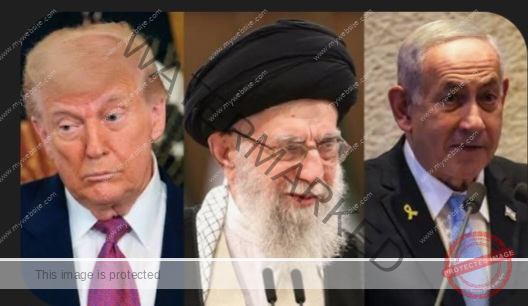
The ongoing escalation between the United States–Israel alliance and Iran serves as a stark reminder of how quickly geopolitical rivalries can reshape global stability. For Africa, the lesson is not abstract. For decades, the continent has often found itself drawn into proxy conflicts where external powers projected their rivalries onto African soil. Foreign ideologies, weapons, and funding frequently turned local tensions into prolonged crises whose human cost was borne almost entirely by African communities.
Seen from this perspective, the current Middle Eastern confrontation should be understood as a warning. When a nation’s foreign policy becomes too closely aligned with the strategic priorities of distant powers, it risks inheriting conflicts that are not its own. Along with security partnerships can come geopolitical entanglements, economic dependencies, and the possibility of becoming a battleground for struggles that originate far beyond the continent.
The Case for Positive Neutrality What, then, should Africa’s response be?
The answer may lie in what could be described as positive neutrality. This is not passive silence or disengagement from global affairs. Rather, it is a deliberate strategy of maintaining independence from great-power rivalries while actively promoting dialogue, mediation, and stability.
Africa’s diplomatic weight should not be underestimated. As a continent of more than a billion people with growing economic and demographic significance, Africa has the potential to act collectively in international forums. By speaking with a more coordinated voice—through the African Union and regional institutions—African states could strengthen the tradition of non-alignment that once played a significant role during the Cold War.
Africa’s leverage lies not only in diplomacy but also in its resources and human capital. The continent holds a significant share of the world’s critical minerals, including cobalt, platinum, rare earth elements, and other resources essential to modern technology and global energy transitions. Combined with the continent’s rapidly expanding youth population, these assets provide Africa with an opportunity to shape global conversations about peace, development, and responsible resource use.
Building Economic and Security Resilience
Yet neutrality alone is not sufficient without structural resilience. The current international environment demonstrates how quickly economic tools—sanctions, financial restrictions, and asset freezes—can be deployed as instruments of geopolitical competition.
For Africa, strengthening internal economic integration is therefore essential. Initiatives such as the African Continental Free Trade Area (AfCFTA) represent a major step toward building a more self-sustaining continental economy. If fully implemented, AfCFTA could expand intra-African trade, reduce dependency on external markets, and help stabilize regional economies during global crises.
At the same time, discussions about long-term monetary coordination and financial infrastructure continue to shape debates about Africa’s economic future. Whether through stronger regional financial systems or deeper cooperation among African central banks, the goal remains the same: ensuring that African economies are less vulnerable to shocks originating elsewhere.
The idea of a broader Pan-African security architecture is also gaining attention in policy circles. Such frameworks would not replace national sovereignty but could strengthen collective responses to cross-border threats, humanitarian crises, and regional instability.
Lessons from Local Conflicts
Across the continent, unresolved conflicts continue to illustrate how external interests and internal grievances can intersect in complicated ways. In places such as Ambazonia, the struggle over political status and identity highlights broader questions about governance, representation, and the legacy of colonial boundaries. While interpretations of the conflict differ widely, its persistence underscores the importance of dialogue, inclusive political solutions, and international engagement that prioritizes peace and stability.
Toward a More Independent African Voice
Ultimately, the question facing Africa is not whether global rivalries will continue—they almost certainly will. The real question is how African nations choose to position themselves within this evolving geopolitical landscape.
A continent that strengthens its economic integration, invests in its institutions, and maintains diplomatic independence will be far better positioned to protect its interests. By avoiding entanglement in external conflicts and focusing on internal development and cooperation, Africa can move from being a stage for global competition to becoming a meaningful contributor to global stability.
The path forward requires confidence, coordination, and strategic patience. But the principle is simple: a more self-reliant Africa will have greater freedom to say, with clarity and conviction, that its people, its resources, and its future are not instruments in someone else’s war.
And in that independence lies the possibility of a more stable future—not only for Africa, but for the wider world.
Lester Maddox
The Independentistnews Guest Writer,
Share This Post:
The Debt Trap – Why Yaoundé is Borrowing to Sustain a Costly Conflict
FACT SHEET on the Ambazonian Sovereignty story
Related Post
A “Natural Death” After Ten Years? How Dion Ngute’s
The Illusion of a ‘Natural Death’: Why Yaoundé’s Playbook
AN AMBAZONIAN RESPONSE TO, Navy Captain Cyrille Serge Atonfack
IS THE WORLD LISTENING: THREE DAYS FOUR FRONTLINES, ASA
SEPTEMBER 24, 1965, THIS DAY IN HISTORY: From Equal
AMBAZONIA’S WAR- IS BIGGER THAN YAOUNDÉ: BRITAIN, FRANCE AND