











History remembers leaders, but the strength of a nation ultimately depends upon the institutions, values, and principles capable of surviving them. That is the lesson of November 22, 1963. And it is a lesson that deserves thoughtful consideration in the continuing debate over Ambazonia’s political future.
By Timothy Enongene
Editor-in-Chief, The Independentist News
An Independentist News Historical Reflection and Political Analysis 22 November 2026
NOVEMBER 22, 1963: THE DAY AMERICA LOST ITS PRESIDENT
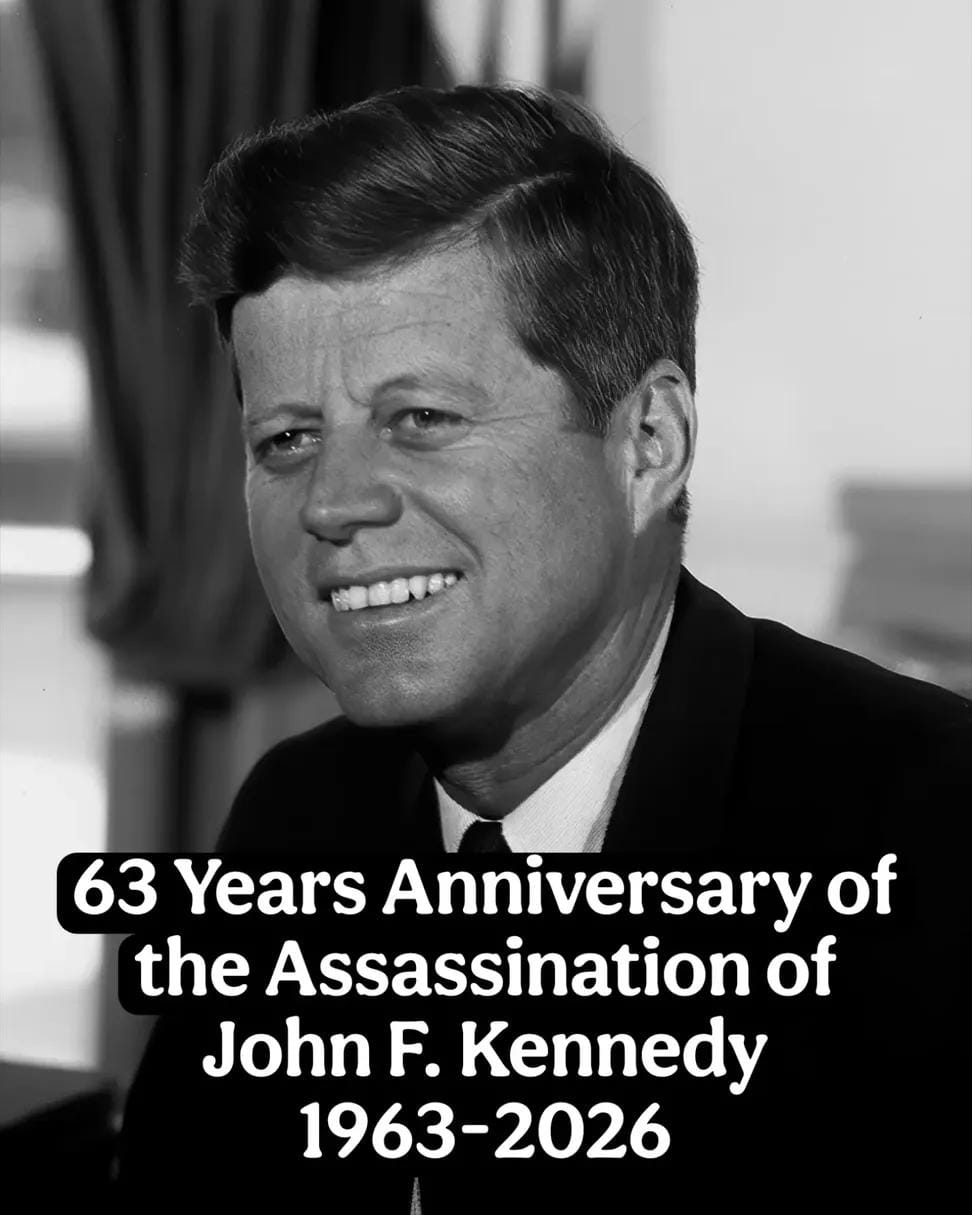
On 22 November 1963, the world witnessed one of the most shocking political assassinations of the twentieth century. John Fitzgerald Kennedy, the 35th President of the United States, was shot and killed while travelling in a presidential motorcade through Dealey Plaza in Dallas, Texas. He was only 46 years old.
The assassination stunned the American people, shook international confidence, and abruptly ended a presidency that had become closely associated with generational change, political optimism, and American leadership during the Cold War.
Sixty-three years later, Kennedy’s death remains deeply embedded in American historical memory. His presidency had confronted some of the most consequential challenges of the twentieth century, including the Cuban Missile Crisis, the struggle for civil rights, relations with the Soviet Union, and the emerging ambition to send human beings to the Moon.
Yet the events of that November afternoon revealed a fundamental truth about political power: even the most influential leaders remain vulnerable to the uncertainties of human existence.
For the people of British Southern Cameroons, also known by independence advocates as Ambazonia, Kennedy’s assassination offers an opportunity for reflection.
The historical circumstances are different, and the assassination should not be equated with the political conflict concerning Southern Cameroons. Nevertheless, the tragedy raises questions directly relevant to political leadership, constitutional continuity, democratic accountability, and the institutional foundations of any future nation.
What happens when a political leader suddenly disappears from the scene? Does the political system collapse with that individual, or do established institutions ensure the continuity of government? The answer to that question provides one of the most important lessons of November 22, 1963.
THE CONSTITUTIONAL TEST: HOW AMERICAN INSTITUTIONS SURVIVED KENNEDY
The assassination of President Kennedy represented an extraordinary national tragedy. But it did not bring the United States government to an end. Within hours of Kennedy’s death, Vice President Lyndon B. Johnson assumed the presidency and took the presidential oath of office aboard Air Force One at Love Field in Dallas.
Federal Judge Sarah T. Hughes administered the oath in the presence of officials and members of the presidential party, including Jacqueline Kennedy. The image of Johnson taking the oath beside the recently widowed First Lady became one of the defining photographs of American constitutional history.
The symbolism was profound. The nation had lost its president, but the presidency itself continued. Government authority did not disappear because its principal officeholder had died. The constitutional system provided a mechanism through which executive authority could be transferred.
This did not mean that American institutions were perfect or that every constitutional question had already been resolved. Indeed, uncertainties concerning presidential disability and vice-presidential vacancies contributed to the subsequent adoption of the Twenty-Fifth Amendment in 1967.
Nevertheless, the orderly succession demonstrated an essential feature of constitutional government. The authority of the state must belong to enduring institutions rather than to the personal existence of a particular leader. Political leaders are temporary custodians of public authority. Institutions, constitutional principles, and the collective sovereignty of the people must be capable of continuing beyond them. For Ambazonia, this is a subject that deserves serious consideration.
THE AMBAZONIAN QUESTION: CAN INSTITUTIONS OUTLIVE THEIR LEADERS?
The political struggle concerning Southern Cameroons has experienced prolonged disagreements over leadership, representation, institutional authority, and political strategy.
Several political organizations have claimed mandates to represent the aspirations of the people. The imprisonment of prominent political figures, including Sisiku Julius Ayuk Tabe and the other members of the NERA 10, has added further complexity to questions of leadership continuity and political representation.
These circumstances are not comparable to the assassination of a sitting American president. They nevertheless raise a related institutional question: how can political authority remain accountable and functional when individuals who exercise or claim leadership are imprisoned, incapacitated, removed from office, or otherwise unable to perform their responsibilities?
A political movement that depends excessively upon the personality of a single leader may face uncertainty whenever that leader becomes unavailable. Similarly, a movement in which several organizations claim overlapping executive authority without agreed procedures may encounter difficulties in decision-making, representation, and accountability.
The lesson from the American constitutional experience is not that one political system can simply be copied into another historical setting. It is that durable political institutions require clear rules. These rules must establish how leaders are selected, how authority is delegated, how vacancies are filled, how disputes are resolved, and how public officials are held accountable. They must also prevent the indefinite concentration of authority in the hands of individuals who are not answerable to the people.
For those aspiring to establish an independent Ambazonian state, these questions are particularly important. Political independence, if achieved, would not automatically resolve disagreements over leadership legitimacy or institutional competence. A sovereign state would require functioning constitutional institutions capable of exercising authority regardless of which individuals hold office.
The future of a nation cannot responsibly depend upon the continued presence, personal influence, or political survival of any one leader.
POLITICAL VIOLENCE: THE SANCTITY OF HUMAN LIFE
Kennedy’s assassination also reminds us of the devastating consequences of political violence. An assassin’s bullet ended the life of a president, deprived a family of a husband and father, and plunged a nation into mourning. The consequences extended far beyond the immediate victim. The tragedy affected political leadership, national confidence, public trust, and the direction of American history.
For Southern Cameroons, the relevance is found in the human consequences of prolonged political conflict. Since the escalation of the Anglophone crisis into armed conflict, civilians and families have experienced violence, displacement, insecurity, and serious disruptions to education and economic life. The suffering of ordinary people must remain central to any consideration of the conflict’s political future.
Political disagreements, however profound, do not diminish the value of human life. The protection of civilians, respect for fundamental rights, and accountability for unlawful violence are responsibilities that apply to governments and non-state armed actors alike.
Assassination, intimidation, arbitrary detention, attacks on civilians, and other violations of applicable law cannot become acceptable instruments of political competition. Nor should political affiliation determine whose suffering deserves recognition. The lives of children, teachers, traders, farmers, workers, traditional leaders, public officials, and ordinary citizens possess equal human dignity. No political objective can justify treating innocent human beings as expendable.
The assassination of President Kennedy therefore provides an occasion not merely to remember a historical tragedy but to reflect upon the responsibilities of political actors to preserve life, protect civilians, and pursue peaceful means of resolving disputes wherever possible.
THE UNRESOLVED QUESTIONS: TRUTH, EVIDENCE AND PUBLIC CONFIDENCE
The circumstances surrounding Kennedy’s assassination have generated decades of historical investigation and public debate. Lee Harvey Oswald was arrested and charged in connection with the killing. Before he could stand trial, however, Oswald was shot and killed by nightclub owner Jack Ruby on 24 November 1963. As a result, the criminal charges against Oswald were never tested through a completed trial.
The Warren Commission, established to investigate the assassination, concluded in 1964 that Oswald acted alone. A later investigation by the United States House Select Committee on Assassinations reached a different assessment concerning the possibility of conspiracy, while leaving important questions unresolved.
Subsequent scrutiny of evidence, including the acoustic evidence used in the congressional investigation, has complicated the historical debate. The existence of competing interpretations does not establish every theory advanced about the assassination. It does, however, demonstrate the importance of evidence, transparent investigative procedures, institutional accountability, and the careful distinction between established facts and allegations.
For Ambazonia, the broader lesson concerns the value of truth in political and historical discourse. Political movements and governments alike have a responsibility to distinguish documented events from speculation. Accusations against political opponents should be supported by credible evidence.
Historical grievances deserve serious examination, but their credibility is strengthened rather than weakened by responsible documentation. Independent journalism has a particularly important role in this process. Its responsibility is not merely to repeat political claims, but to examine evidence, question authority, identify uncertainty, and provide the public with information necessary for informed judgment.
The Independentist News, like every publication committed to public accountability, must recognize that the pursuit of truth requires intellectual discipline as well as conviction. History should be investigated, not invented. And political legitimacy should not depend upon the suppression of inconvenient facts.
LEADERSHIP IS PUBLIC SERVICE, NOT PERSONAL OWNERSHIP OF AUTHORITY
One of Kennedy’s most enduring statements came during his inaugural address on 20 January 1961: “Ask not what your country can do for you—ask what you can do for your country.” Those words continue to resonate because they place public service at the centre of civic responsibility. They also invite reflection on the responsibilities of political leaders.
Leadership should not be understood primarily as the possession of titles, the exercise of personal influence, or the accumulation of institutional authority. It should involve service, accountability, responsibility, and a commitment to the welfare of the people. For Ambazonian political organizations, this principle raises important questions. – Are institutions being developed to serve the public, or are political constituencies being organized around the ambitions of individuals? – Can leaders accept criticism without regarding disagreement as betrayal? – Are leadership responsibilities clearly defined? – Do political organizations have transparent procedures for succession and accountability? – And are decisions evaluated according to their practical consequences for the people?
These questions are relevant regardless of which political structure or constitutional outcome an individual supports. A political movement that seeks democratic legitimacy must be willing to apply democratic standards to its own internal conduct. The promise of freedom cannot be separated from the responsibility to respect the rights and dignity of others.
FROM POLITICAL ASPIRATION TO CONSTITUTIONAL GOVERNMENT
The assassination of JFK illustrates the distinction between individual leadership and the continuity of an established state. It also invites those contemplating a future Ambazonian state to consider the constitutional arrangements that would be necessary to sustain democratic government. Such arrangements would need to address the distribution of executive, legislative, and judicial authority.
They would require safeguards against the abuse of power. They would need procedures for lawful succession, leadership vacancies, impeachment or removal from office, and the peaceful transfer of authority. The independence of the judiciary would be essential to protecting constitutional rights and resolving disputes without political intimidation. Public institutions would need to operate according to law rather than personal loyalty. Political competition would need rules that allow citizens to change their leaders peacefully. Civilian control and lawful oversight of security institutions would also be necessary. These are not merely technical questions for constitutional lawyers. They concern the everyday security and freedom of the population.
A constitution should protect citizens against arbitrary government action. A justice system should provide meaningful remedies when rights are violated. A legislature should be capable of scrutinizing executive decisions. And public officials should understand that authority carries obligations rather than personal entitlement.
The Kennedy succession demonstrates that institutional continuity can help prevent a political emergency from becoming a constitutional collapse. For a prospective Ambazonian state, establishing such institutions would be among the central responsibilities of nation-building. The challenge is not simply to establish the symbols of sovereignty. It is to develop the constitutional substance of responsible government.
THE ECONOMIC AND SOCIAL RESPONSIBILITIES OF A FUTURE NATION
Political stability requires more than constitutional provisions. It also requires public institutions capable of responding to the economic and social needs of the population. The legitimacy of government is strengthened when citizens can access education, healthcare, justice, security, employment opportunities, and reliable public services.
For Southern Cameroons, these concerns have particular significance because prolonged conflict has affected livelihoods, disrupted schooling, damaged local economies, and placed substantial burdens upon families. Any future political settlement would therefore need to consider reconstruction and economic recovery.
For advocates of an independent Ambazonia, the responsibilities of state-building would extend to developing accountable public finance systems, reliable infrastructure, productive industries, and conditions that encourage investment and employment. Political sovereignty would need to be accompanied by responsible economic management.
For those advocating other constitutional arrangements, the challenge would likewise involve demonstrating how governance reforms could address historical grievances and improve public welfare. In either case, political leadership must be judged through more than declarations of principle.
The well-being of ordinary people must remain central. A nation is not strengthened merely because its leaders possess authority. It is strengthened when public institutions use authority responsibly to protect citizens and create opportunities for future generations.
HISTORY REMEMBERS LEADERS, BUT INSTITUTIONS SUSTAIN NATIONS
John F. Kennedy remains one of the most recognizable political figures in modern American history. His presidency continues to attract scholarly attention, public admiration, criticism, and debate. His assassination remains a defining event in the American historical imagination.
Yet the United States did not cease to exist when Kennedy died. Its constitutional institutions continued to operate. The presidency passed to Lyndon B. Johnson, and the country entered a new political period. This continuity did not erase the tragedy or eliminate the political challenges that followed. It demonstrated something more fundamental: the survival of constitutional government cannot depend solely upon the survival of an individual.
For Ambazonia, that is the central institutional lesson. Political leaders may inspire movements, mobilize communities, articulate aspirations, and make significant personal sacrifices. Their contributions may deserve historical recognition. Nevertheless, they cannot substitute permanently for accountable institutions. The political future of a people must be capable of continuing beyond its founders, its most prominent leaders, and its present generation.
Leadership should therefore be understood as a responsibility to build institutions that others can legitimately inherit, scrutinize, reform, and sustain. The greatest contribution of a political leader may not be the authority exercised during a lifetime, but the institutional foundations left behind.
CONCLUSION: THE ENDURING LESSON OF NOVEMBER 22
Sixty-three years after the assassination of President John Fitzgerald Kennedy, the events of November 22, 1963, continue to offer lessons about the fragility of human life, the uncertainty of political leadership, and the importance of constitutional institutions. Kennedy’s death was a tragedy that transformed American history.
But the constitutional continuation of government demonstrated that a democratic political system must possess mechanisms capable of operating beyond the personal existence of its leaders.
For Ambazonia, the significance of this anniversary lies not in drawing a direct historical comparison between the assassination of an American president and the contemporary Southern Cameroons conflict. It lies in examining the responsibilities of political leadership and the institutional foundations of a future political order. A nation cannot depend indefinitely upon one personality. A political movement cannot substitute competing personal claims for accountable procedures.
And the aspiration to sovereignty must be accompanied by a serious commitment to constitutional government, human rights, public service, and institutional continuity. The protection of human life must remain paramount.
Political disagreements must not become excuses for violence against civilians or the denial of fundamental rights. Those who aspire to govern must demonstrate that they understand government as a public trust rather than a personal possession. Kennedy’s life reminds us of the possibilities of political leadership. His assassination reminds us of its fragility. And the continuity of American constitutional government after his death reminds us of the enduring importance of institutions.
History remembers leaders, but the strength of a nation ultimately depends upon the institutions, values, and principles capable of surviving them. That is the lesson of November 22, 1963. And it is a lesson that deserves thoughtful consideration in the continuing debate over Ambazonia’s political future.
TIMOTHY ENONGENE
Editor-in-Chief
THE INDEPENDENTIST NEWS
The Independentist News — Documenting History, Questioning Power, and Defending the Principles of Freedom and Self-Determination.





Leave feedback about this