










Commentary

We are home to news on Cameroon and the CEMAC region. We are dedicated to honest and reliable reporting. We are the voice of the Cameroonian people and their fight for freedom and democracy at a time when the Yaoundé government is silencing dissent and suppressing democratic voices.

An American-formed Pope does not need to instruct. His posture defines expectation: speak plainly, stand where the suffering is visible, avoid proximity to power that compromises moral authority.
By Ali Dan Ismael, Editor-in-Chief, The Independentist News
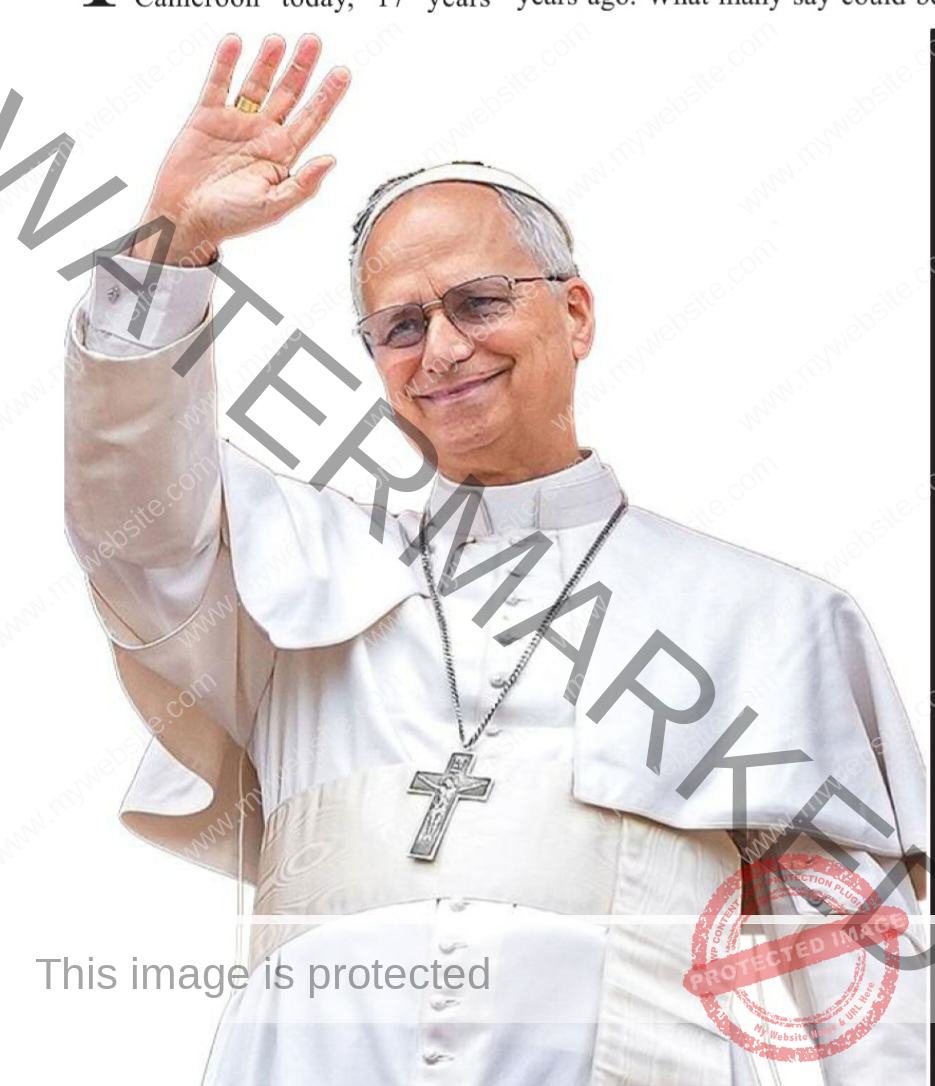
A Pope who speaks like an American is not just a spiritual leader—he is a geopolitical event. For the first time in modern history, the Vatican is no longer speaking to America through translation. It is speaking as America.
The emergence of Pope Leo XIV—an American by formation before becoming a global spiritual authority—has quietly but decisively altered the architecture of international discourse. His words do not pass through interpreters. They do not soften in translation. They arrive with the precision, rhythm, and directness of American speech. And that changes everything.
I. The Collapse of the Diplomatic Buffer
For centuries, papal language carried an invisible layer of insulation. Translation created distance: distance to reinterpret, distance to soften, distance to manage fallout. That distance is gone.
When Leo speaks, his message travels instantly—unaltered—into newsrooms, policy briefings, and social media battlefields. There is no second draft. No diplomatic cushioning. Translations once protected power. Clarity now exposes it.
II. When an American Mind Encounters Ambazonia
What makes this moment strategically significant is not merely that the Pope speaks English. It is how he thinks. An American formation carries distinct instincts: a reflex to question centralized authority, an expectation that power must justify itself, a sensitivity to systems, not just outcomes, and a bias toward clarity over ceremony.
When such a mindset confronts a crisis like Ambazonia, the framing shifts. It is no longer seen as a distant regional disturbance, a bilingual inconvenience, or a manageable internal issue.
It begins to register in terms familiar to Western strategic thinking: legitimacy, consent, structure, and accountability. And once a conflict is understood in those terms, it becomes far harder to contain within borders.
III. Rome Enters the American Arena
Unlike previous pontiffs, Leo operates in the same communication ecosystem as political actors such as Donald Trump. They share language, platforms, and audience. This convergence is unprecedented.
When the Pope speaks about justice, dignity, or human suffering, his words do not remain confined to theology. They move instantly into political narratives, media cycles, and strategic calculations. He is no longer speaking above politics. He is speaking within the same arena. And in that arena, clarity is not commentary. It is influence.
IV. The Unspoken Pressure on the Periphery
This transformation does not require declarations. It creates pressure through contrast. For leaders such as Archbishop Andrew Nkea Fuanya, the implication is unavoidable.
An American-formed Pope does not need to instruct. His posture defines expectation: speak plainly, stand where the suffering is visible, avoid proximity to power that compromises moral authority.
Because when the center speaks without ambiguity, those at the margins—whether political or religious—must decide: Will they echo clarity, or retreat into silence? There is no neutral ground left.
V. Strategic Consequences
The Ambazonian question now intersects with a deeper shift in global communication. The consequences are already taking shape. First, visibility without mediation. Reality travels faster when it is not filtered.
Second, erosion of narrative control. States accustomed to managing perception through layered diplomacy face a new challenge: messages that arrive unaltered and widely understood.
Third, repositioning of moral authority. Actors across the spectrum are forced to reassess their stance when clarity becomes the dominant currency.
VI. What This Moment Represents
This is not an endorsement of any political movement. It is not a declaration of alignment. It is something more consequential: a structural shift in how moral authority communicates in a world that no longer tolerates delay, distortion, or disguise. And in such a world, the ability to be clearly understood is no longer incidental. It is decisive.
Conclusion
The significance of Pope Leo XIV does not lie only in doctrine or tradition. It lies in disruption. A disruption of how power speaks. A disruption of how truth travels. A disruption of how conflicts—like Ambazonia—are perceived, interpreted, and ultimately judged. Because once clarity enters the system, ambiguity begins to collapse.
Final Line
In a world where authority once relied on distance and interpretation, clarity is no longer neutral—it is power.
Ali Dan Ismael, Editor-in-Chief, The Independentist News
Share This Post:
The Independentist News – Note of appreciation
The Pulpit or the Palace: Rome Has Drawn the Line
Related Post
IS THE WORLD LISTENING: THREE DAYS FOUR FRONTLINES, ASA
SEPTEMBER 24, 1965, THIS DAY IN HISTORY: From Equal
AMBAZONIA’S WAR- IS BIGGER THAN YAOUNDÉ: BRITAIN, FRANCE AND
THE DAY SEPTEMBER 22 1961: — WHAT AMBAZONIA CAN
TRUMP’S “SUPER INTELLIGENCE” ERA: WHAT IT REALLY MEANS —
Why Is Ambazonia More Powerful Than many Imagine.