



The capture of a fighter is a military event. The resolution of a national question is a political undertaking. They are not the same thing. And until the political roots of the Ambazonia–LRC conflict are addressed through a credible process, no single military victory can reasonably be presented as the final chapter of the struggle
By an Anonymous Writer and Fervent Reader of The Independentist News
As Amazon associate this site earns from qualifying purchases
Buy your copies of books on Ambazonia’s productive Sovereignty and statecraft By Martin Mungwa on Amazon
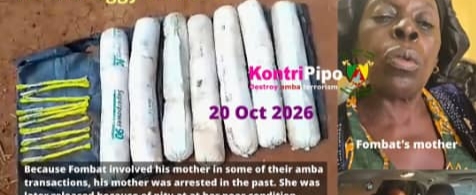
BUEA – October 20, 2026 – The reported capture of General Shaggy of Fako, however significant it may be to La République du Cameroun (LRC), will not end the war in Ambazonia. Neither the capture of an individual commander, the destruction of a military camp nor the announcement of another battlefield victory can, by itself, settle a conflict rooted in competing claims over sovereignty, political authority and self-determination.
Yet a familiar argument continues to emerge: that the Ambazonia struggle can ultimately be suppressed in the same manner as the Union des Populations du Cameroun (UPC) insurgency that erupted in French Cameroun in 1955. The comparison is historically incomplete and politically misleading.
The UPC insurgency and the Ambazonia conflict emerged under different constitutional circumstances, confronted different political questions and developed within different historical settings. They share elements of resistance, repression and political grievance. Their histories even intersected. But these similarities do not erase the fundamental distinctions between them.
The UPC fought principally over the independence and political direction of French Cameroun. The contemporary Ambazonia movement contests the political status of the former British Southern Cameroons and its relationship with LRC.
Confusing these struggles does more than distort history. It encourages the dangerous assumption that defeating armed fighters is equivalent to resolving the political question that sustains a conflict.
TWO STRUGGLES, TWO DISTINCT HISTORICAL FOUNDATIONS
The UPC emerged in French-administered Cameroun as an anticolonial nationalist movement demanding independence and, at different stages, the reunification of territories divided after Germany’s defeat in the First World War.
Following its prohibition by the French colonial administration in 1955, sections of the movement became involved in an armed insurgency. French colonial forces and, subsequently, the government of the independent Republic of Cameroon conducted extensive military operations against UPC resistance.
The repression was severe. The conflict continued beyond French Cameroun’s independence on January 1, 1960, and its legacy remains an important chapter in African anticolonial history.
The former British Southern Cameroons followed a different constitutional trajectory. Administered under British trusteeship, the territory possessed a distinct colonial administrative experience, political development, legal tradition and educational system.
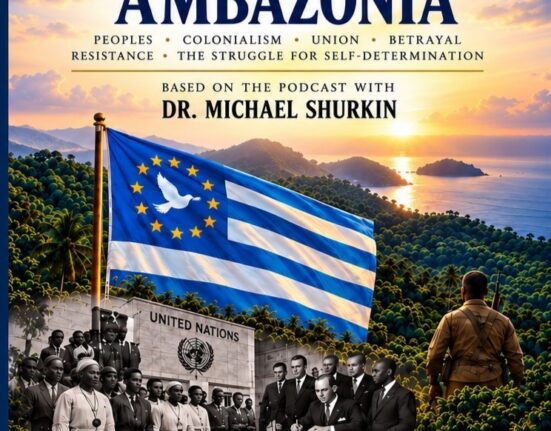
On February 11, 1961, its population participated in a United Nations-supervised plebiscite offering two alternatives: joining the independent Republic of Cameroon or joining Nigeria. Separate independence was not included among the choices.
The Southern Cameroons electorate voted in favour of joining the Republic of Cameroon, and the territory subsequently became West Cameroon within the Federal Republic of Cameroon on October 1, 1961. That federal arrangement was replaced by a unitary state following the May 20, 1972, referendum.
For Ambazonian independence advocates, the circumstances of the plebiscite, the nature of the federation and its subsequent abolition remain fundamental to the argument that the territory’s political status requires renewed examination.
The historical distinction is therefore not simply about the identity of those carrying weapons. It concerns the constitutional and political questions underlying the respective conflicts.
HISTORICAL CONNECTION DOES NOT MEAN HISTORICAL IDENTITY
Historical accuracy requires acknowledging that the UPC movement was not entirely disconnected from the British Southern Cameroons. UPC activists sought refuge and operated across colonial boundaries. The movement also advanced ideas about reunification that influenced the political debate preceding the 1961 plebiscite. These intersections are important.
But historical interaction does not make the two struggles identical. The UPC insurgency principally challenged colonial domination and the post-independence political order in French Cameroun. The contemporary Ambazonia independence movement challenges the political relationship established between the former British Southern Cameroons and the Republic of Cameroon. The distinction becomes particularly significant when the UPC experience is invoked as a model for ending the present war.
The historical suppression of an armed nationalist movement does not establish that another conflict, arising from different constitutional grievances, can be settled through military operations alone. Nor does the failure of one armed organization to achieve its objectives determine the validity or eventual outcome of another people’s political claims. History must be examined, not recycled as a convenient prediction.
FROM THE 1961 FEDERATION TO THE WAR OF 2017
The federal arrangement established in 1961 recognized West Cameroon and East Cameroon as constituent states. Its replacement by a unitary system in 1972 fundamentally changed the constitutional structure under which the former British Southern Cameroons had entered the federation. For decades, disputes continued over representation, legal and educational institutions, language, centralization and the political status of the Anglophone territories.
These grievances intensified in 2016 when lawyers and teachers organized protests against policies they believed threatened the English-language legal and educational traditions. The government’s response, including arrests and the suppression of protests, contributed to a deepening crisis.
By 2017, the confrontation had escalated into an armed conflict involving government security forces and separatist armed groups. The war has devastated communities, uprooted families, disrupted education, damaged economic life and inflicted enormous suffering on civilians. Multiple parties to the conflict have faced allegations of serious human rights abuses.
These humanitarian realities must remain central to any discussion of the war. For independence advocates, however, the conflict also represents the continuation of an unresolved national question. Military developments therefore cannot be evaluated in isolation from the political dispute.
A commander may be captured. An armed formation may be weakened. Territory may change hands. But none of these developments necessarily determines the legitimacy of competing constitutional claims or provides an enduring political settlement. Military power can influence the course of a war. It cannot alone establish a mutually accepted political future.
WHY THE UPC COMPARISON IS POLITICALLY DANGEROUS
Invoking the UPC precedent becomes problematic when the comparison is used to argue that LRC can end the Ambazonia conflict simply by eliminating its armed resistance. Such reasoning reduces a complex political dispute to a question of security operations. It assumes that once particular commanders are captured, the conflict itself can be declared finished.
But what becomes of the historical grievances? What happens to the unresolved disputes surrounding the 1961 arrangements and the abolition of the federation? What happens to the demand for self-determination? What happens to displaced families, political detainees, civilian victims and communities traumatized by years of war? These questions cannot be answered through military communiqués.
A battlefield victory may weaken an armed organization without resolving the circumstances that produced resistance. Conversely, the persistence of armed groups does not automatically establish that every civilian shares their objectives or approves their actions.
A serious political analysis must recognize both distinctions. Neither military victory nor military resistance should be confused with an expression of unanimous public consent. The political aspirations of a population must be assessed through credible and representative processes rather than inferred solely from battlefield developments.
GENERAL SHAGGY IS NOT THE NATIONAL QUESTION
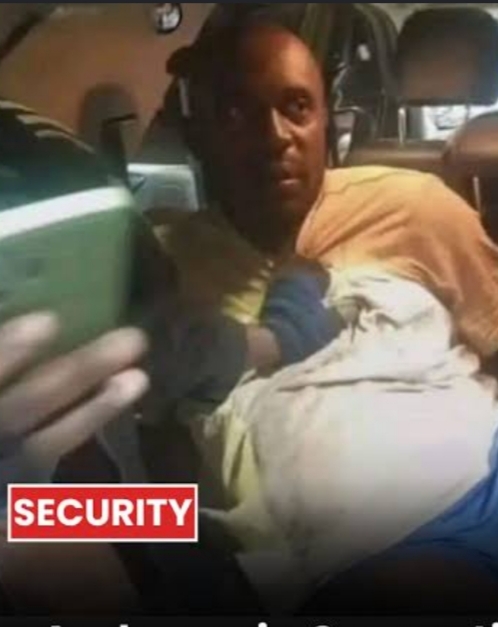
The reported capture of General Shaggy of Fako has renewed debate about the military trajectory of the Ambazonia conflict. The precise circumstances and status of the reported capture require independent confirmation. Nevertheless, the broader political point remains unchanged.
No individual commander, irrespective of his military importance, can embody the entirety of a historical and constitutional dispute. Armed movements may have leaders, factions and command structures. Political movements may have competing organizations, disagreements and rival claims to representation. These realities affect their effectiveness and credibility, and they deserve serious scrutiny. But the arrest or defeat of one military figure cannot erase a territory’s history or conclusively determine its constitutional future.
The October 1, 2026, commemorations and public expressions of support associated with Ambazonian independence also demonstrate the continued significance of the cause to its supporters. Such demonstrations do not establish unanimity among the population. They do, however, challenge attempts to portray the entire issue as the activity of a few armed personalities. A national question cannot be reduced to the fate of a single general.
PEACE CANNOT MEAN THE SILENCE OF ONE SIDE
Every credible effort to end the Ambazonia war should begin with the protection of civilians and the recognition of the enormous human cost of continued fighting. Peace is urgently needed. But sustainable peace requires more than the cessation of hostilities. It requires confronting the underlying grievances, addressing abuses, establishing accountability and creating a political process capable of examining the competing claims.
For advocates of Ambazonian independence, any credible settlement must permit meaningful consideration of self-determination rather than treating the continued political relationship with LRC as an unquestionable starting condition. LRC, for its part, maintains a position favouring territorial unity. The disagreement is therefore substantial and cannot be resolved by pretending it does not exist.
A process intended to secure lasting peace should identify the fundamental issues, permit credible representation and establish procedures that do not predetermine the outcome. An Independent third-party mediation could provide an important framework for such engagement.
It would not eliminate disagreement, but it could help establish conditions under which the parties address their differences without resorting to further violence. The central challenge is to move beyond a security-based response toward an accountable political process.
THE COST OF MISTAKING SUPPRESSION FOR SETTLEMENT
History contains numerous examples of governments suppressing armed organizations without achieving lasting reconciliation. The disappearance of a particular fighting force does not necessarily mean that the grievances associated with it have disappeared.
This does not imply that armed conflict must continue until every political demand is accepted. Nor does it excuse attacks on civilians, kidnappings, forced recruitment or other abuses committed in pursuit of political objectives. It means that the end of organized violence and the achievement of a legitimate political settlement are related but distinct tasks.
For LRC, the challenge is not simply to demonstrate military superiority. It is to establish whether its approach can address the political conditions associated with the conflict and restore lasting public confidence.
For Ambazonian leaders and advocates, the challenge is equally serious: to articulate credible political objectives, strengthen responsible representation, protect civilian interests and demonstrate how their preferred political future would produce accountable government. The suffering of ordinary people should not be subordinated to the prestige of commanders or the ambitions of political personalities on either side.
THE QUESTION YAOUNDÉ MUST ANSWER
After nearly a decade of conflict, the central question is unavoidable: Does LRC seek merely to defeat armed separatist formations, or is it prepared to address the unresolved political dispute that continues to sustain the conflict?
If the objective is limited to military suppression, the reported capture of General Shaggy would represent another development in a prolonged war. If the objective is a lasting settlement, then a more comprehensive political response is necessary.
That response must account for the distinct history of British Southern Cameroons, the 1961 plebiscite, the federation, the constitutional changes of 1972 and the grievances that preceded the escalation of hostilities in 2017. It must also confront the continuing humanitarian consequences of the war.
The international community should avoid interpreting every military announcement as evidence that the underlying conflict is approaching resolution. A reduction in fighting would be welcome. Improved civilian protection would be essential. But a durable peace requires institutions and political arrangements capable of sustaining it.
TWO HISTORIES MUST NOT BE FORCED INTO ONE CONCLUSION
The UPC insurgency and the Ambazonia struggle belong to the larger history of colonialism, nationalism, state formation and resistance in the Cameroons. Both deserve serious historical examination. Both involve painful histories that should neither be trivialized nor exploited for political convenience. But their historical connections do not justify treating them as interchangeable conflicts.
The UPC struggle developed principally around anticolonial independence and the political order of French Cameroun. The Ambazonia struggle concerns, among other issues, the contested political future of the former British Southern Cameroons following the 1961 federation and its abolition. Those distinctions matter.
For those who seek an end to the Ambazonia war, understanding them is not an academic luxury. It is a necessary foundation for any serious attempt at lasting peace. The reported capture of General Shaggy, if confirmed, may be significant to the military balance. It cannot be the final answer to a question that long predates his involvement in the conflict.
The capture of a fighter is a military event. The resolution of a national question is a political undertaking. They are not the same thing. And until the political roots of the Ambazonia–LRC conflict are addressed through a credible process, no single military victory can reasonably be presented as the final chapter of the struggle.
As Amazon associate this site earns from qualifying purchases
Buy your copies of books on Ambazonia’s productive Sovereignty and statecraft By Martin Mungwa from Amazon
Anonymous for — The Independentist News