









Commentary

We are home to news on Cameroon and the CEMAC region. We are dedicated to honest and reliable reporting. We are the voice of the Cameroonian people and their fight for freedom and democracy at a time when the Yaoundé government is silencing dissent and suppressing democratic voices.

The debate over President Biya’s whereabouts and the restoration of the Vice-Presidency ultimately reflects a larger issue confronting Cameroon: the challenge of political transition in a system shaped by decades of centralized authority. Whether current reforms are intended to strengthen governance or manage succession, they have highlighted the growing importance of institutional continuity and constitutional legitimacy.
By Lester Maddox. Guest Contributor, The Independentist News, Oakland County, California
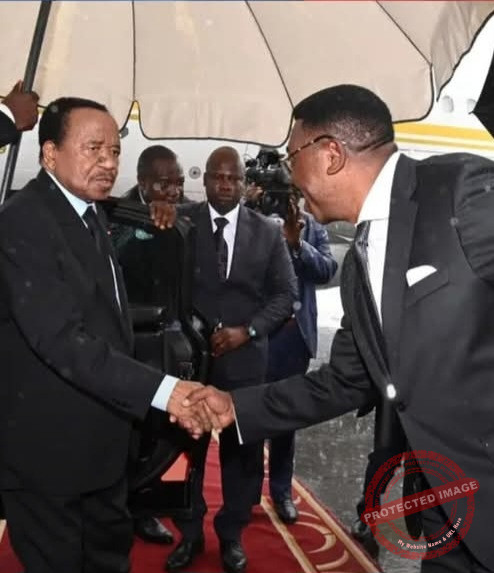
YAOUNDÉ – June 2026 – Political uncertainty often begins with a simple question. In Cameroon today, that question has become increasingly difficult to ignore: Where is President Paul Biya, and who is exercising effective authority within the state? As speculation regarding the president’s health and whereabouts continues to circulate, concerns about governance, succession, and constitutional legitimacy have moved from private conversations into public debate.
Official government statements have insisted that President Biya is merely undertaking a private stay in Europe and that state affairs continue to function normally. Yet the prolonged absence of direct public engagement and the lack of clear information regarding the president’s condition have fueled growing uncertainty both within Cameroon and among international observers. In highly centralized political systems, prolonged ambiguity surrounding the head of state inevitably raises questions about decision-making authority and institutional stability.
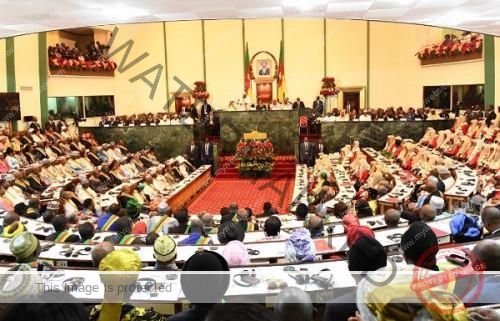
Against this backdrop, recent constitutional developments have attracted significant attention. Earlier this year, Cameroon’s Parliament reportedly convened to approve major constitutional changes, including the restoration of the office of Vice-President, a position that disappeared following the abolition of the federal system in 1972. The move immediately generated speculation regarding its political significance and its possible connection to future succession arrangements.
Supporters of the amendment presented it as a modernization of the constitutional framework and, in some quarters, as a potential mechanism for promoting greater national inclusion. Critics, however, interpreted the reform very differently. They argued that the timing of the amendment was not accidental but rather reflected growing concerns within the ruling establishment about the future of political leadership in a system dominated by one individual for more than four decades.
According to this interpretation, the restoration of the Vice-Presidency was less about constitutional reform and more about succession management. Critics point to provisions that would allow a Vice-President to assume presidential responsibilities under specific circumstances, arguing that such mechanisms could fundamentally alter the established process of political transition. In their view, the amendment was designed to provide a controlled pathway for continuity within the existing power structure rather than to promote broader democratic participation.
These concerns have been amplified by persistent reports of competition among various political factions within the ruling establishment. As uncertainty regarding the future leadership of the country grows, different groups are widely believed to be positioning themselves to influence any eventual transition. In such an environment, constitutional changes are often viewed not merely as legal reforms but as instruments in a broader political struggle over succession and power.
For many observers, the deeper issue extends beyond the fate of any individual leader. The controversy exposes the challenges faced by political systems that become heavily dependent on a single figure. Strong institutions are expected to function effectively regardless of who occupies the presidency. When uncertainty surrounding one individual creates widespread anxiety about the future of the state, questions naturally arise regarding the resilience of the institutions themselves.
Within Ambazonian political circles, these developments are frequently interpreted as evidence of a broader crisis affecting the central state. Many activists argue that a government preoccupied with internal succession battles may find it increasingly difficult to address long-standing political conflicts, including the unresolved crisis in the Northwest and Southwest regions. They contend that uncertainty at the center of power often limits the state’s ability to pursue coherent long-term solutions.
At the same time, analysts caution against drawing premature conclusions from incomplete information. Political rumors have long played a significant role in Cameroonian public life, and the absence of transparency often creates fertile ground for speculation. Nevertheless, the persistence of questions surrounding leadership, constitutional reform, and succession demonstrates the extent to which public confidence depends upon openness and institutional credibility.
The debate over President Biya’s whereabouts and the restoration of the Vice-Presidency ultimately reflects a larger issue confronting Cameroon: the challenge of political transition in a system shaped by decades of centralized authority. Whether current reforms are intended to strengthen governance or manage succession, they have highlighted the growing importance of institutional continuity and constitutional legitimacy.
For many Cameroonians, the fundamental question is no longer simply where Paul Biya is. The more important question may be whether the state’s institutions are capable of functioning effectively beyond the era of a single leader. The answer to that question will likely shape the country’s political future long after the current controversy has faded from the headlines.
Adapted from commentary concerning recent constitutional developments, leadership succession debates, and ongoing questions regarding governance and political transition in Cameroon.
Lester Maddox Guest Contributor, Independentist News, Oakland County, California
Share This Post:
RESOLUTE ON THE GROUND—THE AMBAZONIA STATE ARMY AND THE CONTEST OVER NORMALCY IN FAKO9
THE PANIC OF CAMEROONS COMMUNICATION MINISTER RENÉ EMMANUEL SADI – THERE IS NO SMOKE WITHOUT FIRE
Related Post
AMBAZONIA’S WAR- IS BIGGER THAN YAOUNDÉ: BRITAIN, FRANCE AND
THE DAY SEPTEMBER 22 1961: — WHAT AMBAZONIA CAN
TRUMP’S “SUPER INTELLIGENCE” ERA: WHAT IT REALLY MEANS —
Why Is Ambazonia More Powerful Than many Imagine.
THIS DAY IN HISTORY SEPTEMBER 22, 2017: THE DAY
A President Unseen, a Country Waiting: Yaoundé’s Succession Uncertainty