











Mr. Ngwang Raphael Njeba’s death is a tragedy. So too are the deaths of Senator Kemende Henry, Wardress Florence Ayafor, and Hon. Abe Michael. Exploiting these tragedies to launder state violence and criminalize a people’s resistance compounds the harm. The facts point not to a rogue resistance agenda, but to a failed and brutal state apparatus that manufactures insecurity and then weaponizes it for control.
By The Independentistnews Investigative Desk
A Killing Framed, Not Examined
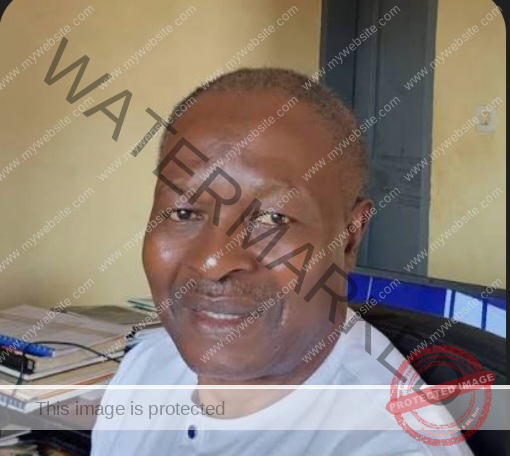
The killing of Mr. Ngwang Raphael Njeba, a seventy-year-old retiree from the Wimbum community, is being publicly framed as another instance of “Ambazonia separatists targeting civilians.” A careful review of the facts, however, points away from resistance-led violence and toward a familiar pattern of state-enabled endangerment, narrative manipulation, and impunity under the regime of Paul Biya.
What Is Not in Dispute
The following facts are not contested. Mr. Njeba was summoned by the Divisional Officer of Nkambe, an administrative representative of the state, for an official appointment. He was traveling openly and unarmed when he was removed from a public vehicle near Wainamah Hill. He was detained for several days, physically abused, financially extorted, and later killed. His body was dumped in a neighboring village, not discovered at the site of any armed confrontation. He had been retired for eighteen years, held no active administrative authority, and was widely respected as a community elder and Baptist church leader. These facts establish that Mr. Njeba was a civilian non-combatant and that his movement on that day was directly linked to a summons from state authorities.
The Context Deliberately Left Out
What state-aligned narratives omit is the broader operational reality in the North-West. The state has a documented history of proxy violence, false-flag tactics, and criminalized militias used to terrorize civilians, discredit the resistance, and justify escalation. Administrative summonses routinely place civilians at risk through surveillance exposure, intelligence leakage, or deliberate baiting. No verifiable evidence has been presented linking this killing to an authorized Ambazonian State Army command structure, operation order, or disciplinary process. Blame is asserted, not proven.
A Pattern of Targeted Killings, Then Narrative Reassignment
Mr. Njeba’s case is not isolated. Independent documentation and consistent testimony point to a repeating method: targeted killings under opaque circumstances followed by rapid attribution to resistance forces without transparent investigation.
Kemende Henry, a sitting senator who publicly opposed the war and spoke truth to power within the Senate, was killed after taking positions critical of the violence. Responsibility was subsequently shifted toward resistance elements, despite credible indications of state involvement and motive.
Florence Ayafor, a senior prison official, was killed under circumstances that were swiftly attributed to separatists, even as evidence and witness accounts raised serious questions about orchestration and narrative laundering. Abe Michael was assassinated and the killing was publicly framed to appear as an Ambazonian State Army action, despite longstanding indications of state-directed targeting and subsequent information manipulation. In multiple instances, claims of responsibility were circulated in the name of Ambazonia Defence Forces linked to Ayaba Cho Lucas, raising persistent concerns that confessions and attributions were solicited, coerced, or fabricated to fit a preselected narrative.
Cui Bono? Who Profits From the Crime
The question matters. The resistance gains nothing from eliminating critics of war, community leaders, or retired officials with no operational role.
The regime of Cameroon gains a propaganda narrative to criminalize the resistance, justify militarization, fracture internal cohesion, and manufacture moral equivalence for foreign audiences—while diverting attention from its own record of village burnings, mass displacement, and civilian deaths. In asymmetric conflicts, patterns outweigh accusations. The pattern here is consistent with state-enabled harm followed by instant narrative assignment.
International Law and State Responsibility
Under international humanitarian law, the occupying power bears primary responsibility for civilian protection. Civilians summoned by state authorities fall under a duty of care. Extrajudicial detention, extortion, killing, and corpse dumping constitute grave breaches, regardless of who physically carried out the act. Where the state creates the conditions, controls the administrative process, and benefits politically, responsibility does not vanish.
A Repeating and Dangerous Pattern
What is unfolding is not random violence but a recurring cycle. Civilians are exposed through administrative summonses or political visibility. They are harmed or killed under opaque circumstances. Blame is immediately assigned to “Ambazonia separatists.” No independent investigation follows. The narrative is used to harden occupation and silence political scrutiny. This is not reporting. It is narrative engineering.
Conclusion: Accountability Cannot Be Assigned by Propaganda
Mr. Ngwang Raphael Njeba’s death is a tragedy. So too are the deaths of Senator Kemende Henry, Wardress Florence Ayafor, and Hon. Abe Michael. Exploiting these tragedies to launder state violence and criminalize a people’s resistance compounds the harm. The facts point not to a rogue resistance agenda, but to a failed and brutal state apparatus that manufactures insecurity and then weaponizes it for control. Until independent investigations are permitted and the administrative machinery of repression is dismantled, the Biya regime remains the central actor responsible for civilian endangerment in the Southern Cameroons.
The Independentistnews Investigative Desk







Leave feedback about this