










Commentary

We are home to news on Cameroon and the CEMAC region. We are dedicated to honest and reliable reporting. We are the voice of the Cameroonian people and their fight for freedom and democracy at a time when the Yaoundé government is silencing dissent and suppressing democratic voices.

The Southern Cameroons became one of those forgotten territories — a people caught between collapsing empires, postwar financial restructuring, Cold War strategy, and incomplete constitutional arrangements. More than six decades later, the consequences remain unresolved. For that reason, many continue to describe the Southern Cameroons case not simply as a political dispute, but as one of Africa’s most enduring examples of incomplete decolonisation
By Ali Dan Ismael
Editor-in-Chief, The Independentist News
Britain Won the War but Lost the Empire
When the Second World War ended in 1945, Britain stood among the victorious powers. The British Empire still stretched across vast parts of the globe. London remained one of the world’s leading financial centers, and Winston Churchill was celebrated as one of the architects of Allied victory. But behind the image of triumph was a painful reality: Britain was financially exhausted.
The war against Nazi Germany had nearly bankrupted the British Empire. For six years, Britain spent enormous resources fighting across Europe, Africa, Asia, and the Atlantic. Industries were redirected toward war production. Trade routes were disrupted. Cities were bombed. National reserves disappeared. By the end of the war, Britain owed massive debts, to the United States. The once-dominant imperial power had become financially dependent on Washington.
British economist John Maynard Keynes traveled to the United States to negotiate desperately needed financial support. Britain hoped wartime sacrifices would result in generous assistance. Instead, postwar loans came tied to conditions that accelerated the transfer of global financial leadership from London to Washington. The Anglo-American Loan Agreement of 1946 symbolized this shift. Britain survived the war militarily. But economically, the empire was collapsing.
Bretton Woods and the Rise of the American World Order
Even before the war officially ended, global leaders understood that the international financial system needed to be rebuilt. In 1944, representatives from dozens of countries gathered in Bretton Woods, New Hampshire, to design the foundations of the postwar global economy. The Bretton Woods Conference created: the International Monetary Fund (IMF), the World Bank, and the dollar-centered financial order that would dominate the modern world.
Before the war, the British pound had been one of the world’s dominant reserve currencies. The British Empire operated through an enormous network of maritime trade, colonial commerce, banking, and insurance centered around the City of London. But Bretton Woods changed the balance of power. The United States emerged as the financial center of the new world order. The dollar replaced the pound as the foundation of global finance. Britain could no longer sustain its empire through the old imperial model.
The Collapse of Empire and the Fate of Smaller Territories
As Britain struggled financially, anti-colonial movements expanded across Africa and Asia. Maintaining colonies became increasingly expensive. At the same time, the United States encouraged European powers to move toward decolonisation while also seeking access to colonial markets previously controlled by European empires. Britain therefore entered a period of imperial retreat. Some territories moved directly toward sovereign independence. Others were reorganized, merged, or politically absorbed into larger structures. Smaller territories often became vulnerable during this transition. Southern Cameroons became one of them.
Southern Cameroons Under British Administration
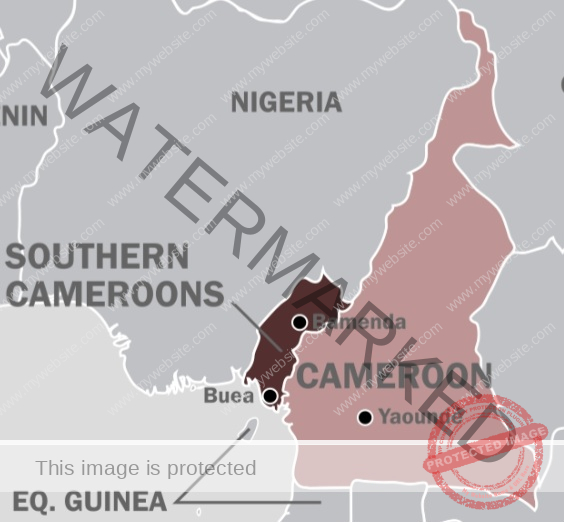
Southern Cameroons emerged from the former German Kamerun territory after Germany’s defeat during the First World War. The territory was divided between Britain and France under League of Nations mandates, later converted into United Nations Trust Territories after the Second World War. Britain administered Southern Cameroons separately from French Cameroun. Over time, Southern Cameroons developed institutions strongly influenced by British traditions: common law, parliamentary governance, local democratic structures, English-language education, and Anglo-Saxon administrative systems. French Cameroun evolved differently under French colonial policies, centralized administration, and French civil law traditions. By the late 1950s, Southern Cameroons had developed a distinct political and constitutional identity.
The Myth of Economic Non-Viability
During the decolonisation process, British officials and some international policymakers repeatedly claimed that Southern Cameroons was too small and economically weak to survive independently as a sovereign state. That argument later became one of the justifications for denying the territory a direct independence option. But history increasingly challenges that narrative. Southern Cameroons possessed enormous untapped natural wealth and strategic potential. Its fertile lands supported: cocoa, coffee, bananas, rubber, palm products, timber, and food agriculture.
The territory also possessed significant hydroelectric potential, valuable forest resources, and later-discovered offshore oil and gas reserves linked to the Gulf of Guinea. Its coastline provided access to one of Africa’s most strategic maritime regions. Critics therefore argue that the issue was never simply economic viability. The deeper issue was geopolitical convenience.
Britain was financially exhausted. France sought regional consolidation in Central Africa. The emerging Cold War pushed Western powers toward stability-oriented political arrangements rather than the creation of additional small sovereign states.
Southern Cameroons became vulnerable because larger powers increasingly viewed the territory as a geopolitical problem to be managed rather than a nation to be fully developed.
The Plebiscite Without Independence
The defining controversy in the Southern Cameroons case remains the 1961 United Nations-supervised plebiscite. The people of Southern Cameroons were presented with only two choices: integration with Nigeria, or union with the already independent Republic of Cameroun. Full sovereign independence was not placed on the ballot. For many Ambazonians, this remains the clearest evidence that the decolonisation process was incomplete.
A separate British-administered UN Trust Territory was never allowed to exercise a direct and unrestricted option for sovereign independence. Instead, the territory was effectively pushed toward political integration into an already existing state structure. Critics argue that this violated the broader spirit of self-determination recognized under international law. The Southern Cameroons case therefore differs fundamentally from many conventional separatist conflicts.
The argument advanced by many Ambazonian scholars, lawyers, and political thinkers is not primarily that Southern Cameroons later “seceded” from Cameroon. Rather, they argue that Southern Cameroons was never fully decolonized in the first place.
The Fragile Federal Arrangement
When Southern Cameroons entered into union with the Republic of Cameroun in 1961, many believed they were entering a federation of equals. The arrangement was expected to preserve: federal autonomy, common law traditions, educational systems, local governance structures, and the distinct Anglo-Saxon identity of Southern Cameroons.
But over time, many of those protections weakened. Federalism gradually eroded. Power centralized increasingly in Yaoundé. The institutions inherited from British administration came under sustained pressure. Many Southern Cameroonians began to feel politically marginalized inside a system dominated by Francophone state structures. For Ambazonian thinkers, this reinforced the belief that the original decolonisation process had never been constitutionally secured.
Incomplete Decolonisation
Today, many Ambazonians frame the Southern Cameroons issue not as a conventional separatist movement, but as a case of incomplete decolonisation. This distinction is crucial. Under this interpretation: Southern Cameroons possessed a distinct colonial identity, it held separate UN Trust Territory status, full independence was never directly offered, and the constitutional basis of the union remains disputed. Supporters of this position argue that the conflict is therefore not merely an internal domestic matter, but an unresolved international question inherited from the collapse of empire after the Second World War. Opponents reject this interpretation and maintain that the 1961 union settled the issue permanently. But the disagreement remains at the heart of the modern crisis.
The Unfinished Legacy of the Second World War
The Southern Cameroons question cannot be separated from the larger transformation of global power after 1945. Britain’s financial collapse accelerated imperial retreat. Bretton Woods transferred global monetary leadership to the United States. Cold War politics prioritized geopolitical stability over unresolved constitutional complexities. Smaller territories often became secondary considerations inside negotiations between larger powers.
For many Ambazonians, Southern Cameroons became one of those forgotten territories — a people caught between collapsing empires, postwar financial restructuring, Cold War strategy, and incomplete constitutional arrangements. More than six decades later, the consequences remain unresolved. For that reason, many continue to describe the Southern Cameroons case not simply as a political dispute, but as one of Africa’s most enduring examples of incomplete decolonisation.
By Ali Dan Ismael
Editor-in-Chief, The Independentist News
Share This Post:
The Ndzerem-Nyam Massacre: How the Junta Created the ADF/Unity Warrior Monster to Destroy Bui
The Illusion of Reform: Yaoundé Still Governs Like Ambazonia Does Not Exist
Related Post
Dr. DAVID MAKONGO: CALLS FOR DIALOGUE WITH AYUK TABE,
QUEBEC VOTED FOR INDEPENDENCE AS AN OPTION, WHY WAS
PROPHECY, POLITICS, AND THE AMBAZONIAN QUESTION (PART III) Why
WHEN YAOUNDÉ’S ALLIES SUDDENLY ENDORSE AYUK TABE: SOLIDARITY OR
THE SECOND RETURN: FROM THE PAIN OF SEPARATION TO
WHEN THE REGULATOR BENDS: WHAT THE VISION 4 AFFAIR