






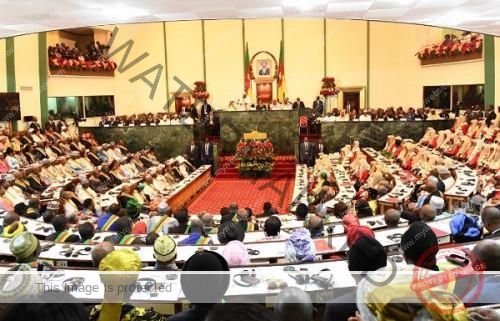






Logic, boundary treaties, and United Nations resolutions converge on a single point. 1st October 1961 marks the independence of Southern Cameroons as a distinct people and territory, entitled to freely commemorate that date.
By Abdulkarim Ali contributor to The Independentist News
1st October 2026
As Amazon associate this site earns from qualifying purchases
Get books on Ambazonia’s productive Sovereignty and statecraft by Martin Mungwa on Amazon
Is it not clever for La Republique du Cameroun to bury its own independence date to swallow that of Southern Cameroons? Yes! For any annexationist, burying 1st January 1960 is the smart price to pay to erase 1st October 1961.
Introduction
For a decade, I have in various ways argued firmly for the right of the people of Southern Cameroons to recognize and freely commemorate their date of independence of 1st October 1961, as many colonized nations in Africa and around the world do. God blessed me with a diploma in Philosophy during these years in jail, and my 2026 arguments will be run on philosophical grounds, deploying Leibniz’s Law, Modus Ponens, and the Law of Non-Contradiction. I consider this particular work, which took me two months to finalize, the most coherent of my arguments on this subject.
This article makes four connected claims. First, on the basis of boundary treaties from 9th January 1931 and United Nations resolutions, Southern Cameroons and La Republique du Cameroun were two distinct legal subjects with two distinct dates of independence: 1st October 1961 and 1st January 1960. Second, the boast that Cameroon is one and indivisible violates logic and history. Third, the decision imposed by UN General Assembly Resolution 1608 (XV) of 21st April 1961, independence by joining, was by and large against the will of the people and inconsistent with UN General Assembly Resolution 1514 (XV) of 14th December 1960, and the federation that followed never satisfied the international legal requirements for a valid union. Fourth, the deliberate clouding of both dates today serves to obscure this history. Logic therefore supports both historical truth and a peaceful way forward through sincere dialogue.
Historical and Legal Foundation
On 28th June 1919, under the Treaty of Versailles, German Kamerun was divided into French and British League of Nations Mandates under Article 22 of the League Covenant of 28th June 1919.
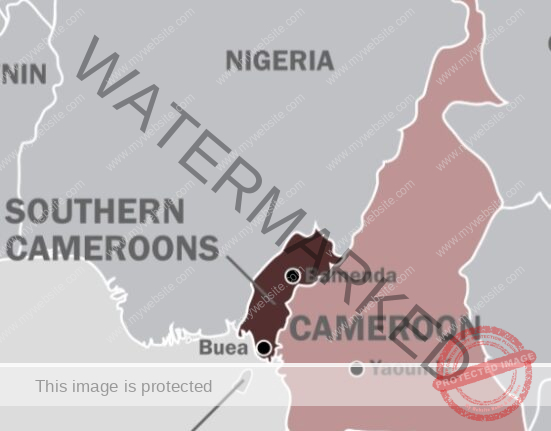
The Thomson-Marchand Declaration of 1929 to 1930 delimited in detail the boundary between the British and French mandates. The Henderson-Fleuriau Exchange of Notes of 9th January 1931 between Great Britain and France incorporated that Declaration and gave it treaty force. The ground demarcation completed in 1932 is often called the 1932 boundary.
On 13th December 1946, both territories became United Nations Trust Territories under Chapter XII of the UN Charter of 26th June 1945. Southern Cameroons was administered as part of British Cameroons, distinct from French Cameroun.
On 13th March 1959, UN General Assembly Resolution 1349 (XIII) decided that trusteeship over French Cameroun shall end on 1st January 1960. On 1st January 1960, French Cameroun achieved independence as La Republique du Cameroun, strictly within its 9th January 1931 borders.
The UN plebiscite for the British Cameroons was held on 11th February 1961. On 21st April 1961, UN General Assembly Resolution 1608 (XV) decided that Southern Cameroons shall achieve independence by joining the Republic of Cameroun on 1st October 1961. On 1st October 1961, trusteeship over Southern Cameroons was terminated and it assumed sovereign powers in federation. This is its independence date.
Philosophical Analysis: Identity and Inference
Two logical tools guide this analysis. Leibniz’s Law, also called the Identity of Indiscernibles, is a principle of identity. It states that if two things are truly identical, then whatever is true of one must be true of the other. Formally: for any x and y, if x is identical to y, then for every property F, Fx holds if and only if Fy holds. Its most useful form for historical argument is the contrapositive: if there exists even one relevant property F such that Fx is true and Fy is false, then x and y are not identical.
Modus Ponens is a basic rule of valid inference. It states that from a conditional statement and the affirmation of its antecedent, the consequent necessarily follows. Formally: If P then Q. P is the case. Therefore Q follows.
Applied to territorial identity: let x be the territorial unit administered as French Cameroun under French Trusteeship. Let y be the territorial unit administered as Southern Cameroons under British Trusteeship. Consider G as the property of being the subject of Resolution 1349 (XIII) of 13th March 1959 terminating trusteeship on 1st January 1960. Gx is true. Gy is false, since Southern Cameroons was the subject of Resolution 1608 (XV) of 21st April 1961 terminating trusteeship on 1st October 1961. Therefore, by Leibniz’s Law, x is not identical to y.
Applied by Modus Ponens: If a distinct trust territory formally ends its trusteeship and assumes sovereign powers on date D, pursuant to Articles 76 and 78 of the UN Charter, then D is its date of independence. Southern Cameroons did so effective on 1st October 1961. Therefore, 1st October 1961 is its date of independence. Further: If La Republique du Cameroun claims Southern Cameroons as part of its inheritance of 1st January 1960, then the boundary of 9th January 1931 must have been legally extinguished before 1st January 1960. It was not, as shown by the plebiscite of 11th February 1961. Therefore, no such inheritance occurred.
Refuting “One and Indivisible”: The Law of Non-Contradiction
The Law of Non-Contradiction is a fundamental principle of logic which holds that a proposition cannot be both true and false at the same time and in the same respect. Formally, it is not the case that both P and not-P. Nothing can both be and not be in the same sense.
The government of La Republique du Cameroun and its surrogates boast that Cameroon is one and indivisible. Let P be the proposition: Southern Cameroons was already an integral part of La Republique du Cameroun on 1st January 1960.
If P were true, then on 11th February 1961 there would have been no separate people, no separate territory, and no separate plebiscite to decide its future. Yet the United Nations organized precisely such a plebiscite on 11th February 1961, and the General Assembly adopted a separate decolonization resolution for it on 21st April 1961. To affirm P is to affirm both that Southern Cameroons was already integrated on 1st January 1960 and that it was still a distinct trust territory awaiting self-determination in 1961. That is P and not-P. It is a contradiction, and therefore false.
History provides clear parallels. Pakistan and Bangladesh were once one state, yet no one today claims they were always one and indivisible after 16th December 1971. Czechoslovakia peacefully divided on 1st January 1993 into the Czech Republic and Slovakia, and the claim of indivisibility ended on that date. Senegambia, formed in 1982, dissolved in 1989 because no valid treaty sustained it. The Soviet Union, long proclaimed as indissoluble, dissolved in December 1991 into fifteen distinct subjects of international law.
In each case, a political boast of unity could not survive a legal act of separation. So it is with Cameroon: the separate UN trusteeship, the separate plebiscite, and the separate independence date of 1st October 1961 refute indivisibility. What was legally distinct cannot be rhetorically merged without contradiction.
A Flawed Independence Formula and a Failed Union
As several speakers observed during the debates on Resolution 1608 (XV), the decision to grant Southern Cameroons independence by joining, rather than as a fully sovereign state, was by and large against the will of the people. There is no concept in international law as independence by dependence. This formula sat uneasily with Resolution 1514 (XV) of 14th December 1960, the Declaration on the Granting of Independence to Colonial Countries and Peoples, which proclaimed the necessity of bringing colonialism to a speedy and unconditional end and affirmed the right of all peoples to self-determination.
Moreover, despite Resolution 1608 (XV), the federation that followed failed to meet the international legal requirements for a valid federation. No union treaty between the two parties as subjects of international law was ever duly concluded and registered. In law, therefore, no valid union treaty extinguished the separate legal personality acquired on 1st October 1961.
The Deliberate Clouding of History
Francophones remain oblivious of 1st January 1960 because their governments have been and are afraid of the truth of 1st October 1961. La Republique du Cameroun declines to celebrate 1st January 1960 with national clarity, while also refusing 1st October 1961. If it were to celebrate 1st January 1960 rigorously, it would have to define precisely what became independent on that day: French Cameroun within its borders of 9th January 1931, excluding Southern Cameroons. That definition would make plain that Southern Cameroons possesses its own separate legal personality and its own date. By clouding both dates, an attempt is made to project a single, timeless Cameroon that absorbs Southern Cameroons retroactively.
Leibniz’s Law refutes this claim to identity. Modus Ponens refutes this claim to inheritance. The Law of Non-Contradiction refutes this claim to indivisibility.
Conclusion: Truth as a Basis for Dialogue
Logic, boundary treaties, and United Nations resolutions converge on a single point. 1st October 1961 marks the independence of Southern Cameroons as a distinct people and territory, entitled to freely commemorate that date.
I call on Southern Cameroonians to use 1st October 1961 not only to rejoice for God’s Mercy, celebrate Independence Day, educate its people, but to engage in open debate with Francophones and encourage them to reclaim the most important date in their own history, 1st January 1960. The struggle is not against the innocent citizens of La Republique du Cameroun, but against its regime and its surrogates.
In this spirit, I respectfully call on the government of La Republique du Cameroun to embrace sincere dialogue and good faith negotiations to address this historical truth and to seek a peaceful and just resolution in the interest of both peoples. To the people of Southern Cameroons, I wish you a Happy Independence Day.
As Amazon associate this site earns from qualifying purchases
Get books on Ambazonia’s productive Sovereignty and statecraft. By Martin Mungwa on Amazon
Abdulkarim Ali contributor to The Independentist News




Leave feedback about this