

Yesterday — September 30: Botswana. Today — October 1: Southern Cameroons/Ambazonia commemoration.Two neighboring dates. Two very different post-colonial histories. And two reminders that the meaning of independence is ultimately measured not only by how sovereignty begins, but by what a people build with it afterward.
By Timothy Enongene, Associate Editor-in-chief The Independentist News
As Amazon associate this site earns from qualifying purchases
Get books on productive Sovereignty and statecraft in Ambazonia. By Martin Mungwa on Amazon
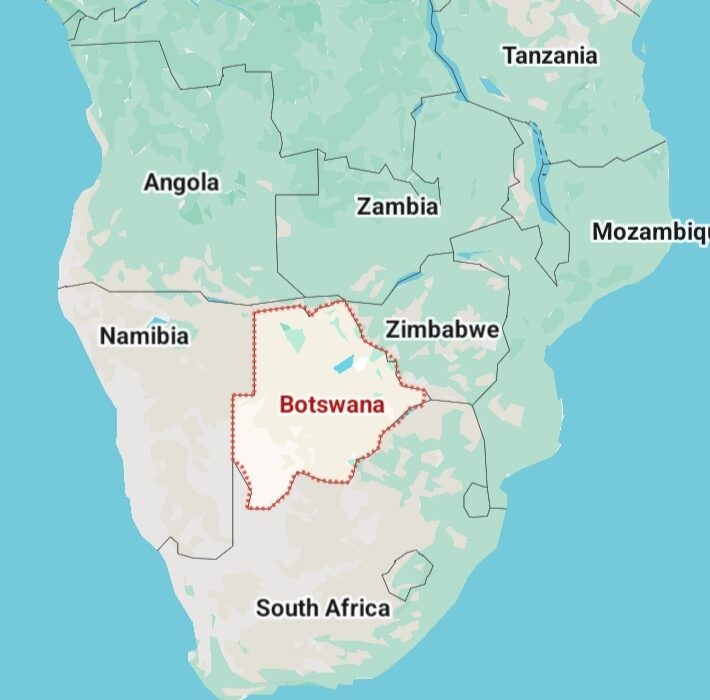
GABORONE – October 1, 2026 – Yesterday, September 30, 2026, Botswana marked 60 years of independence. On September 30, 1966, Bechuanaland became the independent and sovereign Republic of Botswana, with Sir Seretse Khama, previously prime minister, becoming the country’s first president.
For many Ambazonians, Botswana’s Independence Day carries a particular historical resonance. Botswana was once Bechuanaland. We were Southern Cameroons. Both territories experienced British administration, but their post-colonial paths diverged sharply. Botswana emerged from British rule as a sovereign African state. Southern Cameroons followed a different constitutional path. In the 1961 United Nations-supervised plebiscite, the people of Southern Cameroons were presented with two alternatives: achieving independence by joining the independent Federation of Nigeria or achieving independence by joining the independent Republic of Cameroon. There was no separate-independence option on the ballot. (Digital Library)
UN General Assembly Resolution 1608 (XV) subsequently provided for the termination of the Southern Cameroons trusteeship on October 1, 1961, upon its joining the Republic of Cameroon, and called for arrangements implementing the relationship to be finalized. It is what happened around that transition—and the legal and constitutional meaning of those arrangements—that remains central to today’s competing interpretations of Southern Cameroons history.
From an Ambazonian historical and legal perspective, the absence of a separately executed and ratified treaty of union between the two territories is regarded as evidence that the constitutional union was never properly completed. Cameroonian state institutions and other interpretations reject the conclusion that this makes the subsequent union an annexation. The issue therefore remains part of a continuing historical, political, and legal dispute.
Today, the former Southern Cameroons territory is administered principally as Cameroon’s North-West and South-West Regions. For supporters of Ambazonian independence, that transformation represents more than a change in administrative vocabulary. They view it as part of a longer process through which a historically distinct territory, legal tradition, educational system, and political identity were progressively incorporated into a centralized Cameroonian state. That is why September 30 and October 1 stand beside one another with such historical significance.
September 30, 1966
Bechuanaland becomes the independent Republic of Botswana. Parliament of Botswana
October 1, 1961. The UN trusteeship over Southern Cameroons terminates under the constitutional arrangements following the 1961 plebiscite.
October 1, 2017
Ambazonian independence leaders proclaimed what they described as the restoration of the independence of the former Southern Cameroons. And now: October 1, 2026 Southern Cameroonians and Ambazonians around the world once again confront the meaning of that history and the future they wish to build, with Botswana’s six decades of statehood offering something worth reflecting upon.
Independence is not merely about acquiring a flag. The harder work comes afterward. Can institutions be built? Can public resources be managed responsibly? Can citizens trust government? Can political disagreements be managed without destroying society? Can education, infrastructure, enterprise, and accountable institutions create opportunity? Can sovereignty be transformed into durable prosperity? Those questions matter to every society. For people who aspire to an independent Southern Cameroons/Ambazonia, the ambition therefore extends beyond the political objective itself.
Any future political settlement would also have to confront the practical responsibilities of institution-building, democratic governance, economic development, accountability, education, infrastructure, reconciliation, and human security. So, one day after Botswana celebrated six decades of sovereign statehood:
HAPPY 60TH INDEPENDENCE ANNIVERSARY, BOTSWANA. And today, October 1, Southern Cameroonians/Ambazonians around the world remember a date that has shaped their constitutional history for 65 years.
Yesterday — September 30: Botswana. Today — October 1: Southern Cameroons/Ambazonia commemoration. Two neighboring dates. Two very different post-colonial histories. And two reminders that the meaning of independence is ultimately measured not only by how sovereignty begins, but by what a people build with it afterward.
HAPPY OCTOBER 1 COMMEMORATION TO SOUTHERN CAMEROONIANS/AMBAZONIANS AROUND THE WORLD. May history be remembered accurately, debated honestly, and preserved for the generations that follow.
YESTERDAY IN BLACK HISTORY October 1, 2026
As Amazon associate this site earns from qualifying purchases
Get book’s on productive Sovereignty and statecraft in Ambazonia. By Martin Mungwa on Amazon
Timothy Enongene, Associate Editor-in-chief The Independentist News