

America’s experience beginning on September 24, 1965 therefore offers Ambazonia neither a ready-made blueprint nor a policy to reproduce wholesale. It offers something more valuable: a long-running case study in the difficult transition from formal equality to practical opportunity—and in the continuing debate over how governments should pursue that objective fairly.
By Timothy Enongene, Associate Editor-in-chief The Independentist News
As Amazon associate this site earns from qualifying purchases
Buy Southern Cameroons 2050; Why America should care, By Martin Mungwa on Amazon
https://www.amazon.com/s?k=Southern+Cameroon+2050+by+Martin+mungwa&i=specialty-aps&srs=121082092011&crid=165NADKY1TYO0&sprefix=southern+cameroon+2050+by+martin+mungwa%2Cspecialty-aps%2C862&linkCode=ll2&tag=njokings-20&linkId=a14466ee986b5ac231ff0f25ef62e417&language=en_US&ref_=as_li_ss_tl
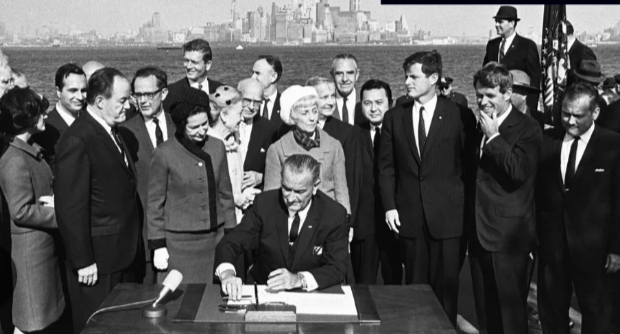
On September 24, 1965, United States President Lyndon B. Johnson signed Executive Order 11246, a major development in the federal government’s effort to translate civil-rights principles into employment practice.
The order required federal contractors to refrain from discrimination and to take affirmative action to ensure equal employment opportunity. As originally issued in 1965, the protected categories included race, color, religion, and national origin. Sex was added later through Executive Order 11375 in 1967.
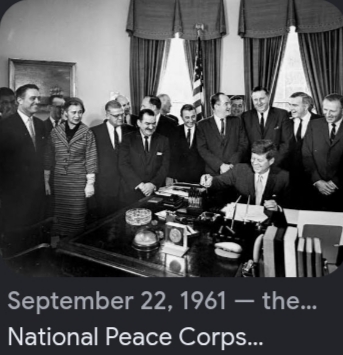
Executive Order 11246 also superseded President John F. Kennedy’s Executive Order 10925 of March 6, 1961, which had established the President’s Committee on Equal Employment Opportunity. Kennedy’s order was an important earlier federal use of the term “affirmative action” in the context of combating employment discrimination.
Johnson had expressed the deeper philosophy behind this approach three months earlier in his June 4, 1965 commencement address at Howard University. His argument was that eliminating legal discrimination did not automatically produce meaningful equality. “Freedom is not enough,” he said.
Johnson argued that a person disadvantaged over many years could not simply be brought to the starting line and told that the competition had now become fair. Opening the gates of opportunity was only part of the task; citizens also required the practical ability to walk through those gates. That distinction raises an important nation-building question for Ambazonia. The Question Is Not Simply: Who Is the Minority?
If a future independent Ambazonia were designing institutions intended to serve all citizens fairly, the central question would not necessarily be: Which ethnic group is the minority, and what percentage of public positions should it receive? That approach could easily turn citizenship into a permanent arithmetic exercise. A more useful question might be: Who faces identifiable barriers to education, employment, public services, political participation, or economic opportunity—and what institutions are producing those barriers? That distinction matters.
American affirmative action developed within a particular historical setting shaped by racial segregation and discrimination, especially against African Americans. Ambazonia would have its own historical circumstances, communities, counties, cultures, languages, institutions, and patterns of disadvantage.
The American system therefore cannot simply be copied and transplanted. But the underlying institutional question remains relevant: Is equality merely the absence of formal discrimination, or should public institutions also examine whether opportunity is genuinely accessible?
What Could Equal Opportunity Mean in Ambazonia?
An Ambazonian framework could examine unequal access without automatically creating permanent ethnic preferences.
Geographical Inclusion
A future government could measure whether universities, scholarships, civil-service opportunities, healthcare, infrastructure, development programs, investment, and other public services are reaching citizens across different counties and zones. The important question would not simply be whether every area receives identical allocations. It would be whether geography has become a barrier to meaningful opportunity.
Gender Inclusion
Where measurable barriers exist, policymakers could examine women’s access to education, professional development, entrepreneurship, public appointments, political participation, and capital. The emphasis should be on identifying actual barriers rather than assuming disadvantage without evidence.
Youth Opportunity
A society emerging from prolonged conflict would face an especially serious responsibility toward young people. Education, vocational training, apprenticeships, technology, entrepreneurship, employment, and meaningful participation in public life would be essential if an entire generation is not to remain outside the institutions of the state.
Persons with Disabilities
Equal citizenship does not automatically remove physical, technological, educational, or institutional barriers. Accessibility therefore deserves a place in any serious national discussion of equal opportunity.
Merit and Competence
Corrective inclusion need not mean abandoning qualifications. One of the enduring debates surrounding affirmative-action policies is how societies should reconcile remediation, representation, equality of opportunity, individual treatment, and merit. Any future Ambazonian approach would need transparent rules rather than political discretion.
From Quotas to Institutional Accountability
This may be one of the most useful lessons from the American experience. Executive Order 11246 did not simply allocate government employment according to fixed racial percentages. It imposed nondiscrimination and affirmative-action obligations on federal contractors, required compliance reporting, and authorized oversight of employment practices.
The transferable lesson for Ambazonia may therefore be institutional accountability. Imagine a public institution required to explain: Who applied? Who was shortlisted? Who was recruited? Were positions advertised widely? Did rural communities have genuine access to the application process? Were qualified applicants from certain locations consistently absent from applicant pools? Were scholarships and training opportunities reaching disadvantaged communities? Were persons with disabilities encountering avoidable barriers?
When persistent disparities appeared, what evidence explained them? And what corrective measures, if any, were justified? That is different from simply declaring: “We will reserve 20 percent for this group and 30 percent for another.” One approach requires institutions to explain opportunity. The other can risk reducing citizenship to permanent bargaining over percentages.
America’s Experience Also Shows the Controversy
Ambazonia should study not only the creation of affirmative action but also the disputes surrounding it. American policy evolved over six decades through executive orders, regulations, court decisions, political debate, and changes in administration.
On January 21, 2025, President Donald Trump revoked Executive Order 11246. His order also directed the Office of Federal Contract Compliance Programs to cease holding federal contractors responsible for taking affirmative action under that regulatory framework. The administration described its policy in terms of ending what it regarded as unlawful discrimination and restoring merit-based opportunity. That later decision does not erase the historical significance of September 24, 1965. It demonstrates something equally important:
Affirmative action has never been a politically or legally static idea. Its goals, methods, scope, constitutional implications, and consequences have been debated continually. That is precisely why Ambazonia should not begin by asking: Should we copy America? The better question is: What system would advance fair access while respecting equal citizenship, competence, transparency, and individual rights?
Equality Should Be Measurable
A future Ambazonian constitutional framework could distinguish between equality before the law and equality of opportunity. Equality before the law would mean that every citizen possesses the same fundamental legal rights and protections.
Equality of opportunity would ask whether citizens actually have reasonable access to institutions through which education, employment, entrepreneurship, public service, and political participation become possible. Those concepts are related, but they are not identical.
Government could therefore be required to identify measurable barriers where they exist, while avoiding assumptions that every unequal numerical outcome necessarily proves discrimination. The objective should not be permanent preference for one ethnic, regional, gender, or social category over another. The objective should be to identify unjustifiable barriers and widen legitimate access. Safeguards Would Be Essential
Any corrective program should contain safeguards against becoming permanent political patronage. Those safeguards could include: clearly defined objectives; published eligibility criteria; evidence demonstrating the barrier being addressed; transparent recruitment and selection procedures; periodic independent review; protection against political manipulation; measurable outcomes; and a clear standard for determining when corrective intervention is no longer necessary. In other words: Corrective opportunity should not become permanent entitlement.
The Deeper Lesson of September 24, 1965
Johnson’s Howard University address remains relevant because it distinguished opening the gate from enabling citizens to make meaningful use of the opportunity beyond it. That insight leads to a fundamental nation-building question: When a state declares that all citizens are equal, what institutions will make that equality visible in everyday life?
The answer cannot be another constitutional declaration alone. Citizens will judge equality through schools and universities. Through hospitals. Through roads, electricity, and communications. Through civil-service recruitment. Through courts. Through access to entrepreneurship and capital. Through public appointments. Through political participation. And through whether citizens in different parts of the country believe that national institutions genuinely belong to them.
That access should be measurable. It should be transparent. It should be regularly reviewed. And it should strengthen common citizenship rather than create permanent categories of favored and disfavored citizens. America’s experience beginning on September 24, 1965 therefore offers Ambazonia neither a ready-made blueprint nor a policy to reproduce wholesale. It offers something more valuable: a long-running case study in the difficult transition from formal equality to practical opportunity—and in the continuing debate over how governments should pursue that objective fairly.
For any future state seeking to build institutions from the ground up, that history is worth studying carefully. — Veritas Network
Historical Perspective | September 26, 2026
As Amazon associate this site earns from qualifying purchases
Buy southern Cameroons 2050; why American should care By Martin Mungwa on Amazon
https://www.amazon.com/s?k=Southern+Cameroon+2050+by+Martin+mungwa&i=specialty-aps&srs=121082092011&crid=165NADKY1TYO0&sprefix=southern+cameroon+2050+by+martin+mungwa%2Cspecialty-aps%2C862&linkCode=ll2&tag=njokings-20&linkId=a14466ee986b5ac231ff0f25ef62e417&language=en_US&ref_=as_li_ss_tl
Timothy Enongene, Associate Editor-in-chief The Independentist News