









Editorial commentary

We are home to news on Cameroon and the CEMAC region. We are dedicated to honest and reliable reporting. We are the voice of the Cameroonian people and their fight for freedom and democracy at a time when the Yaoundé government is silencing dissent and suppressing democratic voices.

Remain alert. Protect personal information. Avoid unnecessary political confrontation. Keep essential documents and medication accessible. Maintain contact with trusted relatives. Monitor reliable information. Reconsider travel when security conditions deteriorate. Seek legal or humanitarian assistance when a specific threat emerges. Above all, do not allow fear, rumor, ethnic hostility, or political excitement to make life-altering decisions on your behalf.
By Lester Maddox
Guest Contributor, Independentist News
Oakland, California
A Moment Requiring Calm and Preparation
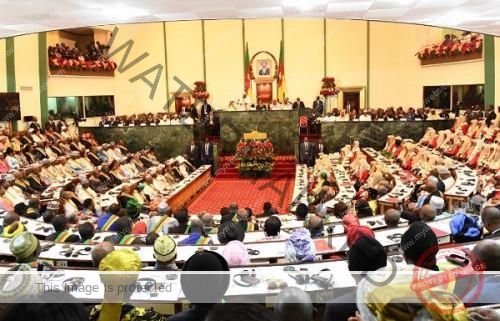
YAOUNDÉ – August 4, 2026 – President Paul Biya’s prolonged absence from public view has intensified uncertainty surrounding executive authority and political succession in La République du Cameroun. Since his departure for Europe on June 7, 2026, official communication concerning his return has remained limited. The uncertainty has been compounded by the continued vacancy of the recently restored office of vice president, which is constitutionally intended to assume presidential authority in the event of death, resignation, or incapacity.
No responsible observer can predict precisely when or how the present political order will change. Paul Biya may return, the existing system may continue functioning for some time, or the country may eventually enter a contested transition. What is certain is that no political era lasts indefinitely.
For Ambazonians living in Yaoundé, Douala, Bafoussam, and other parts of La République du Cameroun, this situation requires vigilance without panic, preparation without provocation, and discretion without surrendering personal dignity. The central directive is simple: remain calm, avoid unnecessary exposure, prepare for emergencies, and base major decisions upon verified information rather than rumors circulating through social media.
Discretion Is Protection
Periods of political uncertainty frequently produce heightened surveillance, additional checkpoints, demonstrations, competing rumors, arbitrary questioning, and unpredictable conduct by security personnel. People associated—correctly or incorrectly—with opposition movements, separatist causes, minority communities, journalism, or civil-society activism may face greater scrutiny.
Ambazonians should therefore exercise exceptional care in public places, workplaces, transportation hubs, hotels, drinking establishments, and online forums. Avoid heated political arguments with strangers. Do not circulate unverified claims about the president’s health, alleged coups, military movements, or impending violence. Review the privacy settings on phones and social-media accounts, and remember that forwarded messages can be misinterpreted when separated from their original context.
Operational discretion does not mean abandoning one’s identity. It means refusing to provide an anxious security system with an unnecessary pretext for harassment, detention, or intimidation. Eyes must remain open—but their purpose should be personal safety and informed judgment, not amateur intelligence gathering or confrontation with security forces.
Prepare a Personal Emergency Plan
Every individual and family should prepare for temporary disruption even if no immediate danger is visible. Essential identity documents, immigration papers, prescriptions, medical information, emergency contacts, and modest emergency funds should be kept secure and readily accessible. Important documents should also be copied and stored separately where possible.
Families should establish reliable check-in arrangements and agree upon safe meeting points if telephone or internet service becomes unavailable. People with diabetes, hypertension, or other medical conditions should maintain an adequate supply of essential medication. Travel plans should identify more than one safe route and should be reconsidered immediately if demonstrations, roadblocks, troop movements, or communal violence are reported.
No one should approach security installations, political demonstrations, military convoys, or gatherings surrounding government buildings merely to observe events. Curfews and emergency restrictions should be taken seriously, even when their legality or political motivation is disputed. Preparation is not fear. It is a disciplined response to uncertainty. Do Not Assume That Succession Will Resolve the Conflict
Ambazonians must also avoid the illusion that replacing Paul Biya will automatically transform Yaoundé’s position on the Former British Southern Cameroons. The conflict is rooted in historical, constitutional, political, and institutional disputes extending beyond one president. A successor from the ruling establishment could continue the present military policy. An opposition government could promise democratic reforms while retaining the same conception of territorial sovereignty. A military-led transition could prioritize national unity and state control even more aggressively.
Professor Maurice Kamto’s prominent service on Cameroon’s legal team during the Bakassi proceedings, for example, demonstrates his longstanding commitment to defending the internationally asserted territorial interests of the Cameroonian state. That professional role does not prove hostility toward Ambazonians, but it does show why no political figure’s position on the Southern Cameroons question should be presumed merely from an opposition or democratic label.
The Ambazonian cause must therefore be evaluated through declared policies and conduct—not personalities, ethnic identities, or campaign slogans.
Reject Collective Ethnic Blame
The struggle for Ambazonian self-determination must not be converted into an indictment of entire ethnic communities inside La République du Cameroun. Bassa, Bamiléké, Bamoum, Beti, and other populations are not politically uniform. Within every community are government supporters, opposition activists, human-rights defenders, journalists, religious leaders, ordinary families, and citizens who may know little about the historical case of the Former British Southern Cameroons.
Collective accusation is morally wrong and strategically destructive. It can expose Ambazonians living outside the homeland to retaliation while undermining the future possibility of peaceful relations between neighboring peoples.
Criticism should be directed toward documented policies, institutions, public statements, and identifiable conduct. Named individuals should be accused of incitement only when their precise words, dates, platforms, and context can be reliably documented. Strong political journalism does not require unsupported allegations. It becomes more persuasive when evidence replaces generalization.
Ambazonia will strengthen its claim to responsible statehood by rejecting the same collective stigmatization that its people have endured.
Relocation Must Be a Personal Safety Decision
Some Ambazonians may reasonably decide to leave areas where they face credible and individualized threats. Others may remain because of employment, family responsibilities, medical needs, schooling, legal status, or the security conditions along available routes.
There should therefore be no blanket instruction ordering all Ambazonians to return immediately to the homeland. Communities within the Former British Southern Cameroons also continue to face armed violence, abductions, arbitrary detention, extortion, displacement, and restrictions on movement. Returning without verified transportation, secure accommodation, family support, medication, and a realistic livelihood plan could replace one danger with another.
Anyone considering relocation should quietly evaluate the safety of the destination, transportation corridors, border or checkpoint conditions, accommodation, financial resources, health requirements, and the needs of children and elderly relatives. Travel should be postponed when routes are affected by violence or when credible local information cannot be obtained.
Where a person faces an immediate threat, the priority should be reaching the nearest genuinely safe location—not satisfying a political expectation about where an Ambazonian ought to live. The homeland must remain a place of belonging, but return must be orderly, voluntary, and guided by safety.
Beware of Rumors and Manufactured Panic
Political transitions generate an industry of false information. Fabricated death announcements, invented military orders, manipulated recordings, recycled videos, and claims of imminent coups can travel rapidly through private messaging groups.
Before acting on alarming information, individuals should seek confirmation from multiple credible sources. A message attributed to a government ministry should be checked against an official publication. A video should not be assumed to be current merely because it appears online today. Voice notes from unnamed “insiders” should never determine whether a family undertakes dangerous travel.
Independentist media also carries a responsibility. It must distinguish confirmed reporting from political interpretation, label unverified information clearly, and avoid publishing predictions as established events. Credibility during uncertainty can save lives; exaggeration can place them in danger.
Community Solidarity Without Public Exposure
Ambazonians can quietly support one another without creating unnecessary visibility. Trusted community networks can help vulnerable families locate temporary shelter, medication, transportation information, legal assistance, and emergency contacts. Religious congregations and established humanitarian organizations may also provide support where their independence and reliability are known.
Community assistance should remain civilian and humanitarian. It should not involve monitoring military installations, recording checkpoints at close range, transporting weapons, concealing armed actors, or sharing unverified security information. Such activities could expose entire families and neighborhoods to grave consequences. The protection of civilians must remain the governing principle.
A Message to Political and Security Authorities
Any transition in Yaoundé must respect the safety and dignity of all civilians, including Ambazonians living throughout La République du Cameroun. Political disagreement, ethnic identity, language, birthplace, or presumed sympathy for self-determination cannot justify collective punishment, arbitrary detention, disappearance, or discriminatory restrictions.
Security forces have a duty to act lawfully, exercise restraint, and distinguish peaceful civilians from persons credibly suspected of committing offenses. Political leaders, broadcasters, academics, and commentators also have a responsibility to avoid rhetoric that portrays entire populations as enemies of the state. A succession struggle among elites must never become an excuse for violence against ordinary people.
Vigilance Without Panic
The present uncertainty may pass without widespread disruption, or it may become the beginning of a consequential political transition. Ambazonians should prepare responsibly for both possibilities.
Remain alert. Protect personal information. Avoid unnecessary political confrontation. Keep essential documents and medication accessible. Maintain contact with trusted relatives. Monitor reliable information. Reconsider travel when security conditions deteriorate. Seek legal or humanitarian assistance when a specific threat emerges. Above all, do not allow fear, rumor, ethnic hostility, or political excitement to make life-altering decisions on your behalf.
The wisdom required in this moment is not found in panic or bravado. It is found in disciplined preparation, careful judgment, mutual protection, and respect for human life.
Political leaders will eventually pass from the stage. Governments will change, institutions will be tested, and new arrangements will emerge. The immediate responsibility of every civilian is to survive that uncertainty without becoming its instrument or its victim. Sleep with your eyes open—but keep your judgment awake as well.
Lester Maddox
Guest Contributor, Independentist News
Oakland, California
Share This Post:
WHEN THE PEOPLE BECOME THE COUNTERINTELLIGENCE NETWORK Part VI: The Strongest Fortress Is Trust From Constitutional Doctrine to National Implementation
WHEN THE PEOPLE BECOME THE COUNTERINTELLIGENCE NETWORK Part V: The Republic Must Never Become the Regime A Constitutional Counterintelligence Doctrine for Ambazonia
Related Post
AMBAZONIA’S WAR- IS BIGGER THAN YAOUNDÉ: BRITAIN, FRANCE AND
THE DAY SEPTEMBER 22 1961: — WHAT AMBAZONIA CAN
TRUMP’S “SUPER INTELLIGENCE” ERA: WHAT IT REALLY MEANS —
Why Is Ambazonia More Powerful Than many Imagine.
THIS DAY IN HISTORY SEPTEMBER 22, 2017: THE DAY
A President Unseen, a Country Waiting: Yaoundé’s Succession Uncertainty