








Commentary

We are home to news on Cameroon and the CEMAC region. We are dedicated to honest and reliable reporting. We are the voice of the Cameroonian people and their fight for freedom and democracy at a time when the Yaoundé government is silencing dissent and suppressing democratic voices.

If Mondays are to retain meaning, they must symbolize discipline, unity, and collective moral resolve — not fear or fragmentation. The path forward requires confronting uncomfortable truths, restoring public confidence, and ensuring that any struggle for sovereignty reflects the values it seeks to institutionalize.
By Carl Sanders
Guest Contributor, The Independentistnews
Soho, London
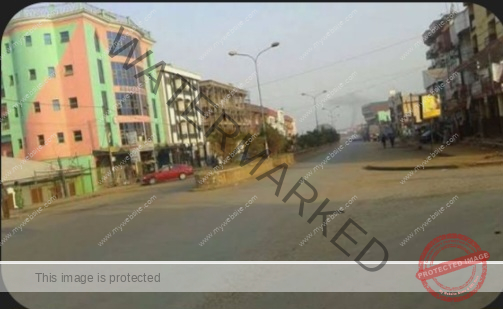
BUEA – February 28, 2026 – Every Monday, from the oil-rich shores of the Atlantic Zone to the highlands of the Savannah, a silent act of political expression unfolds. The “Ghost Towns” have long served as a form of civic protest — a nonverbal referendum reflecting frustration, resistance, and unresolved national questions.
Yet beneath that silence lies anguish. In places such as Batibo, civilians describe living between two pressures: state security operations on one side and armed separatist factions on the other. The result is not empowerment, but exhaustion.
For many in the Midland Zone, the most urgent crisis is no longer only external confrontation. It is internal erosion. Allegations of extortion, kidnappings, factional killings, and undisciplined operations attributed to certain armed actors have severely damaged public trust. When communities fear those claiming to defend them, the struggle loses moral clarity.
Kwame Nkrumah once wrote that freedom is claimed, not bestowed. But freedom cannot be credibly claimed if civilians are intimidated, if rival voices are silenced, or if internal disputes are settled through force rather than accountability. Movements fracture when discipline gives way to rivalry, and when political objectives are overshadowed by criminal opportunism.
The reputational consequences are profound. International forums — including high-level gatherings such as the 39th AU Summit — often point to internal violence as justification for inaction. When images of internal executions or ransom practices circulate, they complicate diplomatic advocacy and undermine arguments grounded in self-determination and human rights.
The deeper danger is structural: a liberation project weakened not by military defeat but by moral ambiguity.
Calls for reform must therefore begin within. This does not mean abandoning the political grievances that gave rise to resistance. It means strengthening internal accountability mechanisms, clarifying command structures, rejecting criminal infiltration, and placing civilian protection at the center of strategy.
Internal diplomacy should not be confused with tolerance of misconduct. Dialogue, transparency, and reform are not signs of weakness; they are prerequisites for legitimacy.
Conclusion: Toward a Sovereign Horizon
Ambazonians envision a future rooted in law rather than decree, citizenship rather than subjecthood. That future cannot be built on internal mistrust or economic coercion.
If Mondays are to retain meaning, they must symbolize discipline, unity, and collective moral resolve — not fear or fragmentation. The path forward requires confronting uncomfortable truths, restoring public confidence, and ensuring that any struggle for sovereignty reflects the values it seeks to institutionalize.
No movement secures its future by silencing critics or intimidating civilians. It secures its future by earning trust.
Sovereignty is not simply a political objective; it is a standard of conduct. If it is to be reclaimed, it must be reclaimed with integrity.
Carl Sanders
Guest Contributor, The Independentistnews
Share This Post:
As Pope visits, Muslim scholar and Prisoner of conscience Abdulkarim Ali writes to the Archbishop of Bamenda and President of the National Episcopal Conference of The Cameroons. from his Kondengui Prison cell.
The Airport Question and the Higher Calling of Unity
Related Post
IS THE WORLD LISTENING: THREE DAYS FOUR FRONTLINES, ASA
SEPTEMBER 24, 1965, THIS DAY IN HISTORY: From Equal
AMBAZONIA’S WAR- IS BIGGER THAN YAOUNDÉ: BRITAIN, FRANCE AND
THE DAY SEPTEMBER 22 1961: — WHAT AMBAZONIA CAN
TRUMP’S “SUPER INTELLIGENCE” ERA: WHAT IT REALLY MEANS —
Why Is Ambazonia More Powerful Than many Imagine.