








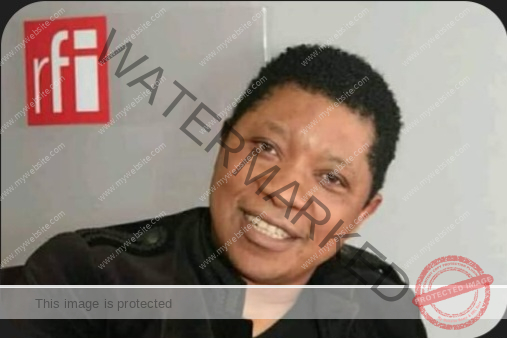
J.P. Rémy Ngono, a France-based sports journalist and commentator with Radio France Internationale (RFI), has been the target of sensational accusations broadcast by Vision 4 presenters Bruno Bidjang and Raul Christophe Bia. In a series of widely circulated programmes and tabloid-style reports, the channel levelled damaging personal allegations against the journalist.
By The Independentist Political Desk
A fresh media storm has erupted between Cameroonian journalist J.P. Rémy Ngono and the Yaoundé-allied television channel Vision 4, deepening concerns about the state of press ethics, political manipulation, and reputational warfare inside French Cameroun’s media landscape.
J.P. Rémy Ngono, a France-based sports journalist and commentator with Radio France Internationale (RFI), has been the target of sensational accusations broadcast by Vision 4 presenters Bruno Bidjang and Raul Christophe Bia. In a series of widely circulated programmes and tabloid-style reports, the channel levelled damaging personal allegations against the journalist, prompting outrage from sections of the Cameroonian diaspora and press-freedom advocates.
This attack follows an earlier campaign by the newspaper L’Indépendant, which had also published claims seeking to cast Ngono in a deeply negative light. Observers have described the recent targeting as coordinated, deliberate, and politically motivated.
Weaponizing Reputation in the Camerounian Media Space
Critics argue that Vision 4 has become notorious for deploying personal scandal as a political tool, particularly against journalists, clergy, former regime insiders, and activists viewed as hostile to Yaoundé. The current campaign against Ngono appears aligned with that pattern.
Sources familiar with the matter allege that the drive to discredit Ngono may have been initiated at the highest levels of the media conglomerate belonging to businessman Jean-Pierre Amougou Belinga. The decision to dispatch a reporter to Ngono’s native village to confront his relatives about his private life demonstrates the aggressive nature of the operation.
Ngono, in a Facebook Live broadcast generating hundreds of thousands of views, condemned the allegations as a smear tactic and an effort to silence his criticism of the government-aligned media establishment.
A Different Response
While the tone of public reaction has ranged from ridicule to indignation, former Cameroon international footballer Étame Mayer took an unexpected stance. In an open message, he praised Ngono for his composure amid the attempts to destroy his reputation, and pledged to appoint him Managing Director of a forthcoming television channel.
His declaration has generated controversy and speculation, triggering backlash from some online commentators who questioned his patriotism for defending a journalist under attack.
A Press in Crisis
The feud underscores a broader problem inside Cameroon’s media ecosystem: the collapse of journalistic standards, the normalization of character assassination, politically-directed propaganda, and the systematic humiliation of critics.
Analysts warn that such sensationalism is designed to distract the public from ongoing national crises—including displacement, insecurity, economic decline, and the escalating conflict in Ambazonia. Instead of fostering national dialogue, the media sphere has devolved into a battleground of mudslinging, intimidation, and personal destruction.
The Real Story
This episode is not about one man. It is about the structural decay of Cameroon’s press environment—and the use of scandal as a strategy of silencing and distraction. In a normal democracy, journalists hold power to account. In a collapsing one, journalists become targets when they ask the wrong questions.
The Ngono affair illustrates, yet again, how the public conversation in French Cameroun is warped not by truth, justice, or ethics, but by the politics of humiliation and control.
The Independentist Political Desk


Leave feedback about this