









Commentary

We are home to news on Cameroon and the CEMAC region. We are dedicated to honest and reliable reporting. We are the voice of the Cameroonian people and their fight for freedom and democracy at a time when the Yaoundé government is silencing dissent and suppressing democratic voices.

Ultimately, political transformation must be judged by what changes in the lives of ordinary people and in the institutions that govern them. New faces are not proof of new governance. New slogans are not proof of new policies. New officeholders are not proof of institutional reform. And electoral victory is not, by itself, proof of public accountability.
By Timothy Enongene
Editor-in-Chief, The Independentist News
November 14, 2026
As Amazon associate this site earns from qualifying purchases
Follow the Amazon link below to get your copies of other publications on the Ambazonian revolution By Martin Mungwa
https://www.amazon.com/s?k=martin+mungwa&linkCode=ll2&tag=njokings-20&linkId=0316ce7481ca0401e305d29853db0c61&language=en_US&ref_=as_li_ss_tl
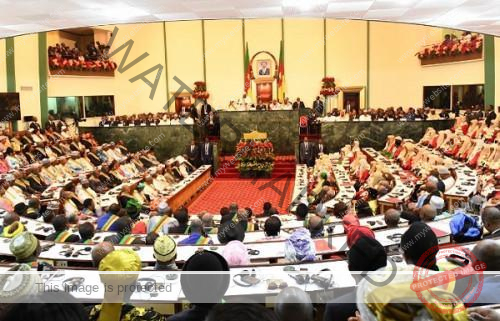
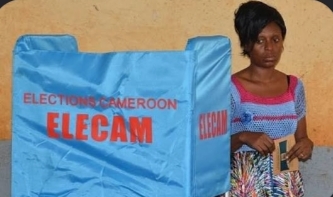
The approaching 2027 municipal and legislative elections in La République du Cameroun (LRC) raise a fundamental question that goes far beyond campaign slogans, political personalities, and electoral promises: Are Cameroonians preparing for genuine political transformation, or merely another rotation of political elites within an entrenched system?
Election after election, citizens are presented with familiar assurances of change. Politicians promise development, employment, better roads, improved healthcare, educational opportunities, transparent administration, and accountable leadership.
During campaign periods, communities that have long struggled with inadequate public services suddenly attract political attention. Candidates visit villages, address public gatherings, shake hands with struggling families, and present ambitious development programmes.
But the central question remains: What happens after the votes have been counted, the celebrations have ended, and the winners have assumed office?
When electoral competition changes the occupants of public institutions without changing how those institutions function, citizens have good reason to question whether meaningful political transformation has occurred.
THE POLITICAL MUSICAL CHAIRS: DIFFERENT FACES, FAMILIAR PRACTICES
The problem cannot be reduced to the individuals occupying parliamentary seats or municipal councils. It concerns the political culture, institutional incentives, administrative practices, and systems of accountability within which elected officials operate.
A new mayor may enter office with ambitious declarations, but if municipal decisions remain opaque, public expenditure escapes scrutiny, and appointments continue to depend on personal connections rather than competence, the promise of change may remain unfulfilled.
Likewise, replacing one parliamentarian with another does not automatically strengthen legislative oversight, improve representation, or ensure that government officials answer difficult questions. Different faces do not automatically mean different politics. New political occupants do not necessarily bring new political values.
The essential issue is not simply who occupies public office, but how political authority is exercised, how public resources are managed, and whether citizens possess effective mechanisms for holding officials accountable.
An election may change representatives without fundamentally changing the institutional environment in which they work. That distinction deserves serious public attention.
THE POLITICS OF PROMISES AND THE REALITY OF GOVERNANCE
For decades, many Cameroonian citizens have expressed frustration over unemployment, inadequate infrastructure, uneven development, administrative inefficiency, and limited opportunities for meaningful participation in public affairs.
The persistence of such concerns raises questions about the relationship between political promises and measurable administrative performance. Campaign speeches are not development projects. Political endorsements do not construct hospitals. Party loyalty does not repair neglected roads. And an impressive electoral victory does not, by itself, guarantee better governance.
Citizens deserve credible answers about what public officials have accomplished, how government resources have been used, and whether announced development programmes have produced measurable improvements.
A serious electoral debate should therefore examine more than personalities and partisan allegiances. It should address budgets, procurement procedures, public-service delivery, local development priorities, legislative oversight, and the institutional barriers that prevent citizens from obtaining effective remedies when officials fail in their responsibilities.
Without such scrutiny, electoral competition can become disproportionately focused on securing public positions rather than demonstrating the capacity to govern effectively.
PUBLIC OFFICE IS NOT PRIVATE PROPERTY
A parliamentary seat is not a family inheritance. A municipal council is not a private business. A government appointment is not a personal entitlement. And political authority should never be treated as a licence for private enrichment.
Public office carries obligations that extend beyond party affiliation and personal ambition. Elected representatives are entrusted with responsibilities affecting the welfare, security, livelihoods, and opportunities of entire communities.
They must therefore be prepared to explain their decisions, justify expenditure, disclose potential conflicts of interest, and accept legitimate public scrutiny. The same standards should apply regardless of which political party controls a municipality or holds parliamentary representation.
Corruption and misuse of office cannot become acceptable merely because the beneficiaries belong to a preferred political organisation. Accountability must be a governing principle, not an instrument selectively deployed against political opponents.
THE QUESTION OF INSTITUTIONAL REFORM
Political transformation requires more than changing officeholders. It requires institutions capable of operating according to transparent rules, protecting citizens’ rights, and enforcing standards of public responsibility. Several questions deserve examination ahead of the anticipated 2027 elections.
How effectively do municipal councils disclose their budgets and expenditures? – What opportunities exist for citizens to challenge questionable administrative decisions? – How independent and effective are the institutions responsible for auditing public resources? – Can elected representatives scrutinise executive decisions without improper interference? – What safeguards protect public procurement from favouritism? – How can voters obtain reliable information about the performance of their representatives? – And what consequences follow when officials fail to fulfil their legal responsibilities?
These questions concern the foundations of accountable government. No political party should be exempt from answering them.
WHEN ELECTIONS BECOME A CONTEST FOR ACCESS TO POWER
An important distinction exists between competition for public office and competition over public policy. The first concerns who acquires authority. The second concerns what that authority is intended to accomplish.
In a functioning democratic system, both matter. Citizens require meaningful electoral choices, but they also need credible alternatives in governance, public administration, economic management, and institutional development.
Where political competition is dominated by access to influence, appointments, contracts, and institutional privileges, the quality of public debate may deteriorate. Political parties risk becoming vehicles for distributing opportunities among their members rather than organisations competing to deliver public benefits.
The central challenge is therefore to assess whether electoral candidates offer demonstrably different approaches to governance and whether existing institutions enable them to implement those approaches. Changing the personnel without examining the rules may leave many of the underlying problems untouched.
THE AMBAZONIAN QUESTION CANNOT BE REDUCED TO AN ELECTORAL EXERCISE
There is another political dimension that deserves careful examination. From the perspective of supporters of Ambazonian independence, Cameroon’s municipal and legislative elections do not, by themselves, resolve the longstanding dispute concerning the political status and future of the former British Southern Cameroons.
The historical, constitutional, and international legal questions raised by the Southern Cameroons conflict extend beyond the allocation of parliamentary seats and municipal offices. Supporters of independence maintain that the fundamental issue concerns the right of the people to determine their political future.
Other political actors advocate federalism, decentralisation, or alternative constitutional arrangements within Cameroon. These positions reflect substantial disagreements over history, sovereignty, constitutional authority, and the appropriate political settlement.
Participation in a municipal or legislative election should therefore not automatically be interpreted as resolving these competing political claims. Nor should electoral representation be presented as a substitute for addressing grievances concerning governance, identity, political participation, security, and constitutional arrangements.
The distinction between electoral administration and the resolution of a contested political question is essential to informed public debate.
WHAT SHOULD 2027 ACTUALLY CHANGE?
The significance of the anticipated 2027 elections should not be measured exclusively by the number of new parliamentarians, mayors, or municipal councillors who emerge. A more meaningful assessment would examine whether governance practices improve.
Are public budgets becoming more transparent? – Are legislative representatives exercising effective oversight? – Are municipal authorities consulting residents before making consequential decisions? – Are procurement processes becoming more accountable? – Are citizens experiencing measurable improvements in public services? – Are public institutions demonstrating greater independence and responsiveness?
Such indicators provide a more substantive basis for evaluating political change than campaign declarations or victory celebrations. They also recognise that not every officeholder has the same record. Some representatives may achieve measurable improvements, while others may fail to deliver their commitments.
Judgment should be grounded in documented performance rather than assumptions about every politician or party. Perhaps the most troubling feature of personality-driven politics is the tendency for public participation to diminish once elections have concluded.
Citizens may be encouraged to attend rallies, applaud candidates, defend political parties, and celebrate electoral victories, yet subsequently find themselves excluded from important decisions affecting their communities.
Democratic accountability cannot end at the ballot box. It requires continuing access to information, public consultation, independent journalism, functioning oversight institutions, and meaningful opportunities to question those exercising authority.
A mayor should remain answerable to the municipality throughout the term of office. A parliamentarian should remain accountable to constituents between elections. And citizens should not be expected to suspend legitimate criticism simply because a preferred candidate has won. The public interest does not belong to any party, personality, or political faction.
CONCLUSION: CHANGING THE PLAYERS IS NOT ENOUGH
The anticipated 2027 municipal and legislative elections present an opportunity to examine the relationship between electoral competition, political accountability, and institutional reform in Cameroon. Whether the elections produce substantial improvements in governance will depend on more than the identities of those elected.
It will depend on the rules governing political authority, the effectiveness of oversight institutions, the transparency of public expenditure, and the capacity of citizens to demand answers from their representatives.
The warning contained in the metaphor of political musical chairs is clear: political turnover may create the appearance of change while leaving established practices intact. That possibility deserves scrutiny rather than automatic acceptance.
The objective of accountable government should not be merely to replace one group of officeholders with another, but to ensure that public authority is exercised lawfully, transparently, competently, and in the interests of the population.
For the people of Southern Cameroons, the additional questions surrounding political status, self-determination, constitutional arrangements, and a sustainable resolution of the conflict remain distinct matters requiring serious engagement. No electoral exercise should be mistaken for an automatic settlement of those disputes.
Ultimately, political transformation must be judged by what changes in the lives of ordinary people and in the institutions that govern them. New faces are not proof of new governance. New slogans are not proof of new policies. New officeholders are not proof of institutional reform. And electoral victory is not, by itself, proof of public accountability.
Changing the players while preserving the rules of a dysfunctional system is not necessarily political transformation. It may simply be continuity under different management. The question for 2027 is whether citizens will witness changes in political personnel alone—or meaningful changes in how public power is exercised.
THE INDEPENDENTIST NEWS Informing, challenging, and holding power to account.
Timothy Enongene
Editor-in-Chief
November 14, 2026
Share This Post:
FIVE UNCOMFORTABLE TRUTHS ANGLOPHONES MUST CONFRONT: THE ROAD TO FREEDOM BEGINS WITH SELF-ACCOUNTABILITY
Related Post
FIVE UNCOMFORTABLE TRUTHS ANGLOPHONES MUST CONFRONT: THE ROAD TO
PRESIDENT DR SAMUEL IKOME SAKO’S CONTRIBUTIONS TO ENCOURAGING UNITY
AMBAZONIA: THE ROAD MAY BE LONG, BUT THE PROMISED
BRITAIN’S BREXIT PARADOX: WHY CAN BRITAIN RECONSIDER ITS UNION
THE MATHEMATICS OF POLITICAL CONFLICT: A Forthcoming Book by
MONDONI UNDER QUESTION: WHO GAVE ANCHI ELIZABETH THE AUTHORITY