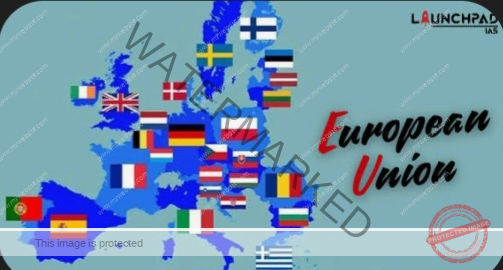


Within the EU, the smallest member states—such as Malta or Luxembourg—possess legal protections and institutional standing equal to those of larger powers like Germany or France. Influence may differ, but sovereignty does not. Africa urgently needs a similar framework—one that protects smaller or emerging nations from being absorbed, dominated, or silenced by larger neighbors.
By Timothy Enongene, Guest Editor-in-Chief, The Independentistnews
In the current landscape of African geopolitics, the African Union (AU) too often functions as a playground for regional giants, where the voices of smaller or marginalized peoples are drowned out by the weight of established powers. If the AU is ever to transition from a “club of presidents” into a true community of nations, it must study Brussels. The European Union (EU) model works because it is built on a radical and stabilizing foundation: sovereign equality.
Within the EU, the smallest member states—such as Malta or Luxembourg—possess legal protections and institutional standing equal to those of larger powers like Germany or France. Influence may differ, but sovereignty does not. Africa urgently needs a similar framework—one that protects smaller or emerging nations from being absorbed, dominated, or silenced by larger neighbors. By adopting a strict doctrine of sovereign equality, a reformed AU could establish the legal safeguards necessary to protect peoples like those of the Federal Republic of Ambazonia from expansionist and hegemonic policies.
The EU Shield: Equality by Design
The strength of the EU lies in its institutional architecture. Through mechanisms such as proportional representation in the European Parliament and veto protections in the Council on sensitive matters, the system is deliberately designed to prevent the “tyranny of the giants.” Military power and economic size do not translate into territorial entitlement. No state can simply cross a border and claim a neighbor’s land.
Africa currently suffers from the opposite dynamic. The AU’s structure often rewards hegemony rather than restrains it. Larger states use diplomatic influence to shield themselves from accountability when they violate the sovereignty of distinct peoples. When military power is combined with political protection, continental institutions become paralyzed. This is not integration—it is dominance operating under the language of unity.
Protection from Expansionism
Sovereign equality means that the right of a people to exist and govern themselves is not determined by population size, military strength, or geopolitical weight. It is an inherent political and human right.
For Ambazonians, this principle represents a direct alternative to the violence, repression, and narrative manipulation that accompany occupation and forced integration. A doctrine of sovereign equality would replace power politics with legal order.
If the AU adopted the EU’s legal safeguards: Annexation would become a red line No state could remain in the union while occupying a territory that has demonstrated a clear and lawful claim to self-determination.
Respect would replace coercion. Cooperation would be built on treaties between equals, not decrees imposed by dominant states. Third-party mediation would become standard practice
Conflicts would be referred to impartial legal and judicial mechanisms, rather than allowing occupying powers to serve as both judge and enforcer.
Fostering Cooperation, Not Conquest
The “One Africa” vision must be based on cooperation, not conquest. Expansionist politics are a relic of the nineteenth century; they have no place in a modern continental order. When one state attempts to absorb another, it creates permanent instability—“frozen conflicts” that drain resources, destabilize regions, and poison future relations.
An independent Ambazonia, recognized as a sovereign equal, would be a far stronger regional partner than an occupied territory. In a reformed AU, we would not be fighting for survival—we would be trading, investing, and contributing to shared prosperity. We would be participants in a continental economy, not victims of extraction.
Conclusion: A Union of Equals
The African Union must decolonize its understanding of power. Africa does not need an association of “big brothers” and “small brothers.” It needs an association of equals.
True integration is only possible when every member feels secure in its identity, borders, and political future. Sovereign equality is not a threat to unity—it is its foundation.
Brussels has demonstrated that nations can pool sovereignty for the common good only when their independence is protected, not threatened. By adopting sovereign equality as a governing doctrine, Africa can finally end the era of regional hegemony and begin building a continental order based on law, dignity, and mutual respect.
It is time for the AU to stand for the small, the new, and the oppressed. It is time to protect sovereignty, not hierarchy. It is time to build a Union of Equals. Only then will “One Africa” become a lived reality rather than a political slogan.