

Decolonizing Africa is no longer only about flags and borders. It is about institutions, power, and whose lives matter. It is time to decolonize African integration itself—and build a union that truly belongs to the African people
By Timothy Enongene, Guest Editor-in-Chief, The Independentistnews
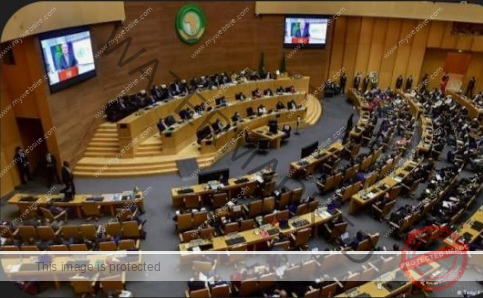
For more than six decades, the African Union (AU) and its predecessor, the OAU, have claimed the language and symbolism of Pan-Africanism. Yet for many marginalized and oppressed peoples across the continent, the lived reality has often contradicted that vision. Instead of dismantling colonial structures, continental governance has too frequently reproduced them—repackaged in African leadership but built on the same logic of domination.
What is emerging today can best be described as a form of collective colonialism: a system in which a bloc of powerful states collectively determines the fate of weaker or marginalized peoples, using the language of “unity” and “territorial integrity” to legitimize political control, repression, and exclusion.
From the perspective of the Federal Republic of Ambazonia, our struggle for independence is not simply a territorial dispute. It is a demand for a new African social order—one that decolonizes the very concept of integration itself. It is a call to move away from a union of rulers and toward a People-First Union, inspired by the most functional elements of supranational integration models such as the European Union.
The Trap of Collective Colonialism
In the colonial era, European powers gathered in Berlin to divide Africa without African representation. Borders were imposed, identities ignored, and peoples subordinated. Today, those same borders are treated as sacred, even when they are used to justify violence, annexation, and repression.
When continental institutions remain silent as state violence is reframed as “internal matters,” or when mass killings are reduced to “intercommunal conflicts,” a deeper injustice is taking place. The protection of inherited borders becomes more important than the protection of human life. The “territorial integrity” of the state is elevated above the human integrity of the people.
This is not Pan-Africanism. It is institutional self-preservation. It is a system that prioritizes regime stability over justice, and order over dignity. In practice, it functions as a mutual protection arrangement among political elites rather than a moral community of African peoples.
The EU Lesson: Justice Beyond Borders
To decolonize integration, Africa must rethink how authority and accountability function at the continental level. One of the most instructive aspects of the European Union is not its economy, but its legal architecture. Supranational justice systems exist that limit the ability of states to hide behind sovereignty when fundamental rights are violated.
A decolonized African Union would require similar structural commitments:
Judicial authority beyond the state. When national courts are compromised or politicized, continental institutions must have the authority to intervene. Justice cannot remain hostage to domestic power structures.
Accountability for Leadership. No political office should function as immunity from prosecution. Crimes against populations must carry legal consequences that transcend national borders.
Legal Pathways to Self-Determination.Peoples seeking political self-determination must have access to lawful, mediated processes—not be forced into violent संघर्ष as the only available route to dignity and autonomy. This is not fragmentation; it is institutional maturity.
Toward a New African Social Order
Ambazonia stands for African unity—but unity rooted in freedom, equality, and consent. Integration cannot be built on coercion. Solidarity cannot be built on subjugation. No person can be integrated while in chains; dignity must precede unity.
A People-First Union would prioritize human security over regime security. It would ensure that natural wealth benefits citizens rather than funding repression. It would create structures where economic integration serves communities, not only political centers of power.
True Pan-Africanism does not erase identity—it protects it. It does not suppress sovereignty—it coordinates it. It does not centralize domination—it distributes dignity.
Conclusion: Decolonizing the Future
As Africa moves through this decade, the African Union faces a defining choice: remain a structure shaped by colonial logic, or evolve into a modern, citizen-centered continental institution.
The Ambazonian struggle represents more than a national cause. It reflects a broader continental question: Who is African integration for—states or people?
We reject collective colonialism in all its forms. We call for an African Union that resembles a true supranational community—an association of free, sovereign states cooperating for the common good, governed by law, accountability, and respect for human rights.
Decolonizing Africa is no longer only about flags and borders. It is about institutions, power, and whose lives matter. It is time to decolonize African integration itself—and build a union that truly belongs to the African people.
Timothy Enongene, Guest Editor-in-Chief, The Independentistnews