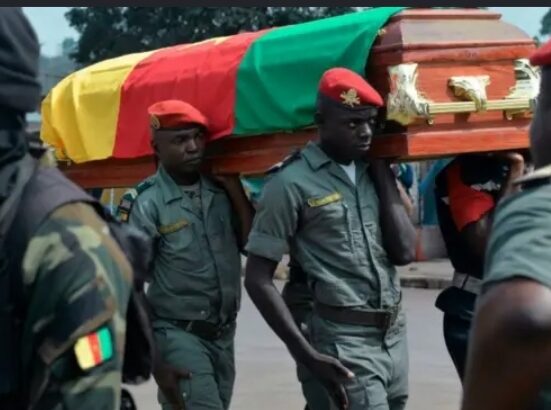
Amid mounting political uncertainty and internal fractures, the government has begun repositioning military units toward the north. Recent troop movements suggest more than routine redeployment: they indicate that the regime is preparing for possible instability on multiple fronts.
By The Independentist news Desk
The CPDM regime in Yaoundé is entering a phase of acute strategic anxiety. Amid mounting political uncertainty and internal fractures, the government has begun repositioning military units toward the north. Recent troop movements suggest more than routine redeployment: they indicate that the regime is preparing for possible instability on multiple fronts.
Redeployment Under Pressure
For eight years, La République du Cameroun has been engaged in a brutal conflict in Ambazonia. Despite commanding an army whose size dwarfs the Ambazonian State Army (ASA) by a ratio approaching 1,000 to 1, the Yaoundé regime has not secured victory. Instead, it faces a costly stalemate that has drained national finances, eroded military morale, and drawn growing scrutiny from international actors.
The redeployment to the north may serve several strategic purposes.

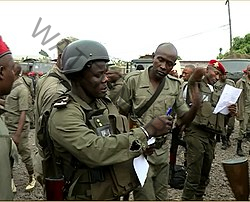
It could be a pre-emptive measure to secure the region against potential unrest in the aftermath of the October transition, or to reinforce a historically sensitive zone where political loyalties have often determined national stability. It may also reflect intelligence assessments indicating emerging threats that the government wishes to contain before they escalate. In this sense, the move is not purely reactive — it also reflects Yaoundé’s effort to manage multiple risks simultaneously.
An Army Under Strain
Still, the Cameroonian military is operating under considerable strain.

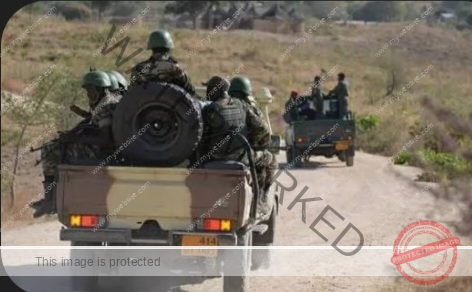
Years of continuous deployment have stretched logistics and exposed deep systemic weaknesses: inconsistent pay, inadequate supplies, corruption in procurement, and declining morale. Casualties in the Ambazonian theatre have thinned elite units, while desertions have quietly increased. Internal divisions within the political and military leadership have also sharpened, with some factions advocating a negotiated settlement and others insisting on continued escalation.
Ambazonia’s Enduring but Limited Resistance
On the other side, the Ambazonian State Army has shown remarkable resilience. Operating with limited resources and manpower, it has held off a far larger force through mobility, local support, and strategic adaptation. However, it too faces significant constraints: limited access to advanced weaponry, logistical vulnerabilities, and the challenges of sustaining a prolonged asymmetric war. These factors temper any assumption that the regime’s difficulties automatically translate into Ambazonian strategic advantage.
The Strategic Equation
The central question now is whether Yaoundé can sustain its military posture on multiple fronts with an overstretched force. History suggests that regimes under internal strain and external pressure often struggle to fight effectively on two fronts. Yet, the outcome is not predetermined. Yaoundé retains certain structural advantages: formal state control, established supply chains, international alliances, and the ability to reallocate forces rapidly. Ambazonia retains moral legitimacy in its territory and a population that has largely resisted assimilation efforts.
The situation is therefore best understood not as imminent collapse or inevitable victory for either side, but as a strategic inflection point. Both Yaoundé and Ambazonia face serious constraints. The direction of events will likely depend on leadership decisions, the durability of external alliances, and whether either side adapts faster to the evolving military and political landscape.
The Independentist news Desk