



Whenever people ask why I support the right of Southern Cameroonians to determine their own future, my mind returns to that terrible day. I think of my brother. I think of my mother. I think of friends whose lives were cut short. I think of the countless families whose stories may never be told.
By A Patriot for The Independentist News
The Day Everything Changed
The day I saw my brother’s body riddled with bullet holes, I shook myself repeatedly, hoping to wake up from what I believed was a terrible nightmare. I wanted to believe that what I was seeing was not real, that somehow my eyes were deceiving me. But it was real. The image remains with me to this day, as vivid as it was on that tragic afternoon.
Nothing in life prepared me for the pain that followed. I never imagined I would witness my mother crying with such overwhelming grief that she ate soil and grass in her sorrow. That image has never left my mind. Years later, the trauma continues to visit me in my sleep. There are nights when I wake up and find myself reliving those moments all over again.
I remember speaking to a friend one day. We talked about ordinary things, never imagining what was about to happen. Barely thirty minutes later, I saw his photograph circulating on social media. He was dead. Just like that. A living person had become a memory within the space of half an hour.
Experiences such as these change people. They change the way one sees the world, the way one understands politics, and even the way one understands identity.
A Proud Cameroonian
Before the conflict, I considered myself a proud Cameroonian. I loved Cameroon. I carried the national flag with pride and marched during national celebrations on February 11 and May 20. Whenever the national football team lost a match, I genuinely felt the disappointment. As a child, I dreamed of becoming a police officer because I wanted to serve my country and contribute to its future. Like many young people, I believed in the nation and felt that I belonged to it.
Everything changed on the day my younger brother was killed. From that moment, something inside me broke. For the first time in my life, I felt that I did not belong. I realized that my own country could take the life of one of its citizens and continue as if nothing had happened. I realized that a person could be killed and forgotten. The sense of security and belonging that I once took for granted disappeared. From that day onward, my relationship with Cameroon changed forever.
When Personal Tragedy Becomes Political
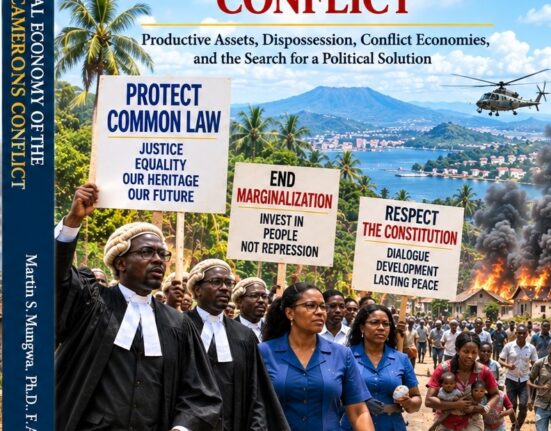
Many people who discuss the Southern Cameroons conflict do so from a distance. They speak in terms of politics, ideology, constitutional debates, and legal arguments. Those discussions are important, but they often fail to capture the human reality that lies beneath the conflict. For many Southern Cameroonians, support for self-determination did not begin with politics. It began with personal experiences of loss, trauma, and suffering.
Thousands of people who once believed in coexistence found themselves questioning those beliefs after witnessing violence, displacement, humiliation, or the deaths of loved ones. Many did not begin their journey as nationalists. They became nationalists because their experiences forced them to rethink everything they thought they knew.
That distinction is important. No one can witness the death of a brother, a sister, a parent, or a child and remain unchanged. Such experiences leave permanent marks on the soul.
The Collapse of Trust
The greatest casualty of this conflict may not be the destruction of buildings, roads, or villages. It may be the destruction of trust. Governments derive their legitimacy from the belief that they exist to protect their citizens. When citizens lose that belief, rebuilding confidence becomes extraordinarily difficult.
The tragedy of Southern Cameroons is that many people who once identified proudly with Cameroon gradually came to feel that the state no longer viewed them as citizens deserving protection and dignity. Whether others agree with that perception or not, it is impossible to understand the depth of the conflict without understanding how widespread such feelings have become.
Many Southern Cameroonians believe that the crisis began because of years of neglect, political marginalization, unresolved constitutional questions, and the state’s response to peaceful protests. Others may disagree with that interpretation. Yet what cannot be denied is that the conflict did not emerge from nowhere. It developed over decades of accumulated grievances, mistrust, and competing visions of history and governance.
The Human Cost of the Conflict
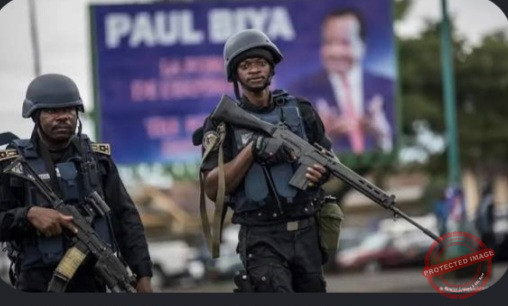
The human consequences have been devastating. Lives have been lost. Families have been torn apart. Communities have been displaced. Entire generations have grown up knowing conflict instead of peace. The suffering has touched virtually every family in one way or another.
Perhaps the most painful aspect of the crisis is the way it has divided people. Some have adopted the language of those they believe are responsible for the suffering, referring to young self-defense fighters as terrorists while ignoring the experiences that led many of them to take up arms. Others dismiss the grievances of Southern Cameroonians altogether, treating their concerns as illegitimate or irrelevant. For those who have lost loved ones, such dismissals can feel like a second injury.
Why the Struggle Endures
The debate over self-determination is often framed as a purely political disagreement, but for many people it is deeply personal. It is tied to memories of loss, grief, fear, and survival. It is connected to brothers who never came home, friends whose lives ended too soon, and parents whose hearts were broken by tragedy.
This is why the demand for self-determination continues despite years of suffering. It is not simply about politics. It is about dignity. It is about recognition. It is about ensuring that future generations do not experience the same pain that so many have endured.
I Did Not Choose This
Whenever people ask why I support the right of Southern Cameroonians to determine their own future, my mind returns to that terrible day. I think of my brother. I think of my mother. I think of friends whose lives were cut short. I think of the countless families whose stories may never be told.
I did not arrive at my convictions because of political theory. I did not embrace them because someone persuaded me. I embraced them because circumstances forced me to confront realities I could no longer ignore.
Like many Southern Cameroonians, I once believed completely in the country I called my own. Then history intervened. That is why I often say that I did not choose this path. This path chose me. And I suspect that countless others across Southern Cameroons would say exactly the same thing.
The Patriot.