









Commentary

We are home to news on Cameroon and the CEMAC region. We are dedicated to honest and reliable reporting. We are the voice of the Cameroonian people and their fight for freedom and democracy at a time when the Yaoundé government is silencing dissent and suppressing democratic voices.

A people’s political existence cannot be erased by geography, imperial convenience, or diplomatic arrangements made without their consent. For Ambazonia, the task is to transform historical identity, sacrifice, and national will into credible institutions, disciplined diplomacy, and a future the world can no longer ignore.
By The Independentist News political Desk
Geography Does Not Decide Sovereignty
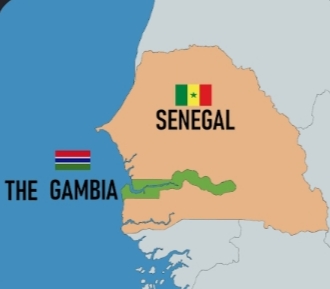
The Gambia offers a powerful lesson for Ambazonia: geography does not decide sovereignty. Although The Gambia is almost entirely surrounded by Senegal, it remains an independent state because its political identity, colonial history, recognized borders, institutions, and diplomatic relations are distinct.
Why The Gambia Matters to Ambazonia
Like The Gambia, Southern Cameroons also emerged from a distinct British-administered history, with English-language education, common law, parliamentary traditions, and a separate political identity. Its claim cannot be dismissed simply because it is smaller than, or geographically connected to, a larger neighbor.
The Imperial Bargain Behind Southern Cameroons
But there is a deeper imperial question. Was Southern Cameroons partly a victim of Britain and France’s punishment of Germany after World War I? The answer is yes, but with nuance. After Germany’s defeat, its former colony of Kamerun was not restored to German control. It was divided between Britain and France under the League of Nations mandate system. This was not only punishment; it was also imperial redistribution.
The Entente Cordiale and Anglo-French Accommodation
The background to this imperial bargaining was shaped by the wider Anglo-French accommodation known as the Entente Cordiale of 1904. That agreement helped settle colonial disputes between Britain and France and reinforced a pattern of cooperation between the two powers over imperial interests. By the time German Kamerun was divided after World War I, Britain and France were no longer acting merely as rivals; they were also partners in managing the postwar colonial order. Southern Cameroons was therefore not created through the free will of its people, but through decisions made by imperial powers.
The Senegambia Confederation Warning
The Senegambia Confederation of 1982–1989 is equally instructive. Senegal and The Gambia attempted political cooperation, but the arrangement collapsed when The Gambia feared absorption by the larger Senegalese state. The lesson is clear: cooperation may be possible, but only when both parties are recognized as equal and sovereign. Confederation Without Equality Is a Trap
For Ambazonia, any talk of federation, special status, decentralization, or confederation with La République du Cameroun is unsafe unless Ambazonia first exists as an equal political entity. Without equality, confederation becomes domination. Without enforceable guarantees, it becomes a trap. Without consent, unity becomes forced belonging.
Independence Is Not Isolation
The Gambia proves that small states can survive beside larger neighbors through diplomacy, trade, infrastructure cooperation, and regional engagement. Independence does not mean isolation. A future Ambazonia can cooperate with La République du Cameroun, Nigeria, Equatorial Guinea, and the Gulf of Guinea states while still preserving its sovereignty.
The Lesson for Ambazonia
The central lesson is simple: a people’s political existence cannot be erased by geography, imperial convenience, or diplomatic arrangements made without their consent. For Ambazonia, the task is to transform historical identity, sacrifice, and national will into credible institutions, disciplined diplomacy, and a future the world can no longer ignore.
The Independentist News Political desk
Share This Post:
Where Is Ubuntu? Ghana, South Africa, and the Betrayal of Pan-African Solidarity
Ambazonia and the Commonwealth’s Unfinished Moral Responsibility
Related Post
QUEBEC VOTED FOR INDEPENDENCE AS AN OPTION, WHY WAS
PROPHECY, POLITICS, AND THE AMBAZONIAN QUESTION (PART III) Why
WHEN YAOUNDÉ’S ALLIES SUDDENLY ENDORSE AYUK TABE: SOLIDARITY OR
THE SECOND RETURN: FROM THE PAIN OF SEPARATION TO
WHEN THE REGULATOR BENDS: WHAT THE VISION 4 AFFAIR
PROPHECY, POLITICS, AND THE AMBAZONIAN QUESTION (PART II) :