










Today, from Senegal to Cameroon, nearly two hundred million Africans still use a currency designed in France, guaranteed by France, and historically supervised with French approval. This is not independence. It is rebranded domination.
By Kemi Ashu, Mankah Rosa Parks, and Kfusalu Bochong
Africa’s present condition did not begin with poor leadership or bad policy. It began as war loot. When World War II ended, Europe lay in ruins. Its cities were rubble, its treasuries exhausted, its empires bankrupt. One continent, however, was quietly repurposed to underwrite Europe’s recovery: Africa. Its land, labor, minerals—and crucially, its money—were reorganized to stabilize defeated and weakened powers, especially France. What followed was not liberation. It was reallocation.
Africa: The Unpaid Reparations of World War II
France emerged from the war determined to retain global relevance. The solution was not reform, but extraction—modernized for a new era. African raw materials rebuilt European industry. African labor subsidized European growth. African monetary systems were redesigned to guarantee European stability.
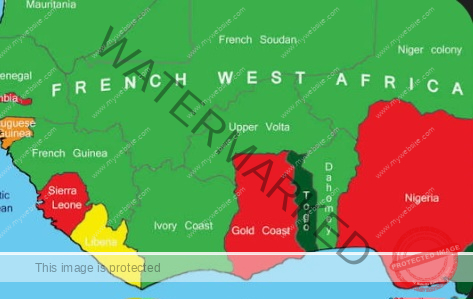
The CFA franc, created in 1945—the very year the war ended—was not an administrative coincidence. It was infrastructure: a monetary leash ensuring African value flowed outward while decision-making remained in Europe. Africa paid for Europe’s war without consent and without compensation.
Independence Without Economic Sovereignty
The independence movements of the 1950s and 1960s removed flags, not frameworks. Political authority was transferred. Economic sovereignty was not. Currencies stayed pegged. Trade remained asymmetrical. Military bases endured. Local elites were cultivated to manage continuity, not rupture. The colonial office closed. The colonial system survived.
Today, from Senegal to Cameroon, nearly two hundred million Africans still use a currency designed in France, guaranteed by France, and historically supervised with French approval. This is not independence. It is rebranded domination.
Stability for Whom?
Defenders of the CFA franc speak of stability—low inflation, predictable exchange rates, investor confidence. But stability for whom? For French corporations extracting uranium, oil, timber, cocoa, and cotton, the CFA removes currency risk and guarantees convertibility. For African farmers, workers, and entrepreneurs, it enforces stagnation: youth unemployment, chronic trade deficits, debt dependence, and the export of raw materials at bargain prices. A stable cage is still a cage.
Africa as a Managed Afterthought
For decades, this arrangement endured because it was quiet. It wore the language of “partnership.” It hid behind technicalities. Deviation was punished; compliance rewarded. But history does not stay buried.
The same postwar architecture that froze Africa into dependency has produced a generation that understands the mechanics of its own confinement. That is why the current rupture matters—and why it terrifies Paris.
AES: The Sahel Refuses Its Assigned Role
The emergence of the Alliance of Sahel States (AES) marks a geopolitical break with the post–World War II order. Formed by Mali, Burkina Faso, and Niger, AES is not an ideological stunt. It is a response to lived experience: decades of French military presence without security, economic systems that exported wealth but imported poverty, and political arrangements that answered more readily to Paris than to African citizens.
French troops have been expelled. Military “partnerships” have been rejected. Monetary sovereignty—once taboo—is now openly discussed as a strategic necessity. This is not protest. It is systemic defiance.
Ambazonia: Decolonisation Reopened
Beyond the Sahel, another front is reshaping Africa’s reckoning with the postwar order: the independence struggle of Ambazonia, the former British Southern Cameroons.
Unlike many African territories, Southern Cameroons was a UN Trust Territory with a distinct legal path to self-determination. Its forced absorption into Cameroon in 1961 collapsed that path and reproduced the same logic imposed across Africa after World War II: consolidate territory, centralize authority, and subordinate local sovereignty to external interests. Ambazonia’s resistance reopens a file Europe wanted permanently closed.
Why Ambazonia Matters to Africa
Ambazonia is not merely a territorial dispute. It is a legal and historical challenge to the entire postwar African settlement. It insists that: colonial borders were not sacred outcomes of free consent, UN trusteeships were not licenses for permanent annexation, and sovereignty cannot be partial—especially not monetary sovereignty.
By demanding restoration rather than reform, Ambazonia exposes the fraud of “independence” without consent and “stability” without justice. That is why it is met with silence, distortion, and hostility. It threatens precedent.
Converging Fault Lines: AES, Ambazonia, and the CFA
AES challenges French dominance from within former colonies. Ambazonia challenges it from the legal foundations of decolonisation itself. Together, they converge on the same pressure points: Who controls money? Who controls security? Who defines legitimacy?
If the CFA franc fractures in the Sahel, the illusion of inevitability collapses. If Ambazonia reframes its struggle as unfinished decolonisation, the sanctity of postwar borders and monetary arrangements dissolves with it. France understands this danger. Empires are never calm when their ledgers are questioned.
The Shackles Are Breaking
Africa did not start World War II. Africa did not lose it. Yet Africa paid the bill. Eighty years later, that bill is being disputed. The chains forged in 1945—currencies, treaties, borders, and narratives—are no longer invisible. They are being named, challenged, and dismantled piece by piece. Africa is no longer Europe’s recovery plan. It is reclaiming its balance sheet, its history, and its future.
From the Sahel to Southern Cameroons, the postwar order is being contested—and the shackles are finally breaking off.
Kemi Ashu, Mankah Rosa Parks, and Kfusalu Bochong







Leave feedback about this