









Commentary

We are home to news on Cameroon and the CEMAC region. We are dedicated to honest and reliable reporting. We are the voice of the Cameroonian people and their fight for freedom and democracy at a time when the Yaoundé government is silencing dissent and suppressing democratic voices.

Nation building is often judged by what people can see. Yet the institutions that matter most are frequently the least visible. Sound financial governance rarely makes headlines, but it shapes the opportunities available to every generation.
By Ali Dan Ismael
Editor-in-chief The Independentist News
Beyond Politics: The Institutions That Build Nations
When people think about nation building, they usually imagine constitutions, elections, roads, airports, or military strength. These are visible symbols of a functioning state. Yet history repeatedly demonstrates that one of the most powerful institutions in any successful nation is rarely seen by ordinary citizens. It is the institution responsible for managing the nation’s money.
Financial policy may appear technical, but its consequences touch every household, every business, every investor, and every generation. It determines whether prices remain stable, whether entrepreneurs can borrow to expand their businesses, whether investors trust the country with their capital, and whether citizens preserve the value of their savings.
For any future nation, including Ambazonia, financial policy cannot be treated as an afterthought. It is one of the foundations upon which lasting prosperity is built.
The Global Influence of Central Banking
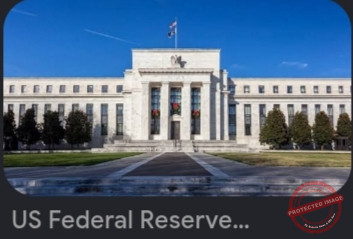
Few institutions illustrate this reality better than the United States Federal Reserve. Over the past century, its leaders have shaped not only the American economy but also global financial conditions. Decisions made in Washington have influenced interest rates, commodity prices, exchange rates, international investment, and access to capital across the developing world.
Although Federal Reserve Chairmen such as William McChesney Martin, Arthur Burns, Paul Volcker, Alan Greenspan, Ben Bernanke, Janet Yellen, and Jerome Powell never played a direct role in the Ambazonia struggle, the lessons from their stewardship remain highly relevant.
Leadership That Changed the Global Economy
Paul Volcker demonstrated that restoring economic confidence sometimes requires difficult decisions. By confronting inflation with determination, he showed that long-term stability often demands short-term sacrifice.
Alan Greenspan presided over an era of globalization, technological advancement, and expanding financial markets. His years at the Federal Reserve highlighted both the opportunities created by innovation and the importance of maintaining sound financial oversight.
Ben Bernanke’s response to the Global Financial Crisis demonstrated how decisive action can prevent systemic collapse. Janet Yellen emphasized balanced economic growth and financial stability, while Jerome Powell has guided the world’s largest economy through a pandemic, inflation, and rapidly changing global conditions.
Lessons for Emerging Nations
The experiences of these leaders offer several enduring lessons. The first is that economic credibility cannot be manufactured overnight. It is earned through consistent policies, transparent institutions, and responsible leadership.
The second is that stable prices protect ordinary citizens. Inflation quietly reduces purchasing power, weakens savings, and creates uncertainty for businesses and families alike.
The third is that investors seek confidence as much as opportunity. Countries that respect the rule of law, maintain predictable economic policies, and uphold institutional integrity are generally better positioned to attract long-term investment.
Looking Beyond Independence
Political freedom, while essential, is only the beginning of nation building. Economic success depends upon the quality of institutions established after independence. History demonstrates that countries with disciplined financial governance tend to experience greater stability, stronger investment, and more sustainable growth over time.
This is why discussions about finance should become part of the national conversation. They are not reserved for economists or bankers. They affect every citizen who earns an income, saves for the future, starts a business, or hopes to see the next generation prosper.
Institutions Outlast Individuals
Perhaps the greatest lesson from the world’s leading central bankers is that institutions outlast individuals. Governments change. Political leaders come and go. Economic cycles rise and fall. Yet strong institutions provide continuity, predictability, and confidence across generations.
The true wealth of a nation is not measured solely by the resources beneath its soil or the size of its budget. It is measured by the quality of its institutions and the confidence they inspire among citizens and the international community alike.
The Real Measure of a Successful Republic
Nation building is often judged by what people can see. Yet the institutions that matter most are frequently the least visible. Sound financial governance rarely makes headlines, but it shapes the opportunities available to every generation.
For Ambazonia, the lesson is clear. The journey toward prosperity will depend not only on achieving political aspirations but also on building institutions capable of sustaining economic confidence for decades to come.
Ali Dan Ismael
Editor-in-chief The Independentist News
Share This Post:
Climate Change and Coastal Resilience: Why Africa Must Redesign Its Coastline for the Storms of Tomorrow. Engineering a Safer Future Through Storm-Hardening Design Standards Part (1)
Beyond Biya: Why Ambazonia Must Prepare for Every Transition Scenario History Rewards Those Who Prepare, Not Those Who Wait
Related Post
PROPHECY, POLITICS, AND THE AMBAZONIAN QUESTION (PART III) Why
WHEN YAOUNDÉ’S ALLIES SUDDENLY ENDORSE AYUK TABE: SOLIDARITY OR
THE SECOND RETURN: FROM THE PAIN OF SEPARATION TO
WHEN THE REGULATOR BENDS: WHAT THE VISION 4 AFFAIR
PROPHECY, POLITICS, AND THE AMBAZONIAN QUESTION (PART II) :
IF SOMALILAND MATTERS TO WASHINGTON, WHY NOT SOUTHERN CAMEROONS?