







News commentary

We are home to news on Cameroon and the CEMAC region. We are dedicated to honest and reliable reporting. We are the voice of the Cameroonian people and their fight for freedom and democracy at a time when the Yaoundé government is silencing dissent and suppressing democratic voices.

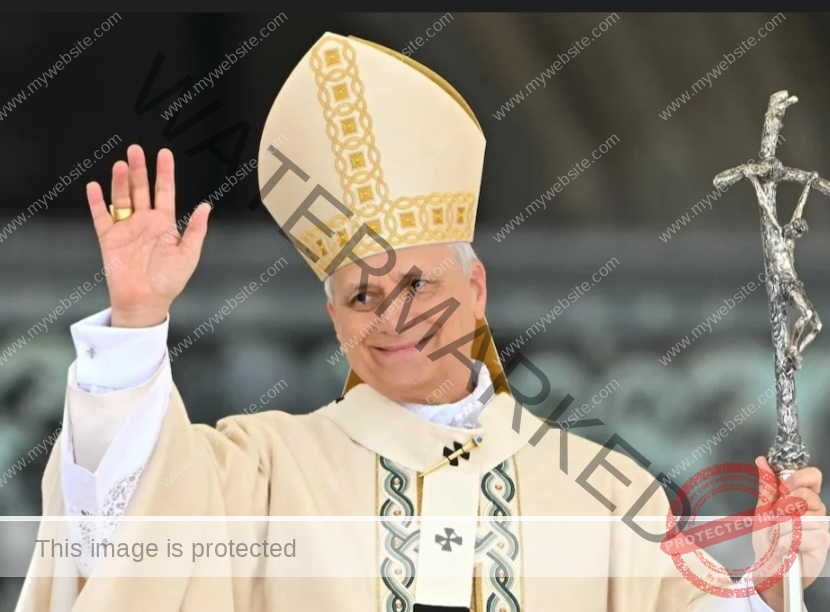
The Pope has spoken. Not in politics—but in principle. War is a choice. Suffering is not inevitable. Peace requires truth. For Ambazonia, the message is unmistakable. The issue is no longer whether the world understands. The issue is whether it is willing to act.
By Ali Dan Ismael, Editor-in-Chief The Independentistnews
Subtitle: The Pope spoke of peace—but beneath his words lies a harder truth: wars do not begin by accident. As the world listens, Ambazonia stands as the question no one wants to answer—who started the war, and why are they still protected? Easter was never meant to comfort the powerful. It was meant to expose them.
This year, as the Pope delivered his message to a wounded world, he did more than call for peace—he drew a moral line. Not loudly, not recklessly, but with a clarity that cuts deeper than slogans: war is not an accident. It is a decision. And if war is a decision, then responsibility is not optional. That is the truth the world continues to avoid.
THE GLOBAL LANGUAGE OF DENIAL
The modern international system has perfected the art of avoiding blame. Wars no longer have authors—they “break out.” Violence is no longer ordered—it “escalates.” Civilians are not targeted—they are “caught in the crossfire.” This is not diplomacy. This is distortion.
Because behind every war is a chain of decisions—signed, approved, and executed. There are architects. There are enablers. There are beneficiaries. To speak of war without naming those responsible is not neutrality. It is protection.
AMBAZONIA: THE WAR HIDDEN IN PLAIN SIGHT
Nowhere is this deception more visible than in Ambazonia. For years, what is clearly a war has been reduced to language designed to weaken its meaning. It is called a “crisis.” A “situation.” An “Anglophone problem.” But remove the language, and the reality stands exposed. Communities have been uprooted. Villages burned. Civilians displaced. Voices silenced through force. This is not a misunderstanding. This is not administrative failure. This is organized violence sustained over time. And yet, the question of responsibility remains deliberately blurred.
THE QUESTION THE WORLD REFUSES TO ASK
The Pope’s message forces a confrontation the international community has long postponed. If war is a choice—then who made that choice? If suffering is real—then who authorized it? If peace is the goal—then why are those responsible for violence shielded behind the language of sovereignty and diplomacy?
Ambazonia exposes a global contradiction:
the world is willing to describe suffering—but unwilling to confront its source.
A MESSAGE THAT REACHES YAOUNDÉ
The Pope did not name countries. He did not single out governments. But moral clarity does not require naming to be understood. When he speaks of war as a human decision, he speaks to every authority that commands force. When he calls for peace grounded in justice, he speaks to every system that sustains violence while claiming legitimacy. That includes Yaoundé. Because power carries responsibility. And responsibility cannot be hidden behind silence.
PEACE WITHOUT ACCOUNTABILITY IS ILLUSION
There is a dangerous pattern repeated across the world: Calls for dialogue without truth. Appeals for unity without justice. Negotiations that ignore the origins of violence. This is not peace. It is postponement.
Real peace begins where denial ends—where responsibility is acknowledged, and where those who start wars are no longer shielded by language, position, or international convenience.
THE LIMITS OF GLOBAL HYPOCRISY
The Pope spoke of the displaced, the hungry, the forgotten. But beneath those words lies a deeper indictment. Because many of the same actors who call for peace are entangled in the structures that sustain conflict—through alliances, economic interests, or strategic silence. This is the paradox of our time: A world that condemns suffering,
but hesitates to confront those who create it.
EASTER AS RECKONING
Easter is not a ceremony. It is a confrontation with truth. It declares that what is built on injustice cannot endure. That what is hidden will be revealed.
That what destroys life must be overcome. And today, what destroys life is not hidden. It is the normalization of violence. The protection of those who initiate it. The manipulation of language to avoid responsibility.
FINAL WORD: THE QUESTION THAT REMAINS
The Pope has spoken. Not in politics—but in principle. War is a choice. Suffering is not inevitable. Peace requires truth. For Ambazonia, the message is unmistakable. The issue is no longer whether the world understands. The issue is whether it is willing to act.
Because until those who start wars are named—
until responsibility replaces rhetoric— every call for peace will remain incomplete. And history will remember not the words spoken, but the truths that were ignored.
Ali Dan Ismael, Editor-in-Chief The Independentistnews
Share This Post:
An Ambazonian Patriot from Home Front, writes to The Independentistnews on the story “How Amadou Ahidjo stole the future of Cameroon” He chooses to be anonymous for security reasons.
The Architecture of Erasure: A Narrative
Related Post
1st OCTOBER 1961 AND THE REUNIFICATION LIE: An Open
THE BIAFRA TRAP: How AGovC, IGCARE, and Competing Political
THE TWO NNAMDIS AND THE THIRD BOX: Azikiwe, Kanu,
PROPHECY, POLITICS, AND THE AMBAZONIAN QUESTION (PART I) :
COMING SOON!!! SCRIPTEGRITY CERTIFICATION PROGRAM
Clement Atangana Is Gone. What Did He Leave Behind