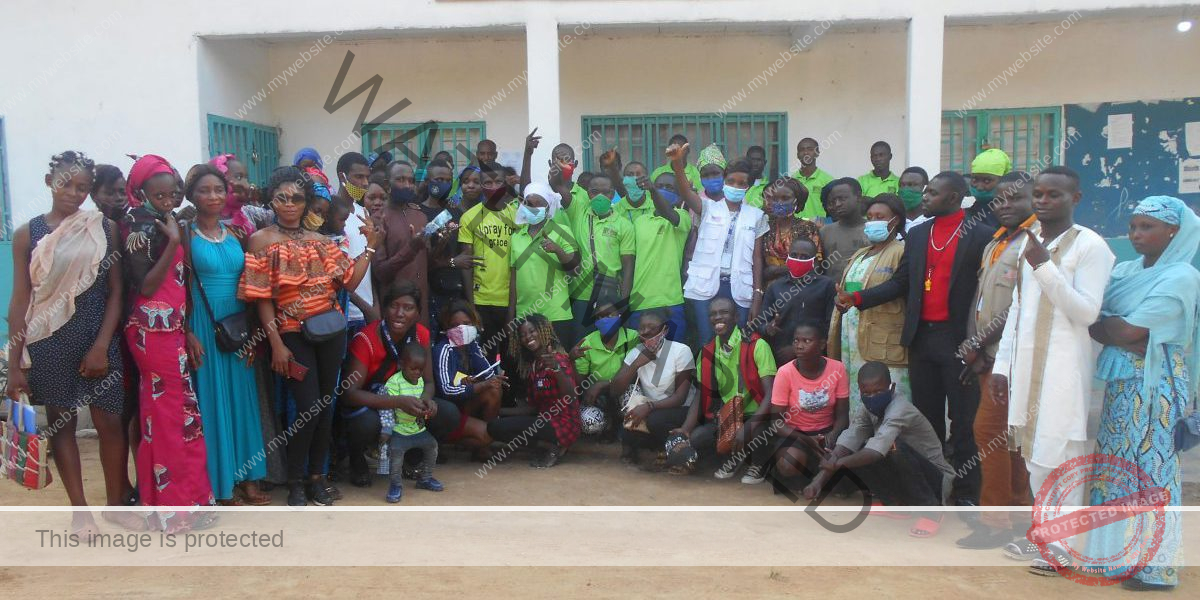


A recurring claim spread online is that Ambazonian forces target the Mbororo community. This narrative is often circulated without investigation. Yet the facts on the ground tell a different story: Mbororo communities remain present across Ambazonian territory. Local dialogue and coexistence persist despite moments of tension.
By Vivian Abiedu — Independentist Contributor
Across Africa today, conflicts are shaped not only by weapons and political decisions, but also by the information people choose to share. In moments of national tension, unverified claims can cause more damage than the events they attempt to describe. This is especially true in Cameroon, where the competing narratives surrounding the crisis have created confusion that threatens prospects for peace. It is therefore essential for African audiences, journalists, and civil-society actors to engage with this issue carefully, thoughtfully, and with a commitment to truth.
Understanding the Context: Why Certain Narratives Serve the Wrong Interests
The conflict in the former British Southern Cameroons (Ambazonia) has lasted nearly a decade. Throughout this period, the central government in Yaoundé has frequently employed a well-organized information strategy designed to: portray Ambazonian self-defence units as aggressors, frame local communities as enemies of one another, and shift focus away from the structural political issues at the heart of the crisis.
These tactics are not accidental. They are intended to justify military operations, undermine solidarity, and discourage meaningful engagement from the African and international community. When individuals — sometimes unknowingly — amplify unverified claims or circulate government-aligned narratives, they may unintentionally strengthen a system of disinformation that has already harmed many groups across the continent.
Community Relations: What Independent Observers Have Seen
A recurring claim spread online is that Ambazonian forces target the Mbororo community. This narrative is often circulated without investigation. Yet the facts on the ground tell a different story: Mbororo communities remain present across Ambazonian territory. Local dialogue and coexistence persist despite moments of tension. Even after tragic attacks by non-state actors, Ambazonian communities have consistently avoided collective retaliation.
No reliable evidence has ever confirmed a systematic anti-Mbororo campaign by Ambazonian self-defence groups. This reality underscores a central truth: Ambazonia’s struggle is political, not ethnic. It is directed at systemic injustice, not at communities.
Why Disinformation Matters for All Africans
Africa’s history shows clearly how misinformation has fueled catastrophic outcomes: in Rwanda, in Sudan, in Liberia, in Côte d’Ivoire, in Ethiopia,and in the DRC. False narratives have justified violence, deepened ethnic divides, and prolonged conflicts. Social media has only magnified this pattern.
African citizens and activists should therefore be cautious about amplifying information that resembles state propaganda, especially in contexts where governments have a documented history of manipulating narratives for political survival. When disinformation spreads: communities become suspects instead of victims, genuine peacebuilding becomes harder, and oppressed groups are turned against one another.
An Appeal to Fellow Africans Commenting on the Crisis
Cameroon’s mosaic of communities — from the Grassfields to the Sahel, from the Littoral to the former Southern Cameroons — carries a long history of shared struggle, resilience, and unfortunately, political manipulation. Many of these communities have experienced: marginalisation, state violence, economic exclusion, and political persecution.
This is precisely why we must avoid reproducing the very tactics used to divide people. If Africans wish to stand on the side of justice, they must: verify information before sharing, refrain from ethnic stereotyping, distinguish propaganda from genuine reporting, and focus their criticism on systems — not communities. Solidarity requires discipline. Peace requires truth. Unity requires responsibility.
A Larger African Lesson: Narrative Warfare Is Real
Across the continent, regimes and armed actors increasingly rely on narrative warfare — controlling the story, the information flow, and the public perception — to maintain power.
The Ambazonian crisis is not only a local struggle.
It is a case study in how African conflicts are shaped by: state propaganda, online manipulation, and the weaponisation of ethnicity. For African civil society, the lesson is clear: truth has become a frontline.
Conclusion: Truth Is the Foundation of Justice and Peace
The crisis in the former British Southern Cameroons is complex and deeply rooted in historical and constitutional disputes. It deserves thoughtful engagement from the African community — not superficial narratives or recycled talking points. When unverified claims are shared irresponsibly: they do not advance justice, they do not strengthen solidarity, they do not create peace. Instead, they prolong suffering and deepen mistrust.
For Africa to move forward, we must ensure that the conversations we shape — especially about the struggles of vulnerable communities — are grounded in truth, fairness, and responsibility. Only then can peace be meaningful. Only then can solidarity be genuine. Only then can Africa rise together.
Vivian Abiedu