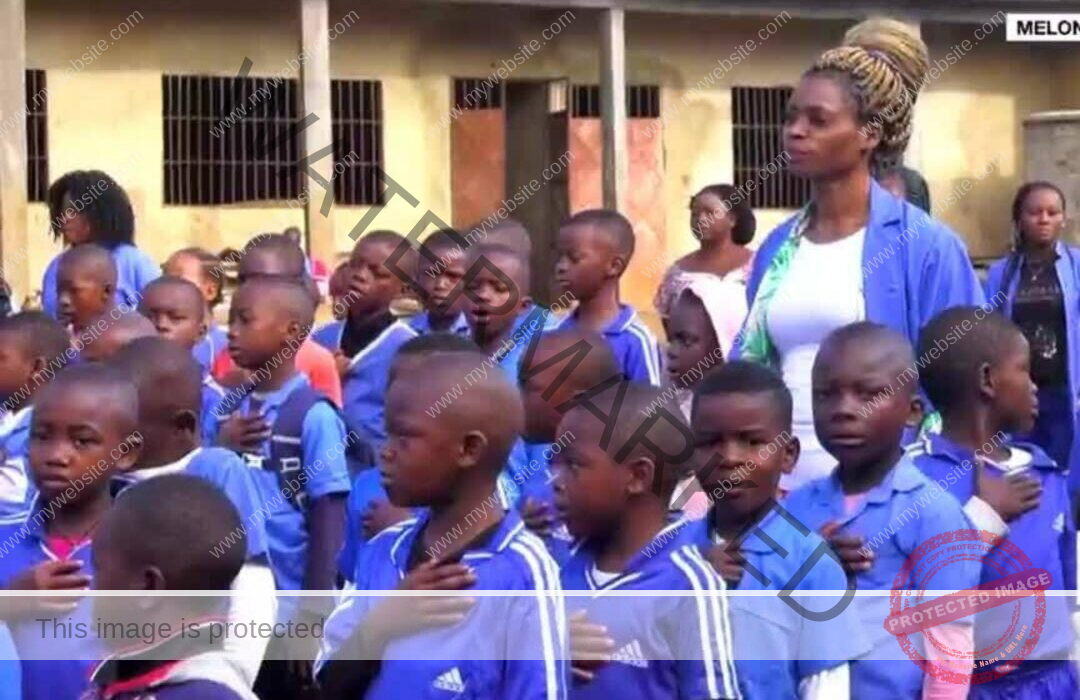


I was among the fewer than 500 Cameroonian students who publicly supported the creation of the SDF on March 26, 1990 — two months before its official launch — and I sang (for only the third time in my life) our national anthem in English, which I had learned in primary school back in the late 1970s.
By Bobo Mavalse and Dr. Martin Mungwa
For The Independentist
BOBO MAVALSE: The Memory of a Shared Struggle
My dear Martin Mungwa, I’m not an “intellectual” in the elitist sense of the word. I’m a Cameroonian citizen — in the full meaning of the term — someone who has spent his life trying to understand the historical memory of his country, and who has been fighting for it since the age of twenty, if not earlier.
For your information, I was among the fewer than 500 Cameroonian students who publicly supported the creation of the SDF on March 26, 1990 — two months before its official launch — and I sang (for only the third time in my life) our national anthem in English, which I had learned in primary school back in the late 1970s.
I was also one of the leaders of the Student Parliament of the University of Yaoundé, one of those who, one day in June 1991, met in a classroom of the Catholic School in Ntamelung to think about the future of Cameroonian students — and of a Cameroon without dictatorship.
I never imagined that my fellow comrades (Achas, Chebes, and others) would one day have children who’d tell mine that Anglophone Cameroonians are “Ambazonians” and that we Francophone Cameroonians are citizens of a “Republic” — the same neocolonial, authoritarian Republic that my father, then a young UPC militant, fought from 1957 to 1971. No, my friend, you don’t know the history of Cameroon. And you can’t build anything solid on ignorance.
DR. MARTIN MUNGWA: When History Is Reduced to Memory
My dear Bobo, I was a 28-year-old lecturer at the Polytechnique in 1990, when the SDF was launched — not merely as a witness, but as one of its subject-matter experts. I drafted the SDF’s policy on Public Health and Sustainable Architecture.
So when you summon 1990 as the beginning of your nationalist awakening, remember that I was already in the engine room of that same ship you now romanticize. You say I don’t know history. But history isn’t built on songs or nostalgia; it’s built on treaties, resolutions, and law.
The United Nations never ratified a union between British Southern Cameroons and La République du Cameroun. There was no treaty of federation deposited at the UN registry. What you call “reunification” was, in fact, absorption without consent.
BOBO MAVALSE: When the Struggle Turns into Confusion
I supported, from the very first days, the federalist struggle of lawyers Barrister Bobga and Barrister Nkongho — without realizing that, in August 2016, we were sitting together on a “Black Friday” of the Stand Up for Cameroon movement, studying strategies for the refoundation of our country.
Then came the events of Bamenda and Buea, the arrests in Cameroon and in Nigeria, and the infamous “Buea Connection,” which Atanga Nji — then Secretary of the National Security Council — turned into a separatist and armed network in Brussels.
That’s when I realized this Ambazonian scam was designed to exploit the ignorance of young people and to destroy any chance of bringing down Biya’s dictatorship in 2018. We were in 2017.
DR. MARTIN MUNGWA: Confusion Has a Name — Yaoundé
No, my brother. The confusion was not born in Bamenda or Buea — it was born in Yaoundé. When teachers and lawyers asked for federal dialogue, the regime sent soldiers. When they requested reform, it sent tanks. When children marched, it sent bullets.
That is not democracy. That is occupation. Ambazonia was not designed to destroy Cameroon; it was forced into existence because Cameroon destroyed every legal path to reform. The so-called “National Refoundation” you invoke is an illusion; no dictator has ever negotiated himself out of power.
BOBO MAVALSE: A Simple Question — What Are You Afraid Of?
Yes, a democratic Cameroon is not incompatible with an autonomous or even separate North-West and South-West, if that is truly the will of the people themselves. You even said it yourself: a referendum under military occupation is not democracy.
So why can’t you understand the call made in Bamenda, Buea, and Limbe by Issa Tchiroma Bakary for regime change, an end to occupation, and the opening of National Refoundation Talks with a Truth–Justice–Reconciliation Commission, a National Audit Commission, and a Commission on the NoSo Question and the Form of the State?
What are you afraid of? Do you think Ambazonia’s “occupation” is any different from Biya’s military occupation? Both are terrified of democracy — the voice of the Cameroonian people, Anglophone or Francophone alike.
DR. MARTIN MUNGWA: Fear Is Not Ours
Fear? We have none. We have already paid the price in blood and exile. You want a national conversation about democracy — excellent. But you cannot build a democracy on falsehood.
There was never a legal Cameroon to “refound.” The Republic of Cameroon of 1960 and the British Southern Cameroons of 1961 were two different international entities. Their so-called “federal union” died at birth because it was never signed. You don’t fix a broken marriage by pretending there was a wedding.
BOBO MAVALSE: History Didn’t Start in 2016
You have a short memory, Martin. From 1957 to 1971, the Francophone people lived through the same terror the Anglophones face today — entire villages burned, thousands killed, heroes executed, families exiled. So please, don’t repeat the tired lies, pretending the Ambazonian armed struggle is a historical novelty. Weapons have never liberated Cameroon — not in the 60s, not now. They only deepen our wounds.
DR. MARTIN MUNGWA: The Selective Memory of Suffering
True — Francophones suffered too. The UPC martyrs paid with their lives. But after the bloodshed, your elites made peace with the same oppressor and inherited his machine. Anglophones, by contrast, refused to kneel. Weapons may not liberate, yes — but silence and complicity enslave faster.
BOBO MAVALSE: Who Really Oppresses the Anglophones?
Who exactly are you calling the oppressor of the Anglophone people? Atanga Nji, head of the National Security Council? Dion Ngute, the Prime Minister? All those Anglophones who’ve served willingly in Biya’s regime for decades?
Or patriots like me, whose parents — refugees in British-administered Cameroon — were expelled by your heroes: Foncha, Muna, Mukete, Endeley, Angwafor, Chafah, and others?
Get a grip, Martin. You’ve been played — by the Bareta crowd, by activists in Norway — puppet of Atanga Nji since 2007. An old colleague from Bamenda called me recently and said, “You were right, sir.”
DR. MARTIN MUNGWA: Puppets Have Strings — We Cut Ours Long Ago
You call me a puppet? That’s rich. Those of us who built our lives on truth, law, and evidence cannot be puppets. The real puppets are those who chant “One Cameroon” while begging French ambassadors for moral approval.
Ambazonia’s struggle isn’t hatched in Oslo or Brussels; it’s enshrined in Article 1(2) of the UN Charter and Resolution 1608 (XV) — the same legal framework your so-called Republic pretends doesn’t exist. We are not breaking Cameroon; Cameroon broke itself.
BOBO MAVALSE: Truth Before Flags
We won’t fight for micro-ethnic states or illusions drafted in exile. We fight for a free and democratic Cameroon that brings justice to all — Francophone and Anglophone alike — and closes, once and for all, the dark chapter of dictatorship.
DR. MARTIN MUNGWA: Dignity Before Denial
You may keep your anthem, Bobo — we’ll keep our dignity. For sixty years, we have begged for reform and received repression. The federation was dissolved, our state erased, our people scattered.
Ambazonia is not an illusion; it is the last breath of a people suffocated by lies. You fight for “One Cameroon.” We fight for One Truth.
Bobo Mavalse — Federalist and Unionist Thinker
Dr. Martin Mungwa — Commissioned Secretary for Communication, Government of the Federal Republic of Ambazonia