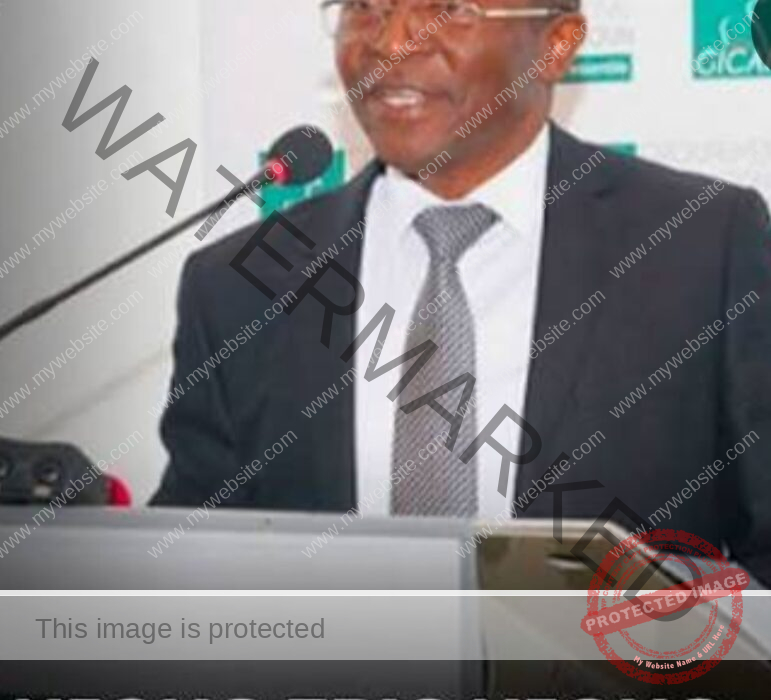


Critics argue that contracts often flow to companies closely aligned with political power, creating a system where accountability disappears and reconstruction simply becomes another profitable contract. Among the prominent figures frequently cited in public discussions of regime-era contracting networks is Eric Njong, founder and managing director of Société BUNS, one of the country’s largest indigenous construction companies.
By Ali Dan Ismael, in London, and Calistus Bochong in Fundong
For more than four decades, governance under the Biya regime has followed a single principle: political survival before national progress. Loyalty is rewarded. Silence is promoted. Competence becomes secondary. And the people pay the price—in broken infrastructure, economic stagnation, and endless political deception.
What we are witnessing today is not accidental failure. It is the predictable outcome of a system designed to reward loyalty rather than performance, patronage rather than professionalism, and political convenience rather than national responsibility.
From the days when Francis Nkwain occupied powerful ministerial positions, networks of political and economic favoritism took deep root. Decisions that should have protected the interests and historical realities of Southern Cameroons instead became moments of compromise and accommodation, weakening Ambazonian political standing at critical junctures.
Many Ambazonians still remember those moments as political betrayals whose consequences are still unfolding today. But politics is only one side of the story. The economic machinery of patronage has been just as destructive.
Infrastructure as a Business of Recycling Failure
Across Cameroon, citizens have grown accustomed to a painful cycle: roads are built, celebrated, inaugurated—and then collapse shortly afterward. In many regions, newly constructed roads crack, wash away, or disintegrate within months. Drainage systems fail. Slopes erode. Entire road sections require reconstruction almost immediately after commissioning. This is not development. It is institutionalized waste.
Critics argue that contracts often flow to companies closely aligned with political power, creating a system where accountability disappears and reconstruction simply becomes another profitable contract. Among the prominent figures frequently cited in public discussions of regime-era contracting networks is Eric Njong, founder and managing director of Société BUNS, one of the country’s largest indigenous construction companies.
The company boasts billions in turnover, thousands of employees, and hundreds of kilometers of roads built. Yet citizens judge infrastructure not by brochures or corporate statistics, but by durability. And in many cases, durability has been absent.
Engineers repeatedly point to the same failures: inadequate geotechnical assessment, poor execution standards, weak oversight, and rushed delivery to satisfy political timelines rather than engineering realities.
When roads fail, citizens suffer. Transport costs rise. Trade slows. Accidents increase. Communities become isolated. Economic life stagnates. Meanwhile, contracts continue to circulate among the same networks.
Political Strategy: Replace Faces, Keep the System
As tensions remain high in the Northwest and Southwest regions, speculation now grows around potential leadership reshuffles, particularly regarding the position of prime minister. Observers note a recurring strategy: when unrest emerges in one region, appoint someone from that region to high office, creating the appearance of inclusion while leaving the underlying system unchanged.
When dissatisfaction rose in the Southwest, leadership appointments followed. Now, with the Northwest seen as the current epicenter of political tension, discussions circulate about elevating figures from that region as political replacements. The strategy is familiar: change the messenger, not the message; change the face, not the system. Citizens are expected to believe representation equals reform—even when nothing else changes.
Allegations, Fear, and Silence
In polarized political environments, serious accusations frequently circulate regarding relationships between political elites, business interests, and security operations. While many of these claims remain contested or unproven, what is clear is the atmosphere of fear and silence surrounding corruption allegations and political criticism.
Critics argue that voices challenging corruption or misconduct have often faced intimidation, marginalization, or exclusion from decision-making spaces. The result is a climate where loyalty is safer than honesty, and silence becomes political currency.
The System Is the Problem
This crisis is bigger than individuals. It is structural. A governance model that rewards loyalty instead of competence will always produce collapsing roads, weak institutions, and public distrust.
Citizens across the country already understand this reality. They live it daily—in unsafe highways, poor public services, rising economic hardship, and uncertain futures. What people demand is not symbolic appointments or recycled political figures. They demand infrastructure that lasts. Governance that serves citizens rather than elites. Leadership that confronts problems instead of managing appearances.
Until patronage gives way to accountability, collapse will remain routine, political manipulation will continue, and public frustration will deepen. And the people—long patient, long burdened—are growing increasingly unwilling to accept politics as usual.
Ali Dan Ismael, in London, and Calistus Bochong in Fundong