












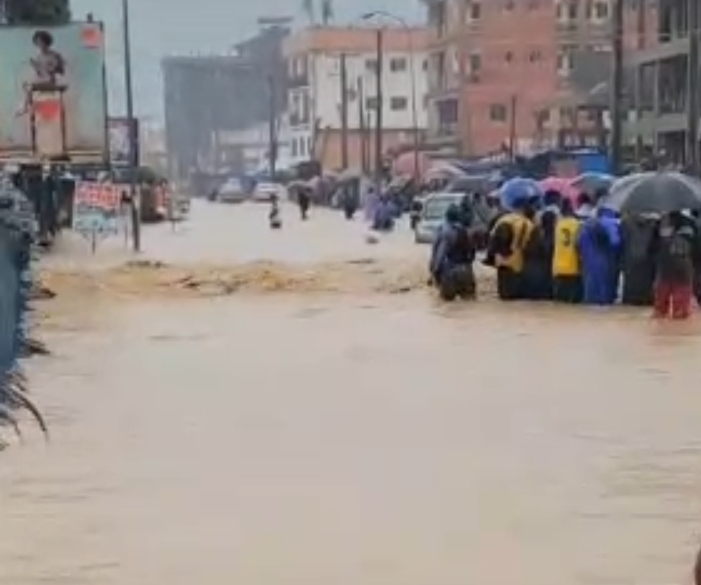
The objective is graceful transformation rather than catastrophic collapse. Critical Infrastructure Must Receive Special Protection. Not all infrastructure carries equal consequences when failure occurs. Some facilities become more important during disasters than during normal operations. Hospitals. Emergency operation centers. Ports. Airports. Electrical substations. Telecommunication hubs. Water treatment plants. Fuel storage facilities.
By Martin Mungwa, PE, PhD, F.ASCE
Fellow of the American Society of Civil Engineers
Infrastructure That Functions During Disaster
Resilience Is Not always about Survival Alone. Traditional engineering often focused on preventing structural collapse. A bridge that remained standing after a flood was considered successful. A hospital that suffered no major structural damage after a hurricane was considered resilient. Climate change demands a higher standard. Modern resilience requires infrastructure not merely to survive disasters but to continue functioning during and immediately after them.
A bridge that remains standing but cannot be accessed due to flooded approaches has failed operationally. A hospital building that survives structurally but loses power, communications, water supply, and emergency access has failed operationally. An airport runway that remains intact but whose navigational equipment is submerged and cannot support emergency operations is invalid. The engineering profession increasingly recognizes the distinction between structural survival and operational continuity. Future infrastructure must achieve both.
The New York Experience: Lessons from Superstorm Sandy
Perhaps no modern event transformed infrastructure resilience more dramatically than Superstorm Sandy in 2012. Storm surge flooded tunnels, subway systems, electrical substations, wastewater treatment plants, transportation networks, hospitals, and telecommunications infrastructure throughout the northeastern United States.
Entire neighborhoods lost power for weeks. Transportation systems ceased functioning. Economic losses exceeded tens of billions of dollars. Yet Sandy also became one of the largest resilience laboratories in modern engineering history. The response fundamentally changed infrastructure design philosophy.
Electrical substations elevated transformers and switchgear above projected flood elevations. Hospitals relocated emergency generators and fuel systems from basements to higher floors. Flood barriers and deployable flood walls protected critical facilities. Transportation agencies redesigned tunnels and ventilation systems to resist future storm surges. Utilities hardened electrical networks and improved system redundancy. Critical assets were no longer designed merely for today’s flood levels but for projected future conditions.
The lesson for Africa is straightforward.
Waiting for disaster is the most expensive method of learning engineering lessons. Designing for Failure Without Catastrophic Consequences No infrastructure system can be designed to eliminate all risk. Instead, resilient systems are designed to fail safely and recover rapidly.
This philosophy is already embedded within modern aviation and earthquake engineering. Climate adaptation requires the same approach. Electrical grids should contain redundancy and sectionalization so that failures remain localized. Transportation networks should include alternative routes and emergency access corridors. Water supply systems should possess backup pumping capacity and emergency storage. Communication networks should include redundant pathways and protected facilities.
The objective is not perfection. The objective is graceful degradation rather than catastrophic collapse. Critical Infrastructure Must Receive Special Protection. Not all infrastructure carries equal consequences when failure occurs. Some facilities become more important during disasters than during normal operations. Hospitals. Emergency operation centers. Ports. Airports. Electrical substations. Telecommunication hubs. Water treatment plants. Fuel storage facilities.
These assets form the backbone of disaster response and economic recovery. Their design criteria should therefore exceed minimum code requirements. Societies often discover the true value of infrastructure only when it stops working. Engineers have the responsibility to ensure that never happens.
Martin Mungwa, PE, PhD, F.ASCE
Fellow of the American Society of Civil Engineers







Leave feedback about this