









Commentary

We are home to news on Cameroon and the CEMAC region. We are dedicated to honest and reliable reporting. We are the voice of the Cameroonian people and their fight for freedom and democracy at a time when the Yaoundé government is silencing dissent and suppressing democratic voices.

Southern Cameroonians contributed to Britain’s wartime survival. A Spitfire carried the name “Cameroons Province.” Britain won the war but emerged financially exhausted. It later terminated its trusteeship over Southern Cameroons while British commercial interests remained. Decades later, Margaret Thatcher told President Paul Biya that Britain, having withdrawn from the stage after independence, wanted to return. The Spitfire, the veteran, the £1 million CDC investment and the banana tell different chapters of the same unfinished story.
By Ali Dan Ismael, Editor-in-chief The Independentist News
As Amazon associate this site earns from qualifying purchases
Get your back to school needs from Amazon
https://www.amazon.com/s?k=back+to+school+needs&crid=3KS69OCP4YOBJ&sprefix=back+%2Caps%2C890&linkCode=ll2&tag=njokings-20&linkId=edf2f3d0d6cb4db283f286b260a4c31f&language=en_US&ref_=as_li_ss_tl
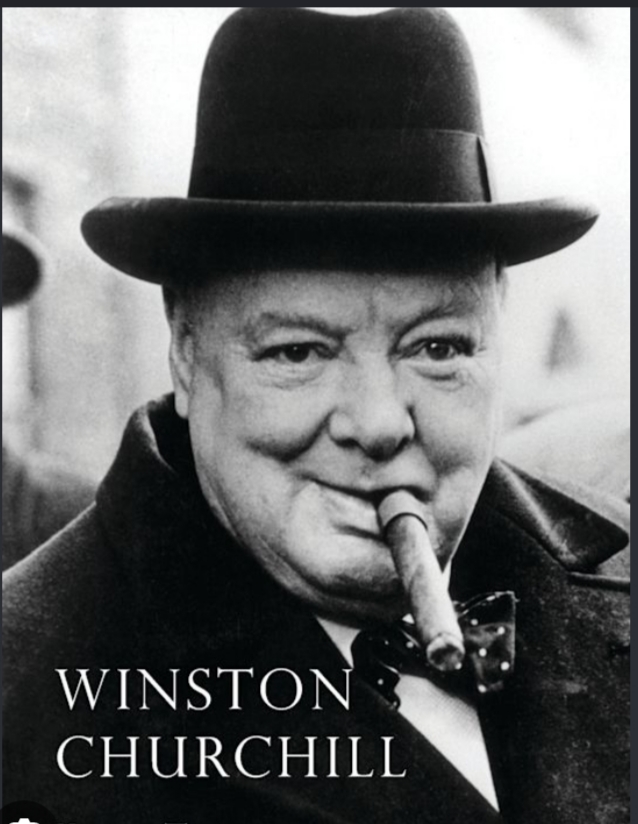
History becomes propaganda when it requires its major figures to be either saints or monsters. Winston Churchill was neither. He was one of the indispensable political leaders of the Second World War. At a moment when Nazi Germany had conquered much of Europe and Britain itself faced an existential threat, Churchill refused capitulation. He rallied a frightened nation, sustained resistance and helped maintain the political will that contributed to Allied victory. That achievement cannot responsibly be erased.
But neither should another Churchill be erased: the committed imperialist whose passionate defense of British freedom existed alongside a political system in which Britain governed millions of people who did not possess equivalent power to determine their own political futures.
For Africans—and particularly for the people of the Former British Southern Cameroons—that contradiction deserves examination. Churchill represents what might be called two freedoms. There was the freedom Britain demanded for itself when its sovereignty, institutions, territorial integrity and national survival were threatened. Then there was the more conditional freedom Britain was prepared to concede to peoples living under British imperial authority. To recognize Churchill’s first freedom does not require Africa to forget the second.
THE CHURCHILL BRITAIN REMEMBERS
Britain remembers 1940 for good reason. France had fallen. Much of continental Europe had been overrun. Britain confronted the possibility that its political future might be dictated by a victorious foreign power.
Churchill became Prime Minister in May 1940 and made resistance the organizing principle of British national policy. Africans do not need to deny this achievement in order to examine Churchill critically. Indeed, the stronger argument begins by acknowledging it. Churchill demonstrated that when a people believe their political existence is threatened, sovereignty may be regarded as too important to surrender merely because resistance is costly, dangerous or apparently hopeless. Britain’s political future, in Churchill’s view, belonged to Britain. That principle is understandable anywhere. The difficulty begins when we ask whether Britain extended the same presumption of political agency to the peoples it governed overseas.
LIBERTY AT HOME, EMPIRE ABROAD
Churchill was not accidentally associated with empire. The British imperial system formed an important part of his understanding of Britain’s global identity, security and greatness. This does not make the British Empire identical to Nazi Germany. They were different systems, and historical seriousness requires that distinction. Nor does a credible argument require exaggerated claims that Churchill agreed with virtually everything Hitler believed. Such rhetoric weakens a much stronger historical case.
The documented contradiction is sufficient: Churchill fought against the domination of Britain while defending an imperial order through which Britain exercised political authority over other peoples. Then history produced an extraordinary irony. Churchill helped Britain win its greatest war. But the economic and geopolitical price of victory helped weaken the imperial system he wanted Britain to preserve.
THE PRICE TAG OF VICTORY
Britain won the Second World War. It did not emerge economically intact. Six years of total war required enormous public expenditure, industrial mobilization, liquidation of overseas assets, borrowing and dependence upon external financial support. By 1946, British public debt had reached roughly two and a half times the size of annual national output. Britain defeated Hitler militarily. But the Britain that emerged in 1945 was financially very different from the imperial power that had entered the war in 1939 Victory carried a price. And that price mattered to empire.
It would be historically wrong to argue that the Second World War alone destroyed the British Empire. That would erase the agency of Indians, Africans, Asians and Caribbean peoples who organized, resisted, negotiated, protested and demanded self-government. But the war profoundly altered Britain’s ability to finance, defend and politically justify an empire stretching across the world.
The better conclusion is: The Second World War did not single-handedly dismantle the British Empire. It accelerated the exhaustion of the economic and geopolitical system that had helped make empire sustainable.
THE CAMEROONS SPITFIRE
Southern Cameroonians were not merely spectators to Britain’s struggle. They participated in wartime mobilization and fundraising. Historical records of presentation aircraft include Spitfire AB378, bearing the name: CAMEROONS PROVINCE. That aircraft deserves a place in Southern Cameroons historical memory.
Precision is necessary, however. The surviving evidence should not be stretched into the claim that today’s Ambazonians alone paid every pound associated with the aircraft. British Cameroons was then administered through the Nigerian colonial system, and wartime funds were organized within that broader imperial structure. The historically responsible formulation is nevertheless powerful: Southern Cameroonians contributed to Britain’s wartime effort, and a Royal Air Force presentation Spitfire carried the name CAMEROONS PROVINCE. That is enough.
SMALL MONEY AGAINST AN ENORMOUS DEBT—BUT NOT A SMALL SACRIFICE
Measured against Britain’s wartime expenditure and postwar liabilities, one presentation aircraft was economically tiny. It could not rescue the British Treasury. But that is the wrong measurement. One English village did not finance the Royal Air Force. One factory did not win the Battle of Britain. One African territory could not determine the financial outcome of a world war. Wartime mobilization depended upon aggregation. The importance of the Cameroons contribution therefore lies not in its percentage of British national debt but in what it represented: participation, sacrifice and obligation.
When Britain needed resources, people governed within its imperial system were expected to contribute. When Britain feared losing its own political freedom, imperial solidarity mattered. The Spitfire may have been financially insignificant beside Britain’s mountain of debt. Morally, it was not insignificant at all.
THE PEOPLE WHO HELPED BRITAIN RESIST
Imagine the scene. A plantation worker in Victoria. A trader in Kumba. A clerk in Mamfe. A civil servant in Bamenda. They lived thousands of miles from London. They did not elect the British Parliament determining imperial policy. Their territory was not sovereign. Britain administered British Cameroons through its Nigerian colonial machinery. Yet they were asked to contribute to a war whose political message was unmistakable: Britain must not fall. Britain must remain free. A stronger foreign power must not determine Britain’s political future. That principle is precisely why the Cameroons contribution matters.
Approximately twenty years later, Southern Cameroonians reached their own decisive constitutional moment. Yet sovereign independence as a separate state was not one of the two alternatives placed before them in the 1961 plebiscite. They were asked to achieve independence by joining either Nigeria or the already independent Republic of Cameroun. The contrast is difficult to ignore: Southern Cameroonians helped Britain during Britain’s struggle to preserve its political freedom. When Southern Cameroons reached the end of trusteeship, an independent Southern Cameroons was not on the ballot.
BRITAIN WON—THEN BORROWED BILLIONS
Britain’s postwar economic weakness became obvious almost immediately. The United States extended Britain multibillion-dollar postwar credit. Canada provided substantial additional financing. These arrangements should not be caricatured as America simply presenting Britain with an invoice for victory. They addressed Britain’s severe dollar shortage, postwar reconstruction, transition from wartime production and settlement of wartime financial obligations.
But they reveal how dramatically the war had transformed Britain. The imperial center had survived militarily. Financially, it needed help. And repayment lasted astonishingly long. Britain’s final payments associated with the major American and Canadian postwar loan arrangements were completed only in December 2006. The war ended in 1945. The financial ledger remained open for more than sixty years.
A memorable way of stating the contrast is: Britain won the war in six years and spent more than six decades closing part of the financial account. Against that mountain of debt, the Cameroons Spitfire was financially tiny. Historically, it was not.
CHURCHILL SAVED BRITAIN—BUT COULD NOT SAVE CHURCHILL’S EMPIRE
This is one of the great ironies of Churchill’s political life. He helped preserve the British state. Yet the mobilization required to preserve Britain accelerated forces that made the old imperial system increasingly difficult to maintain. India and Pakistan became independent in 1947. Ghana followed in 1957. Nigeria became independent in 1960. Southern Cameroons reached the end of British trusteeship in 1961.
The imperial map did not vanish overnight, and Britain did not simply hand independence to passive colonial populations. Peoples throughout the colonies were central actors in their own liberation. But Britain’s strategic circumstances had changed profoundly. The old imperial system was becoming increasingly difficult to finance, defend and justify. And millions of colonial subjects could ask an obvious moral question: If freedom from foreign domination was worth defending in Europe, why was the same principle conditional in Africa?
CHURCHILL AND SOUTHERN CAMEROONS
Churchill did not create the present Southern Cameroons conflict. He did not design the 1961 plebiscite. He did not negotiate the later federal arrangements. His direct relevance lies earlier. He served as Britain’s Colonial Secretary during the formative period in which Britain’s administration of its Cameroons mandate was being institutionalized. British Cameroons possessed a distinct international mandate identity. Yet Britain administered the territory through its Nigerian colonial machinery.
The historical importance lies in the distinction between: international territorial status and administrative attachment. Those concepts were not identical. That distinction would acquire enormous importance later.
1961: BRITAIN ENDS ITS RESPONSIBILITY
By 1961 Britain was preparing to terminate its United Nations trusteeship. The plebiscite resulted in Southern Cameroons choosing independence by joining the Republic of Cameroun. Britain then stated clearly that after 1 October 1961, its responsibility would cease. British troops would withdraw. British subjects remaining in Southern Cameroons would thereafter be living in what Britain regarded as a foreign country. Those words deserve attention. For decades Britain had administered Southern Cameroons. Then a date arrived. The trusteeship terminated. The troops departed. Responsibility ceased. Britain disengaged politically. But economic relationships did not obey the same timetable.
THE £1 MILLION THAT DID NOT LEAVE WITH THE TRUSTEE
Before trusteeship ended, Britain’s Colonial Development Corporation had become directly involved in the future of the Cameroons Development Corporation. The arrangement contemplated substantial British capital for CAMDEV, including approximately £1 million for immediate development, with further investment contemplated under a larger restructuring. The first £1 million became real capital connected to CAMDEV’s productive system. Then Britain left politically. The investment remained. That distinction is fundamental.
Southern Cameroons had become foreign for purposes of Britain’s colonial responsibility. But British commercial interests associated with its productive assets did not suddenly become meaningless. Investment could continue. Bananas could continue moving. Shipping interests could continue. Markets could continue. The constitutional relationship changed faster than the economic relationship.
FROM TRUST TERRITORY TO “FOREIGN COUNTRY”
By 1963 British parliamentary debate was explicitly discussing CAMDEV as an enterprise operating in a foreign country while simultaneously acknowledging the British capital invested in it and Britain’s continuing commercial interests. That transition deserves to be placed plainly before the reader.
Before October 1961: British trust responsibility. After October 1961: Foreign country. Yet simultaneously: British capital. British shipping interests. British market. British concern over the future of the plantations. The constitutional obligation had ended. The productive geography had not disappeared. That does not prove that Britain engineered the political settlement in order to exploit Southern Cameroons. Such a claim would require evidence. What it does prove is more structural: Political responsibility and economic interest can operate on different timelines.
THE SPITFIRE WENT NORTH. THE BANANA CAME BACK.
There is almost perfect historical symmetry here. During Britain’s moment of greatest danger: Resources moved from Southern Cameroons toward Britain. After British trusteeship ended: Bananas continued moving from West Cameroon toward Britain. The Spitfire represents participation in Britain’s survival. The banana represents productive value continuing through the economic relationship after political responsibility had formally ended. One helped defend Britain. The other supplied Britain’s market. Between them lies the constitutional transformation of Southern Cameroons.
THE BANANA THAT OUTLIVED TRUSTEESHIP
Britain had been one of the major markets for West Cameroon products, especially bananas. After the constitutional transition, British parliamentarians remained deeply concerned about the future of West Cameroon banana exports, the Cameroons Development Corporation, British shipping interests and the consequences of losing Commonwealth preference. The essential point is simple. The political transition occurred on a date. The plantation economy did not. The land remained. The banana trees remained. The workers remained. The corporation remained. The shipping routes remained. The British consumer remained. What changed was the international political authority under whose name the commodity moved. The trustee departed. The banana did not.
THE COMMONWEALTH PREFERENCE PARADOX
Britain understood the problem. West Cameroon temporarily continued receiving Commonwealth tariff preference even after its constitutional transformation had placed it outside the old Commonwealth commercial position. Why? Because Britain had helped orient production toward the British market. British commercial interests existed. British consumers were buying the produce. A constitutional transition could occur overnight. An economic structure created over decades could not. This is why the banana is not merely a commodity in this story. It is a witness. It forces constitutional history back into the productive economy.
THATCHER: THE OLD ORDER IN A NEW AGE
Then came Margaret Thatcher. Thatcher was not a colonial governor, and she bore no personal responsibility for designing the 1961 Southern Cameroons settlement. But she led the same British state whose institutions, corporations, diplomatic interests and commercial networks had survived the transformation from empire to post-imperial statecraft. In that sense, Thatcher belonged to the institutional continuity of the old order operating through new instruments. Direct administration had largely disappeared. Trade, diplomacy, investment and strategic influence had taken its place. That is why her words during President Paul Biya’s official visit to Britain in 1985 are so revealing. She acknowledged that Britain had withdrawn after independence. Then she said Britain wanted to return: Britain wanted “to come back onto the stage.” And she explained the new role. More British firms. More trade. More investment. A larger British role in Cameroon’s economic development.
That language should be placed beside Britain’s earlier declaration that its responsibility for Southern Cameroons had ceased. In 1961: Responsibility ends. In 1985: Britain wants back onto the stage. Only the role had changed.
FROM TRUSTEE TO TRADER
Britain was not returning as trustee. It was returning as trading partner. It was not returning as administering authority. It was returning through companies, commerce, finance and diplomacy. It was not accepting renewed constitutional responsibility for Southern Cameroons. It was dealing with Paul Biya and the Republic of Cameroon as the internationally recognized sovereign government. That is the crucial transformation. The territory Britain once administered had not moved. The CDC plantations had not moved. Victoria had not moved. Buea had not moved. The land had not moved. The people had not disappeared. What changed was the political framework through which Britain encountered them.
Yesterday: trust territory and administrative responsibility. Today: foreign market and commercial opportunity. That is one of the defining transformations from empire to post-imperial statecraft.
THATCHER DID NOT CREATE THE SYSTEM—SHE INHERITED IT
This distinction matters. Thatcher should not be accused of personally constructing the earlier Southern Cameroons arrangements. Her importance is symbolic and institutional. She inherited a British state whose relationship with Africa had moved from direct administration toward diplomacy, trade, finance, investment and influence.
Her declaration that Britain wanted “back onto the stage” makes that transition unusually visible. Britain had withdrawn politically. It wanted back economically. And Britain’s counterpart was no longer Southern Cameroons. It was Yaoundé.
1995: CAMEROON ENTERS THE COMMONWEALTH
Ten years later came another remarkable development. The Republic of Cameroon entered the Commonwealth in 1995. Most of the territory of the Republic of Cameroon had historically been administered by France. Its principal direct British political, legal and educational inheritance arose through the former British Cameroons territories. Yet Commonwealth membership belonged internationally to the Republic of Cameroon as a whole.
Southern Cameroons did not return to the British relationship as a separate international party. Yaoundé did. For The Independentist News, this raises an important historical question. The territory that carried much of the country’s British institutional inheritance had ceased to be Britain’s separate international interlocutor. The Republic of Cameroon occupied that position.
BRITAIN RETURNS AS CUSTOMER, NOT TRUSTEE
And then the banana completes the circle. In the modern era Britain again became an important destination for bananas exported from Cameroon. Modern British trade arrangements are negotiated with the Republic of Cameroon. This should not be confused with the old Commonwealth Preference system. The Commonwealth itself does not buy bananas. The contemporary legal architecture is bilateral trade. But historically the sequence remains striking. Britain administered Southern Cameroons. Southern Cameroonians contributed to Britain’s wartime mobilization. A Spitfire carried the name CAMEROONS PROVINCE. Britain invested approximately £1 million into the CDC system. Britain terminated trusteeship. The territory became foreign. British commercial interests remained. Bananas continued moving. Thatcher later announced that Britain wanted back on the stage. Cameroon entered the Commonwealth. Britain continued trading through Yaoundé. The political architecture changed. The commercial geography survived.
THE FORMER TRUSTEE NOW DEALS THROUGH YAOUNDÉ
Today Britain does not negotiate internationally with Southern Cameroons as a separate political territory. It deals with the Republic of Cameroon. Diplomatic relations operate through Yaoundé. Trade agreements operate through Yaoundé. Commonwealth relations operate through the Republic of Cameroon. Products originating within the historical Southern Cameroons territory enter international commerce under the national designation Cameroon. That reflects the existing international system.
But it produces a legitimate historical question: How did a territory Britain administered under an internationally distinct mandate and trusteeship become politically submerged within the state through which Britain now conducts its diplomatic and economic relationship with that same geography? The £1 million does not answer that question. The banana does not answer it either. Thatcher’s statement does not answer it. But together they make it impossible to dismiss the question as irrelevant ancient history.
WHO REMEMBERS THE PEOPLE WHO HELPED BRITAIN WIN?
Then there is the human ledger. Britain remembers victory magnificently. VE Day has been commemorated through veterans, wreaths, national ceremonies, military pageantry, royal participation, flypasts and the familiar image of Churchill addressing a victorious country. Commonwealth servicemen have also formed part of Britain’s wider remembrance tradition. But where in that narrative is Southern Cameroons as Southern Cameroons? Where is the story of the people from Victoria, Kumba, Mamfe, Bamenda and elsewhere who contributed to Britain’s wartime mobilization? Where is CAMEROONS PROVINCE? Where is the distinct historical territory whose people contributed during Britain’s moment of greatest danger?
There may have been individual Cameroonian or African participation in remembrance ceremonies, and Britain has conducted remembrance activities in Cameroon. That is not the same question. The question is whether Southern Cameroons has been visibly remembered in the distinct historical identity under which its wartime contribution was made. That deserves investigation.
AND WHAT OF THE VETERANS?
The veterans question demands the same evidentiary discipline. It would be irresponsible to say that no African serviceman ever received a pension or benefit. Colonial military pension arrangements existed. But that does not close the historical account. The important questions are: Who from Southern Cameroons served? Who died? Who returned wounded or disabled? Who qualified for pensions? Who actually received them? At what rates? For how long? What happened to widows and dependants? What happened to those administrative obligations when British trusteeship terminated? Where are the surviving files? Where are the names? Where is the institutional accounting?Instead of making an absolute accusation, the stronger demand is simple: OPEN THE RECORDS.
Identify the Southern Cameroons servicemen. Account for their service. Account for their pensions and benefits. Identify the dead. Identify the wounded. Identify their families. Determine what obligations were fulfilled. Determine what obligations, if any, were not. Recover the names. Recover the contribution. Restore them to the history of the victory in which they participated.
THE MORAL OF EMPIRE
Here perhaps lies the moral of empire at its most revealing. When Britain was endangered, empire could speak the language of one family. Money was raised. Resources were mobilized. Colonial economies were redirected. Soldiers served. A Spitfire could carry the name: CAMEROONS PROVINCE But when responsibility was distributed, the empire could suddenly acquire compartments.The contribution was imperial. The pension could become a colonial administrative matter. The victory became part of British national memory. Political responsibility for Southern Cameroons could cease on a specified date. Commercial investment could remain. The banana could continue moving.
And decades later Britain could announce that it wanted back on the stage—this time through the government that had inherited international authority over the territory. That may be the moral of empire at its best and worst: When sacrifice was required, the empire could be one. When responsibility was due, the empire could suddenly have compartments.
THE SPITFIRE, THE VETERAN, THE £1 MILLION AND THE BANANA
Four witnesses now tell the story. The Spitfire remembers a time when Southern Cameroons was sufficiently connected to Britain for its people to contribute to Britain’s survival. The veteran asks whether those who served were remembered as persistently as the victory itself. The £1 million CDC investment demonstrates that commercial relationships could cross the dividing line between trust territory and foreign country. The banana demonstrates that productive value could continue flowing after political responsibility ended.
Then Thatcher supplies the post-imperial connecting sentence: Britain had withdrawn. Britain wanted back onto the stage. The role changed. The interest did not disappear.
THE FLAG WENT DOWN. THE ECONOMIC CIRCUIT KEPT MOVING.
Empire is often remembered ceremonially. A governor departs. Troops leave. The Union Jack comes down. Another constitutional arrangement begins. History announces that colonial administration has ended. But economies do not necessarily obey ceremonial dates. Plantations remain. Ports remain.Companies remain.Shipping routes remain.Contracts remain.Markets remain.Debts remain.Investments remain. Consumers remain.
Sometimes political empire disappears long before the economic relationships developed beneath it disappear. Sometimes those relationships are reconstructed through the successor state. Southern Cameroons offers a striking example.
WHO LEFT? WHO STAYED? WHAT REMAINED?
The deeper African question is therefore not merely whether colonial government officially ended. It is: What remained? Who owned the productive source? Who controlled the corporation? Who controlled market access? Who negotiated external agreements? Who inherited public assets? Who received recurring economic value? Who possessed international legal personality? Who could sign? Who could decide? Who became Britain’s recognized counterpart? Who remained responsible when the constitutional architecture changed?
Those are not simply questions about yesterday. They are questions about political sovereignty, productive sovereignty and institutional continuity.
CHURCHILL’S TWO FREEDOMS RETURN
We can now return to Churchill. The Churchill Britain remembers stood before overwhelming power and insisted that Britain’s political future would not be dictated by a stronger state. That is part of his greatness. The Churchill Africans remember belonged to an imperial system in which Britain itself exercised extraordinary authority over other peoples’ political futures.
Both truths can exist simultaneously. A man can defend freedom courageously in one arena while defending hierarchy in another. A country can oppose foreign domination of itself while exercising authority over others without equivalent political equality. And an empire can win a world war while emerging from victory financially and geopolitically weakened enough that the old order its wartime leader cherished begins disappearing.
THE GREATEST IRONY
Perhaps Churchill’s greatest historical irony is therefore this: He helped preserve Britain through a war whose financial and geopolitical consequences accelerated the erosion of the imperial Britain he wished to preserve. Britain survived. The old British Empire did not. India departed. Africa followed. Southern Cameroons reached the end of trusteeship. Britain’s postwar financial obligations continued into the twenty-first century.
Yet the end of formal empire did not mean the end of every economic connection developed beneath it. For Southern Cameroons, the chronology is especially striking. The Spitfire flew. Britain borrowed billions. The empire retreated. The trusteeship ended. The £1 million remained connected to the productive enterprise. The territory became foreign. The banana kept sailing. The veterans grew old.
Then Thatcher—representing the continuity of the British state in a new post-imperial age—told Paul Biya that Britain had withdrawn from the stage and now wanted back onto it. That may be one of the most revealing sentences in the entire history. Britain had not forgotten Africa. Britain had changed roles. From trustee to trader. From administrator to investor. From governing power to diplomatic partner. From responsibility for a territory to commercial relations with the state internationally recognized as sovereign over it.
THE FINAL CONTRADICTION
Churchill helped Britain survive. The Allied victory defeated one of history’s most destructive regimes. That achievement belongs permanently to Churchill’s record. But victory carried a staggering price. Britain emerged heavily indebted. Its relative global power declined. Anticolonial movements transformed world politics. The imperial map contracted. The old empire became increasingly unsustainable.
Meanwhile, Southern Cameroons had participated in Britain’s wartime effort. A Spitfire carried the name: CAMEROONS PROVINCE. Two decades later British trusteeship ended. Britain withdrew. Its formal responsibility ceased. The veterans aged. The £1 million commercial connection remained. The bananas continued moving. Later Britain said it wanted back onto the stage. Cameroon entered the Commonwealth. And Britain’s modern diplomatic and commercial relationship with the territory came to be conducted through Yaoundé.
None of those facts, by themselves, determines the present international legal status of Southern Cameroons. They do something else. They demand that the historical record be remembered in full. When Britain demanded liberty, liberty was sacred. When Africa demanded liberty, liberty was often managed through imperial choices and constitutional arrangements. When Britain needed sacrifice, Southern Cameroons participated.
When Britain terminated political responsibility, economic interests did not necessarily terminate with it. And that may be the moral of empire at its most revealing: When sacrifice was required, the empire could be one. When responsibility was due, the empire could suddenly have compartments. The Spitfire flew. The veteran grew old. The trustee departed. The £1 million remained. The banana kept sailing. And Britain came back onto the stage. That is why Churchill matters. That is why Thatcher matters. That is why the CDC matters. That is why the veteran matters. That is why the banana matters.
And that is why Southern Cameroons is entitled to insist that Britain’s imperial and post-imperial relationship with the territory be read as one continuous historical record rather than as disconnected episodes.
As Amazon associate this site earns from qualifying purchases
Get your back to school needs from Amazon
https://www.amazon.com/s?k=back+to+school+needs&crid=3KS69OCP4YOBJ&sprefix=back+%2Caps%2C890&linkCode=ll2&tag=njokings-20&linkId=edf2f3d0d6cb4db283f286b260a4c31f&language=en_US&ref_=as_li_ss_tl
Ali Dan Ismael, Editor-in-chief The Independentist News
Share This Post:
COMING SOON: SOUTHERN CAMEROON 2050 — WHY AMERICA SHOULD CARE
Related Post
COMING SOON: SOUTHERN CAMEROON 2050 — WHY AMERICA SHOULD
THE NEW-OLD TRAP: DAVID MAKONGO AND THE POLITICS OF
ANGLOPHONE UNITY IS NOT THE QUESTION: THE QUESTION IS
THE CARETAKER PRESIDENCY: PAUL BIYA, FRANCE, AND CAMEROON’S UNFINISHED
THE ADF–ATANGA NJI FILES: WHAT THE WITNESSES SAY AND
OCTOBER 1 IS COMING: PREPARE FOR THE ANNIVERSARY, NOT