

This cycle will continue until the system itself collapses — not through reform, not through audits, not through restructuring, but through loss of legitimacy and historical reckoning. Because what Cameroon faces today is not a debt crisis. It is a governance collapse disguised as development policy.
By The Independentistnews Editorial Desk
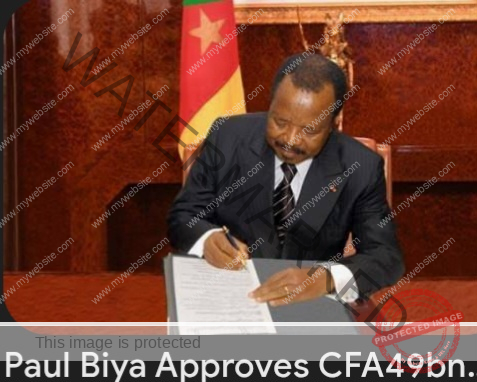
Paul Biya’s regime has perfected a ruinous cycle: borrowing trillions of CFA francs in the name of “development” to service old debts, then borrowing again to service the borrowing. This is not fiscal policy. It is kleptocratic recycling — a closed financial loop designed not to build a nation, but to sustain a predatory elite.
Cameroon is not poor. It is plundered.
A country endowed with fertile land, oil and gas reserves, timber, minerals, hydropower potential, and rare earth resources should not be trapped in permanent debt dependency. Yet instead of monetising its natural wealth, the regime mortgages the future. The state borrows not to transform production, but to plug fiscal holes created by corruption, capital flight, and institutional theft. Across the country, the evidence is visible and damning.
Fully funded projects are abandoned. Others are “completed” multiple times — on paper only. Infrastructure exists more in budgets than in reality. The Douala–Yaoundé double carriage road stands as a national monument to inertia. AFCON stadiums remain unfinished long after the final whistle. Hospitals are under-equipped. Universities decay. Roads collapse. Power grids fail. Yet the loans keep coming.
Borrowed money does not build. It disappears — embezzled, shared, recycled, and redistributed through patronage networks that stretch from the presidency down through ministries, agencies, contractors, and intermediaries. What remains is a hollow economy: debt without development, loans without roads, budgets without accountability. This is not economic mismanagement. It is systemic extraction.
It is not borrowing from Peter to pay Paul.
It is stealing from the people to enrich a few — and sending the bill to generations unborn. International financial institutions continue to participate in this theater of “development.” Lenders structure facilities. Reports are written. Frameworks are signed. Conditions are negotiated. But the lived reality never changes. The money flows in. The people see nothing. The debt grows. The elite prosper.
This raises a fundamental question: At what point does financing a corrupt system become complicity? A state that cannot account for its borrowing cannot claim moral authority over its people. A government that converts loans into private wealth forfeits its legitimacy. A regime that uses debt as a survival mechanism rather than a development tool is not governing — it is extracting.
The Ambazonian Position
For Ambazonia, this debt system is not a Cameroonian domestic issue — it is an instrument of occupation. Ambazonia does not recognize the legitimacy of debts contracted by a regime that: does not represent the Ambazonian people, that does not govern with their consent, that does not develop their territory, but uses these borrowed financial resources to militarise and repress their homeland. These loans are not development instruments — they are occupation finance.
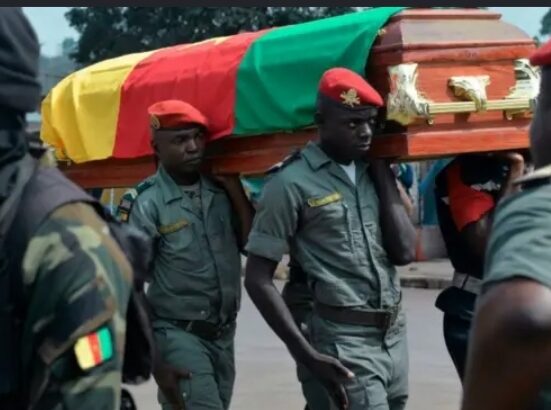
They fund: military deployment, counterinsurgency operations, securitisation of civilian spaces, repression infrastructure, propaganda systems and administrative control mechanisms. Debt becomes a weapon. Finance becomes coercion. Development becomes a cover story.
Ambazonia therefore rejects the doctrine that these liabilities bind its future. A people cannot inherit the debts of their oppressor. A nation cannot be morally or legally bound by financial instruments contracted without its consent and used for its subjugation. This is not secession from a functioning state. It is decolonisation from a predatory system.
Ambazonian sovereignty is not a political slogan — it is an economic necessity. Because a system built on debt-fueled extraction, kleptocracy, and repression cannot be reformed into justice. It can only be replaced. This is why the crisis in Cameroon is not merely political. It is structural. It is financial. It is moral. It is institutional. It is civilisational. No nation can borrow its way out of corruption. No society can debt-finance legitimacy. No regime can build sovereignty on theft.
This cycle will continue until the system itself collapses — not through reform, not through audits, not through restructuring, but through loss of legitimacy and historical reckoning. Because what Cameroon faces today is not a debt crisis. It is a governance collapse disguised as development policy. And history is clear on one truth: Systems built on extraction do not reform themselves. They eventually collapse — under the weight of their own theft.
— The Independentistnews Editorial desk