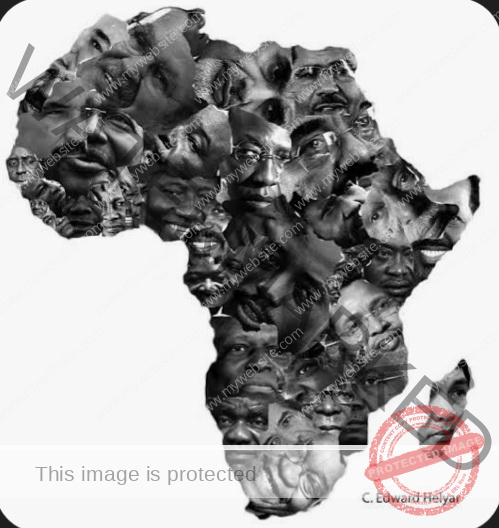


Africa’s future—self-defined, prosperous, and globally respected—will depend on inclusive systems, accountable leadership, and a commitment to dialogue over conflict. It is time to step beyond the scripts written by others and build the future envisioned by Africans themselves.
By M. C. Folo The Independentist contributor.
More than sixty years after the first independence celebrations, African nations continue to navigate a political order influenced by colonial borders, extractive governance systems, and long-standing alliances between domestic elites and external interests. The post-colonial state—built more for administrative convenience than for collective empowerment—often treats citizens as passive recipients rather than active participants in governance. The result has been a political environment where conflict feels inevitable, consensus appears weak, and power is pursued as a winner-take-all commodity.
Yet this perception of politics is not inherently African. It is the lingering architecture of a world designed by others. The old colonial formula—divide, manipulate, dominate—persists through ethnicized party systems, adversarial political cultures, and patronage networks that reward continuity over reform. Global actors who benefit from African instability often find willing partners in local elites who maintain the status quo. Africa’s recurring conflicts, therefore, are not simply internal dysfunctions; they are the product of intersecting local and global interests, shaped by history and sustained by inertia.
A Turning Tide: Countries Rewriting the Narrative
Despite these structural constraints, many African countries are demonstrating that transformation is possible when institutions, leadership, and citizens pursue genuine accountability.
Ghana continues to illustrate the stabilizing effect of independent institutions and credible elections.
Botswana reinforces the value of prudent resource management and continuity in governance.
Rwanda—despite ongoing debates on political pluralism—has asserted national direction and developmental focus.
Senegal’s vibrant youth and civil society movements are reshaping democratic participation. These examples show that Africa is not trapped in a cycle of elite dominance. With intentional leadership and engaged citizens, political renewal is achievable.
The Sahel’s Assertive Realignment: Strategic Sovereignty
One of the most significant developments in recent years has come from the Sahel, where military-led transitions in Mali, Burkina Faso, and Niger have redefined national sovereignty in unconventional ways. While their origins raise valid democratic concerns, these governments have articulated a political philosophy that resonates with citizens who felt excluded by previous political orders.
Their approach revolves around four major shifts:
Severing long-standing dependency on France
For decades, France maintained deep political and military involvement in Sahelian affairs. The new leadership has chosen to end these arrangements, presenting their decision as a reclaiming of dignity and self-determination.
Reclaiming control over natural resources
Mining and energy contracts that were widely viewed as unfair or outdated are being renegotiated or terminated. Whether these efforts achieve lasting change remains to be seen, but the intention signals a break from passive resource extraction.
Repositioning themselves in global markets
Rather than operating solely as suppliers of raw materials, these nations are asserting control over pricing, marketing, and commercial partnerships. This reflects a broader desire for holistic economic sovereignty.
Redefining leadership as service
The Sahelian authorities frame their intervention as a corrective measure—promising to fight corruption, strengthen national pride, and restore state authority. Whether these goals can be realized within a military framework will depend on their willingness to transition toward democratic legitimacy. Still, the shift in rhetoric and posture marks a notable break from traditional post-independence politics. These experiments are complex and often controversial, but they reflect a genuine continental yearning for agency, accountability, and a political model that does not mimic the old colonial template.
The Imperative of Inclusive, Non-Adversarial Politics
If Africa is to unlock its economic and geopolitical potential, it must move away from political cultures built on hostility and polarization. Inclusion does not require ideological conformity; it requires a respect for difference and a recognition that no single group or party can monopolize national progress.
Healthy political systems allow parties to compete without demonizing one another.
Constructive criticism must be distinguished from sabotage. Opposition must be understood as a democratic necessity, not an existential threat. A stable political ecosystem—one that values dialogue, fairness, and cooperation—is essential for long-term development.
Dialogue Before Bullets, Not After
Africa’s most painful conflicts often begin where dialogue should have been. Too often, negotiations follow violence instead of preventing it. Yet traditional African governance models—whether in the Sahel, the Great Lakes, or Southern Africa—were grounded in consensus-building, restorative justice, and extended consultation. Reviving these indigenous strengths can help societies resolve disputes without escalating them. Dialogue must be a reflex, not a last resort.
Talking With, Not Over Each Other
A prosperous African future depends on political actors who: listen before they respond, consult before they coerce, negotiate honestly, and prioritize the common good over personal or factional gain. Talking to one another—really talking—can transform diversity from a pressure point into a national asset.
Conclusion: A Future Reclaimed
Africa’s political present need not mirror its colonial past. The democratic strides of Ghana, the civic awakening in Senegal, and the assertive sovereignty of the Sahel all show that Africans are rewriting their political story. A continent that once inherited its political blueprint from external powers is now beginning to author its own.
Africa’s future—self-defined, prosperous, and globally respected—will depend on inclusive systems, accountable leadership, and a commitment to dialogue over conflict. It is time to step beyond the scripts written by others and build the future envisioned by Africans themselves.
M. C. Folo