



An administration that possesses the authority to wage a war also possesses the responsibility to pursue a credible political path toward ending it. That responsibility cannot simply be transferred to traditional rulers, religious leaders, market women, youths, and communities already bearing the burdens of conflict. The measure of political leadership is not the number of dialogues announced.
By Ali Dan Ismael
Editor-in-Chief
The Independentist News
As Amazon associate this site earns from qualifying purchases
Buy your copies of books on Ambazonia’s productive Sovereignty and statecraft By Martin Mungwa from Amazon
YAOUNDÉ –16 October 2026 – When a Colonial Administration Confronts Its Own Contradictions. There comes a moment in the life of a political regime when its repeated initiatives reveal more about its inability to resolve a crisis than about its determination to end it.
Yesterday, the answer was military force. Today, it is community dialogue. Tomorrow, perhaps another commission, another reconstruction programme, another reconciliation conference, or another declaration of national unity. The terminology changes. The ceremonies multiply. The underlying political dispute remains.
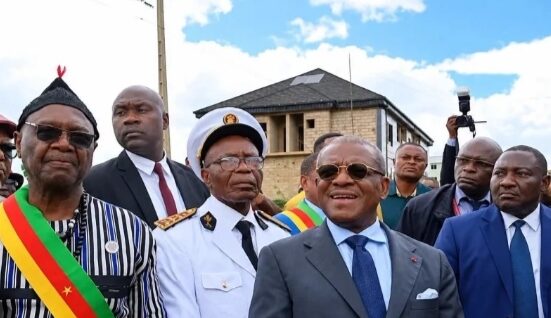
On 15 October 2026, Joseph Dion Ngute, the Prime Minister of La République du Cameroun (LRC), whom Southern Cameroons independence advocates describe as the colonial Prime Minister, launched another community dialogue initiative in Bamenda.
The initiative brought together traditional authorities, religious leaders, civil society representatives, youths, women, and other local stakeholders. According to reporting on the event, the initiative followed instructions from President Paul Biya and was intended to encourage collective responsibility for restoring peace and normalcy in the North-West Region.
But an essential question arises. How does a conflict that the LRC colonial administration chose to confront militarily become primarily a problem for communities to solve? That question exposes the central contradiction in Yaoundé’s latest approach to the Southern Cameroons conflict.
2017: The Military Response That Defined an Era
On 30 November 2017, LRC President Paul Biya returned from the African Union–European Union Summit in Abidjan and addressed the killing of four soldiers and two police officers in the South-West Region. He condemned attacks attributed to separatists and assured the public that measures had been taken to end the violence. Cameroonian state radio subsequently described his position as a declaration of war against separatist fighters.
Within days, international reporting documented intensified military operations, civilian displacement, and a deepening confrontation between LRC colonial security forces and armed Southern Cameroons separatist groups.
The historical distinction is important: Biya’s recorded statement promised decisive security action, while the language of a declaration of war was used in subsequent reporting and official broadcasting. Nevertheless, the resulting military response became a defining feature of the conflict. Nearly nine years later, that conflict continues.
Now, the colonial Prime Minister is asking community leaders and ordinary citizens to take collective responsibility for restoring peace. Local peacebuilding is essential. But it cannot absolve the LRC colonial authorities of responsibility for decisions concerning military operations, negotiations, constitutional arrangements, and civilian protection.
The people of Bamenda did not command the colonial armed forces. The traditional rulers of Kumbo did not establish LRC national security policy. The displaced families of Mamfe did not determine Yaoundé’s negotiating position. Why, then, should the burden of finding a comprehensive political settlement appear to fall principally upon their shoulders?
The Mirror Strategy: Changing the Image Without Changing the Conflict
The expression mirror strategy is used here as an analytical description, not as the name of an officially documented LRC programme. .It refers to a recurring pattern in which the Yaoundé colonial authorities present successive initiatives as new responses to a crisis, while critics question whether those initiatives substantially address the original dispute. Three characteristics define this pattern.
First, the problem is repeatedly reframed. A historical, constitutional, and political dispute is variously presented as a security emergency, a development challenge, a decentralisation issue, or a problem of community relations.
Second, new public initiatives are announced without sufficient demonstration that earlier approaches have achieved their stated objectives. The existence of a dialogue conference or development programme becomes a measure of activity, even when the conflict persists.
Third, responsibility becomes increasingly dispersed. The LRC colonial administration retains decisive political and military authority while local communities are encouraged to assume responsibility for outcomes beyond their institutional control.
This framework does not establish that every initiative is insincere. It establishes a standard by which initiatives should be examined. What has changed in policy? What new authority has been created? Which opposing parties have been engaged? What measurable commitments have been made? A mirror can change the appearance of a problem. It cannot change the problem itself.
The Unfinished Business of the 2019 Major National Dialogue
La République du Cameroun has already conducted a nationally publicised dialogue initiative. Between 30 September and 4 October 2019, the LRC colonial administration convened the Major National Dialogue in Yaoundé under the leadership of colonial Prime Minister Joseph Dion Ngute. The dialogue produced recommendations, including a Special Status arrangement for the North-West and South-West Regions, subsequently incorporated into LRC decentralisation legislation.
The Yaoundé authorities presented these measures as a pathway toward addressing Anglophone grievances. Yet the principal Southern Cameroons separatist leadership did not participate. The International Crisis Group subsequently questioned the limitations of that dialogue, including the exclusion of important political perspectives and restrictions on discussing alternative constitutional arrangements.
Seven years later, questions surrounding implementation and political legitimacy have not disappeared. What measurable political settlement emerged from the 2019 dialogue? What historical and constitutional grievances were resolved? What binding guarantees were established? What independent mechanisms evaluated implementation? If the earlier initiative did not achieve a comprehensive settlement, what fundamentally distinguishes the new community dialogue from its predecessor?
Without satisfactory answers, the latest initiative risks becoming another exercise in political repetition. Community Dialogue Is Not Political Negotiation Community dialogue can perform valuable functions. Traditional rulers can promote reconciliation. Religious leaders can facilitate trust. Women’s organisations can communicate the experiences of families affected by violence. Youth representatives can contribute to economic and social recovery. These are legitimate peacebuilding activities. No durable peace can ignore communities that have experienced years of insecurity and displacement. But community dialogue and political negotiation are distinct.
A local dialogue can address insecurity around schools, markets, roads, farms, and neighbourhoods. A comprehensive political negotiation must also address the authority of the LRC colonial administration, the positions of armed movements, security arrangements, constitutional questions, and enforceable guarantees. Traditional leaders cannot independently alter the constitutional distribution of power. Religious authorities cannot, by themselves, bind armed organisations to ceasefire agreements. Local development committees cannot determine the political future of the former British Southern Cameroons.
Those responsibilities require engagement by actors possessing the political and operational authority to make binding commitments. Community dialogue can support a peace process. But It cannot credibly replace negotiations over the dispute that sustains the war.
The Anatomy of a Decrepit Colonial Regime
The description of a regime as decrepit should not be reduced to the age of its leadership or the duration of its rule. Political decrepitude is an institutional condition. It emerges when governing structures demonstrate an impaired ability to acknowledge failure, revise unsuccessful policies, respond to legitimate grievances, and enforce accountability.
From the perspective of Southern Cameroons independence advocates, Yaoundé’s continued exercise of authority over the former British Southern Cameroons represents an unresolved colonial relationship.
That characterization is politically contested. The LRC government regards the territory as an integral part of Cameroon, while independence advocates challenge the legitimacy of the constitutional arrangements through which the territories were joined and subsequently governed. Against this background, four indicators deserve examination.
Policy repetition without demonstrated learning. Have successive dialogue and reconstruction initiatives been accompanied by transparent assessments of why earlier measures did not secure peace?
Concentration of decision-making. Are meaningful political concessions possible through existing institutions, or do essential decisions remain dependent upon the LRC colonial executive?
The gap between public declarations and measurable results. Are peace initiatives assessed by their announcements and ceremonies or by independently verifiable improvements in security and political accommodation?
Limited inclusion of opposing positions. Can those who fundamentally reject the LRC constitutional framework participate in credible negotiations without first abandoning the issues they seek to negotiate?
These questions offer a substantive test of institutional deterioration rather than rhetorical condemnation alone. The LRC colonial administration’s record should be assessed against its own stated objectives: peace, security, reconciliation, development, and national stability.
The LRC Colonial Administration’s Position—and Its Limitations
A serious analysis must acknowledge Yaoundé’s stated rationale. The LRC administration regards Cameroon’s territorial unity as non-negotiable and argues that decentralisation, reconstruction, reintegration, and community participation can provide a framework for peace. It also faces genuine security threats from armed separatist groups, including attacks on security personnel and abuses against civilians.
Local dialogue may help reduce intimidation, improve access to essential services, and persuade some fighters to leave armed movements. These possibilities deserve consideration. But the effectiveness of community dialogue should not be confused with resolution of the broader political dispute.
Southern Cameroons independence movements demand the restoration of independence for the territory they call Ambazonia. Other Anglophone political currents have advocated federalism or extensive autonomy. The LRC colonial authorities reject separation. Those conflicting positions remain central to the dispute.
A credible negotiating process would have to confront these differences rather than assume that community reconciliation alone can overcome them. Recognition of the conflict’s political dimension does not require prior endorsement of any particular constitutional outcome. It requires acknowledging that opposing political claims exist and must be addressed.
The Human Cost of Unresolved Conflict
Behind the speeches, delegations, and official communiqués are families living with the consequences of prolonged conflict. The crisis has involved deaths, displacement, attacks on educational institutions, interruption of livelihoods, and extensive humanitarian suffering.
International human rights and conflict-monitoring organisations have documented serious violations and abuses attributed to LRC security forces and separatist armed groups.
These include alleged unlawful killings, abductions, threats, destruction of property, and attacks affecting civilians. No credible peace argument should minimise violations according to the identity of the alleged perpetrator. Civilians are entitled to protection regardless of whether they support independence, federalism, decentralisation, or the LRC government’s position.
The success of dialogue must therefore be measured by observable improvements. Can children attend school safely? Can farmers return to their land? Can traders travel without coercion? Can displaced families return voluntarily and securely? Can political differences be expressed without fear? Can alleged violations be investigated independently? These are not secondary considerations. They are among the most immediate tests of whether peace initiatives improve ordinary lives.
The Missing Political Architecture
One of the central deficiencies in successive peace initiatives has been the absence of a sustained, inclusive negotiating framework accepted by the principal adversaries. Past opportunities deserve examination.
International Crisis Group documented the failure of earlier dialogue efforts, including Swiss-facilitated initiatives and limited contacts with imprisoned separatist leaders in 2020. In 2023, the organisation identified the Canada-led initiative as another opportunity for advancing negotiations. The record illustrates the difficulty of creating a process that commands sufficient trust among competing parties.
Any future comprehensive framework would need to clarify several matters: representation of the principal parties, the role of impartial facilitators, protection of participants, the scope of negotiations, arrangements for reducing hostilities, and mechanisms for implementation. None of these questions is answered merely by convening community stakeholders.
The Bamenda initiative may contribute to local confidence-building. But its relationship to a wider political process must be established rather than assumed.
Colonial Prime Minister Dion Ngute’s Unanswered Questions
The latest dialogue initiative presents colonial Prime Minister Joseph Dion Ngute with an opportunity to provide answers that can be independently evaluated. What specific authority has been delegated to community dialogue participants? Will the LRC colonial administration publish the outcomes and implementation timetable? What measures will be used to assess reductions in violence? How will civilian protection and humanitarian access be monitored? Will independent observers evaluate progress? What lessons from the 2019 Major National Dialogue have informed the 2026 initiative?
And, most importantly, does the colonial administration envisage direct political engagement with representatives of Southern Cameroons independence movements as part of a wider settlement process? These questions are not arguments against dialogue. They are tests of its substance.
The distinction matters because an initiative may produce worthwhile local improvements without resolving the political conflict. Acknowledging partial achievements is compatible with demanding a broader settlement. The Central Contradiction: Authority Without Accountability
The LRC colonial administration continues to exercise national authority over security, constitutional policy, and the institutions responsible for implementing peace agreements. Community leaders do not possess equivalent powers. That difference creates an imbalance between the responsibility assigned to local stakeholders and their capacity to deliver political outcomes.
A government cannot legitimately be expected to secure reconciliation without community participation. Equally, communities cannot reasonably be expected to resolve questions that remain within the authority of the LRC colonial administration and the principal armed and political actors. Both dimensions matter.
The critical issue is whether Yaoundé’s new initiative recognizes this distinction. If it does, community dialogue could become a useful component of a broader peace architecture. If it does not, the initiative risks being judged as another example of the mirror strategy: a change in political presentation without a corresponding resolution of the underlying dispute.
Conclusion: The Mirror Cannot End the War
The Southern Cameroons conflict has endured through military operations, reconstruction programmes, reintegration initiatives, constitutional adjustments, and nationally publicised dialogue. Some of these measures have produced institutional or local outcomes. None has yet delivered a comprehensive political settlement.
That record does not prove that the Bamenda dialogue must fail. It does, however, justify rigorous scrutiny of its purpose, authority, inclusiveness, and expected results. The LRC colonial administration under President Paul Biya chose a forceful security response to armed separatism in 2017. Colonial Prime Minister Joseph Dion Ngute is now promoting community dialogue as part of the search for peace.
The decisive question is not whether the colonial administration has changed its vocabulary. It is whether it has changed the substance of its approach to a conflict involving competing political claims, armed confrontation, and profound civilian suffering. Community reconciliation is necessary. Humanitarian recovery is necessary. Security improvements are necessary. But the central political dispute cannot be wished away through ceremonial consultations.
An administration that possesses the authority to wage a war also possesses the responsibility to pursue a credible political path toward ending it. That responsibility cannot simply be transferred to traditional rulers, religious leaders, market women, youths, and communities already bearing the burdens of conflict. The measure of political leadership is not the number of dialogues announced.
It is the willingness to confront unresolved questions, acknowledge institutional limitations, and pursue arrangements capable of producing enforceable peace. The mirror may change the image. Only substantive political action can change the reality.
Historical References
Presidency of the Republic of Cameroon. Statement concerning the killing of four soldiers and two police officers, 30 November 2017.
Reuters. Reporting on Cameroon’s military response to Anglophone separatist attacks, December 2017.
The New Humanitarian. Reporting on the government’s declaration-of-war framing, 4 December 2017.
International Crisis Group. Cameroon’s Anglophone Crisis: How to Get to Talks? 2 May 2019.
International Crisis Group. Analyses of the Major National Dialogue, 2019–2020.
International Crisis Group. A Second Look at Cameroon’s Anglophone Special Status. March 2023.
International Crisis Group. Canada Initiative Offers Opportunity for Cameroon Peace Process. 2023.
Cameroon Tribune. Reporting on the Bamenda community dialogue, 16 October 2026.
City FM. Reporting on the launch of the North-West community dialogue, 16 October 2026.
As Amazon associate this site earns from qualifying purchases
Buy your copies of books on Ambazonia’s productive Sovereignty and statecraft By Martin Mungwa from Amazon
Dan Ismael
Editor-in-Chief
The Independentist News